


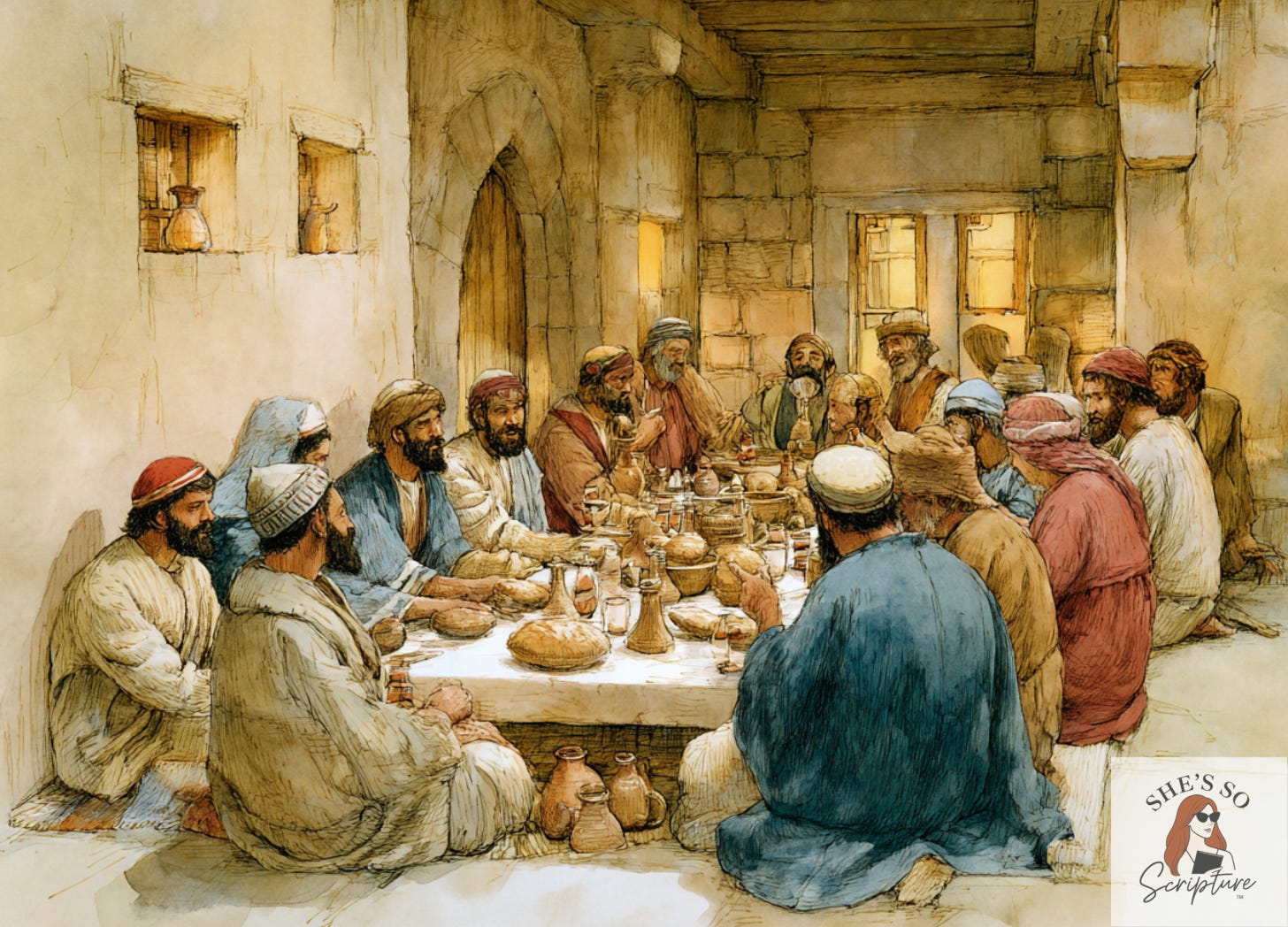
In the Gospels, meals are one of the primary settings where tension around Jesus arises. These moments are often reduced to a simple narrative: Jesus eats with sinners, the Pharisees object, and Jesus ignores Jewish concerns about purity.
That framing misses what is actually happening.
Pharisaic concern for purity wasn’t fringe or petty. It reflected a broader Jewish longing for holiness, covenant faithfulness, and national restoration during a time of Roman occupation and spiritual strain. Many Jews believed that renewed devotion to Torah, including everyday practices like eating, was part of preparing the community for God’s redemptive presence.
Jesus doesn’t step outside this concern. He steps right into it.
To understand what is happening at the table, we must understand how meals functioned in the Jewish world of the first and second centuries and how purity was understood not as exclusion by default, but as preparation for the Presence of God.
1. Table Fellowship Was Theologically Meaningful
In Jewish life, the table was never neutral. Meals carried covenantal and theological weight. They reinforced identity, belonging, and faithfulness.
In some Jewish traditions, including Pharisaic circles and communities like Qumran, the table was understood as a kind of miniature altar. Eating together echoed sacrificial language and covenant participation. Daily meals became a way of living out holiness beyond the Temple.
This means table fellowship was not merely social. It was theological.
To share a table was to make a statement about community, values, and one’s orientation toward God.
