


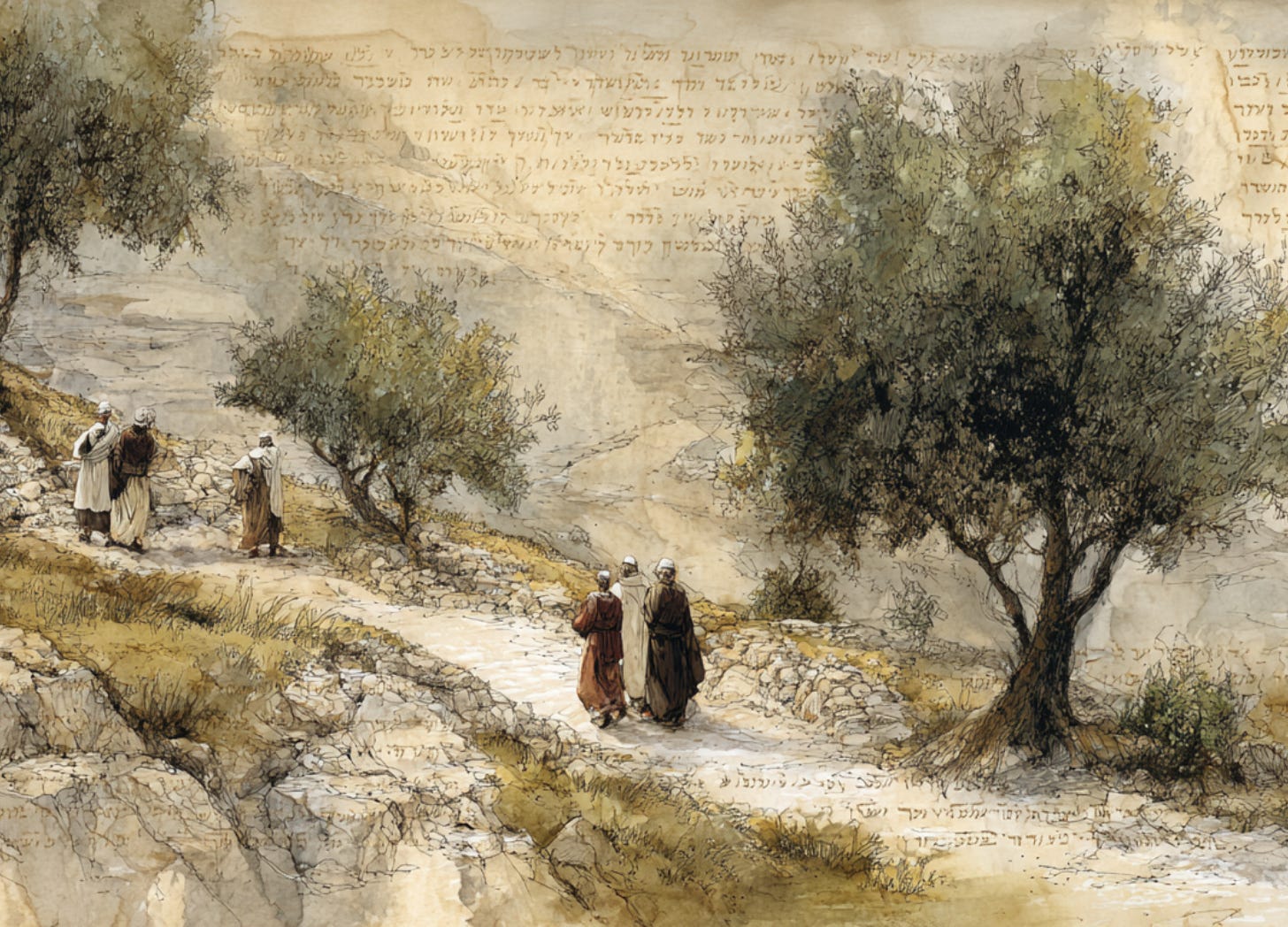
Ok friends…I am pulling out all my seminary teachings for you in this lesson so buckle up! We are taking a deep dive.
When Jesus talked about His yoke, He was speaking a language every first century Jewish listener understood. A Rabbi’s yoke was not something he carried in his hands. It was the combination of his interpretation of Scripture and his way of living out that interpretation day by day.
In order to understand what Jesus meant, we need to understand what a yoke meant in His world. A Rabbi’s yoke shaped how he taught Torah, how he applied it to real life, how his disciples lived, and even how they prayed.
This lesson brings together both sides of the yoke:
How a Rabbi interpreted Scripture and how he lived it.
Jesus invited His disciples into both of those realities.
1. The Yoke as Interpretive Authority
The Hebrew word for yoke is עֹל (ol, interpretive framework or burden). A Rabbi’s yoke began with the way he understood Torah. In the first century, Rabbis did not all interpret Scripture the same way. Their interpretive differences shaped daily life in very real and practical ways.
1.1 Competing Yokes in First Century Judaism
Two of the most influential interpretive schools were those of Hillel and Shammai. Their yokes shaped much of Jewish thought in the decades before and during Jesus’s time.
