


Please note that this article may contain affiliate links. As an Amazon Associate, I earn on qualifying purchases at no additional cost to you.
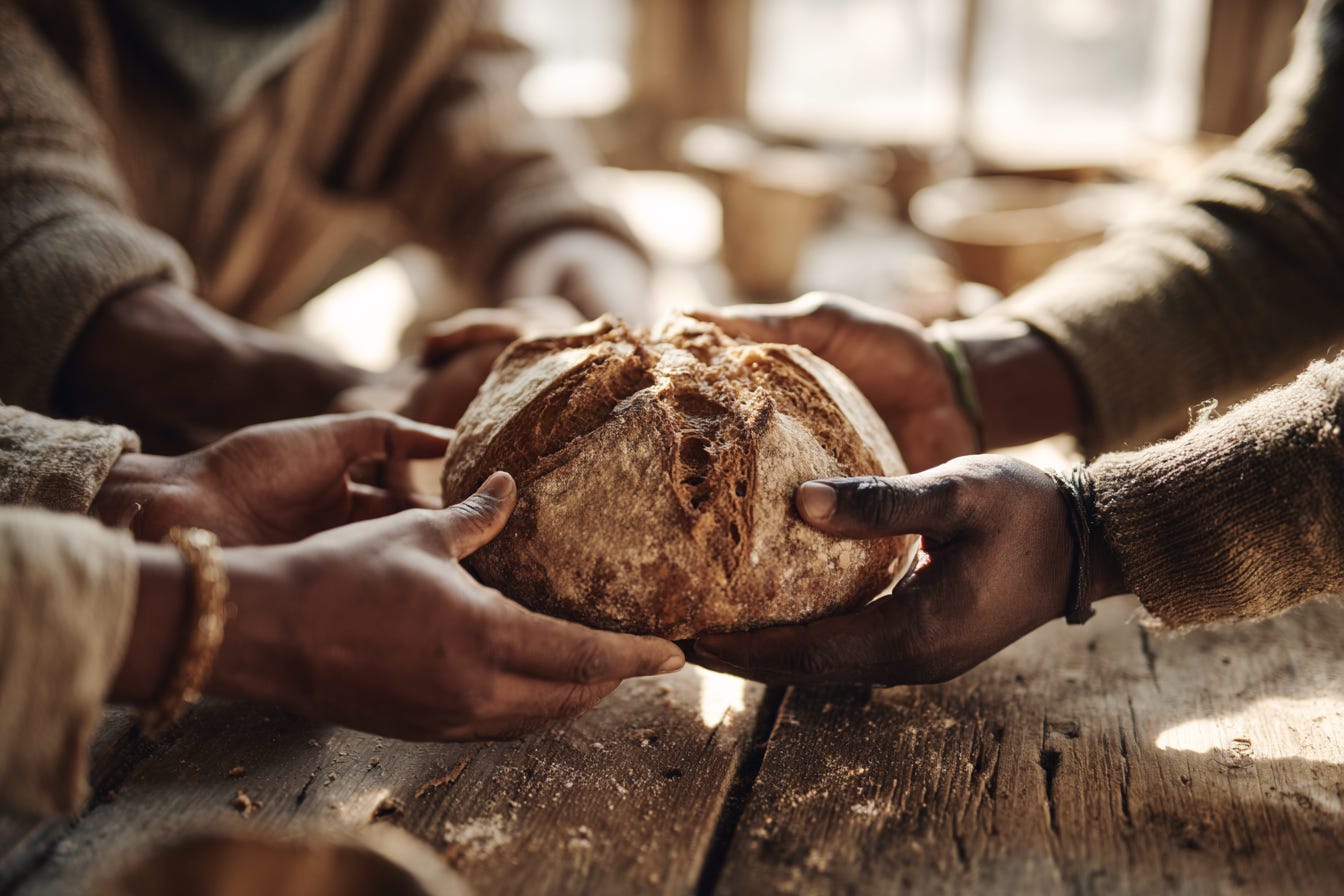
We’ve turned “hospitality” into matching napkins and a spotless kitchen. No wonder so many of us freeze. We feel underprepared, overbooked, or convinced our homes (and lives) aren’t “guest-ready.”
But Scripture paints a different picture. Hospitality isn’t a performance; it’s a posture. It’s the holy habit of making room: at the table, in our schedules, and in our hearts—especially for the outsider, the lonely, and the overlooked.
This Substack is reader-supported. To receive new posts and support my work, consider becoming a free or paid subscriber.
Below is a fresh look at hospitality from Genesis to the early church, with simple ways to live it out even when your house is small, your calendar is full, and your meal is more “soup and salad” than “seven courses.”
Be sure to download your free copy of our printable Hospitality in the Bible Study, Reflection and Action Challenge guide with worksheets at the end of this post! No sign up required!
What the Bible Means by “Hospitality”
In Hebrew thought, hachnasat orchim means “bringing guests in.” The New Testament word philoxenia literally means “love of the stranger.” Put together, biblical hospitality is not elite entertaining; it’s everyday welcome: costly, sincere, and often inconvenient.
Hospitality is relational more than it is culinary. It reflects God’s heart, not our home décor.
God Is the Host First
From Eden’s garden to manna in the wilderness, God fashions space, provision, and presence for His people. Over and over the Torah reminds Israel, “You were strangers once, so treat the foreigner as family.” Divine generosity becomes the template for ours.
Old Testament Snapshots
Abraham’s tent (Genesis 18): He runs to greet unknown travelers, offers his best, and discovers he’s entertaining the Lord.
Lot in Sodom (Genesis 19): Flawed as he is, he insists guests come under his roof, protecting the vulnerable was non-negotiable.
Rahab (Joshua 2): Her risky welcome opens the door to redemption.
The Shunammite (2 Kings 4): A simple upstairs room for Elisha becomes the setting for miracles.
Biblical hospitality is active, not passive; personal, not performative.
Welcoming the Stranger Is a Command
Leviticus 19 calls God’s people to love the outsider “as yourself.” Prophets like Isaiah link true worship to practical mercy, sharing bread, sheltering the homeless, and clothing the exposed. Hospitality isn’t an optional extra; it’s covenant life.
Jesus Practiced Table-Shaped Ministry
Yeshua/Jesus ate with tax collectors, sinners, Pharisees, and friends. He restored dignity over meals and told kingdom stories about banquets where the last are invited first. In one dinner scene (Luke 7), He contrasts a woman’s costly welcome with a host’s cold formality, exposing how hospitality reveals the heart.
When Hospitality Fails, Communities Fray
A famous rabbinic story (Kamtza and Bar Kamtza, Gittin 55b–56a) traces Jerusalem’s unraveling to public shaming at a banquet and the silence of bystanders. It’s a sobering reminder: neglecting welcome and mercy has consequences far beyond a single table. Jesus echoes this gravity in Matthew 25. How we receive “the least of these” matters eternally.
The Early Church: Homes as Outposts of Grace
Acts shows believers praying, breaking bread, and opening homes. Before there were sanctuaries, there were living rooms. Paul expects all believers to “pursue hospitality” and requires church leaders to model it (Romans 12:13; 1 Tim. 3:2; Titus 1:8). Hebrews 13:2 nudges us to remember: sometimes we host heaven’s messengers without knowing it.
Hospitality Is Worship—and Mission
Welcoming those who can’t repay us mirrors the gospel. It honors the image of God in others and becomes a living apologetic in a fragmented world.
Women are central in this story: Sarah’s tent, Rahab’s courage, the Shunammite’s spare room, Lydia’s open house, Martha’s serving, Mary’s attentive presence. Hospitality looks like both action and attention.
Why We Hesitate (and How to Move Anyway)
Common barriers
“I’m too busy.”
“It might be awkward.”
“My space isn’t nice enough.”
“I don’t cook like that.”
Truth to counter them
Hospitality isn’t a party; it’s presence.
Awkward is human. Love covers it.
A cleared corner and honesty beat perfection every time.
Soup counts. So do takeout boxes and paper plates.
Simple Ways to Start (No Perfection Required)
Put an extra chair at the table and ask, “Who needs this seat this week?”
Brew a pot of coffee and invite a neighbor for 30 minutes.
Drop off a double-portion meal to a new parent or widow.
Host a small Bible reading night, even if toys are on the floor.
Keep a “pantry hospitality kit”: pasta, sauce, salad fixings, tea.
Notice the person alone at church; sit with them and listen.
Write a note to someone who’s grieving or new in town.
Start small. Repeat often.
Spiritual Formation With a Door Hinge
Like prayer and Scripture, hospitality shapes us. It humbles our pride, stretches our patience, and trains our hearts to love. As we make room for others, we discover God has been making room in us.
Where the Story Is Headed
Revelation 19 ends with a feast. The marriage supper of the Lamb. The Bible begins in a garden home and culminates at a shared table. Every humble meal of welcome now is a rehearsal dinner for then.
My Final Thoughts
Hospitality is not about a flawless table; it’s about a willing heart. Clear a space, light a candle, set out mugs that don’t match, and make room for one more. The kingdom looks a lot like that.
FAQs About Hospitality in the Bible
Is hospitality optional or required?
Scripture treats it as both a universal calling and, for some, a distinct spiritual gift. All disciples are invited to practice it; some are specially graced to lead the way.
I’m introverted, can I still practice hospitality?
Absolutely. Hospitality isn’t a personality contest; it’s an act of love. Quiet welcome—attentive listening, thoughtful invitations, creating calm spaces—often ministers most.
Do I have to host in my house for it to “count”?
Not at all. You can meet at a park, bring a meal, offer a ride, sit with someone at church, or make space at your table after service. Presence is the point, not the venue.
Is biblical hospitality focused only on strangers?
It includes everyone: family, friends, neighbors—and gives special attention to the overlooked, new, or marginalized.
How can I cultivate hospitality in my kids?
Model it. Let them help set the table, write notes, greet guests, and pray for the people you welcome. Explain the “why”: we make room because God made room for us.
Download Your Printable Study Guide


🔥 Want to go deeper?
Step beyond the surface and into the Word with our paid subscriber community. When you upgrade, you unlock The Vault — and if you’re ready to go all in, Founders Level brings even more.
🔐 Inside The Vault:
💛 Weekly devotionals with depth and application
🌿 Monthly teachings on the Jewishness of Jesus
💬 Private community chats
🎁 30% off all digital products
🚨 Access to our Peppery Bible Study Group in Signal
👑 Founders Level includes everything in The Vault, plus:
🎧 Weekly audio teachings
💻 Monthly Bible Study Q&A Calls
📓 Printable studies and reflection tools
⏰ Early access to studies and new digital products
🖊️ Exclusive journal
💸 50% off all digital products + 10% off physical merch
👉🏽 Join now to unlock your access and walk deeper in truth, boldness, and biblical beauty.
This Substack is reader-supported. To receive new posts and support my work, consider becoming a free or paid subscriber.
You’re currently a free subscriber to She’s So Scripture. For the full experience, upgrade your subscription.
🛍️ Shop resources crafted for believers who build bold confidence, gratitude, and Bible intimacy. Click here to visit the She’s So Scripture Shop!
Tree of Life (TLV) – Scripture taken from the Holy Scriptures, Tree of Life Version*. Copyright © 2014,2016 by the Tree of Life Bible Society. Used by permission of the Tree of Life Bible Society.