



Here’s something that might surprise you about this week’s soul trait.
The author of the book we are working in, Alan Morinis’s “mantra” for sh’tikah, the trait the Mussar tradition calls silence, is this: nothing is better than silence. Not “silence is good.” Not “silence has its place.” Nothing is better than it.
That’s a bold claim in a world that has made a virtue out of having something to say at all times, on every platform, about every situation, with full confidence and minimal reflection.
This week’s lesson is not about becoming a quieter person in some general, personality-based sense. It’s about learning to govern your speech the way a wise person governs anything valuable, with intention, with restraint, and with a clear understanding of what words actually cost.
The audio this week goes into what the Mussar tradition calls shmirat halashon, guarding the tongue, why Solomon and James are saying the exact same thing centuries apart, and what it actually means to practice silence as a spiritual discipline rather than just a social preference.
This Week’s Practice
Before you speak this week, in any conversation where you feel the urge to react immediately, pause and ask yourself one question: does this need to be said by me, right now?
Not whether it’s true. Not whether you have the right to say it. Whether it actually needs to be said, by you, in this moment. That pause is where sh’tikah begins.
To get the book we are currently using, Everyday Holiness by Alan Morinis, click here.
Here is your audio lesson!

Represent She’s So Scripture and Your Love of Exegesis!
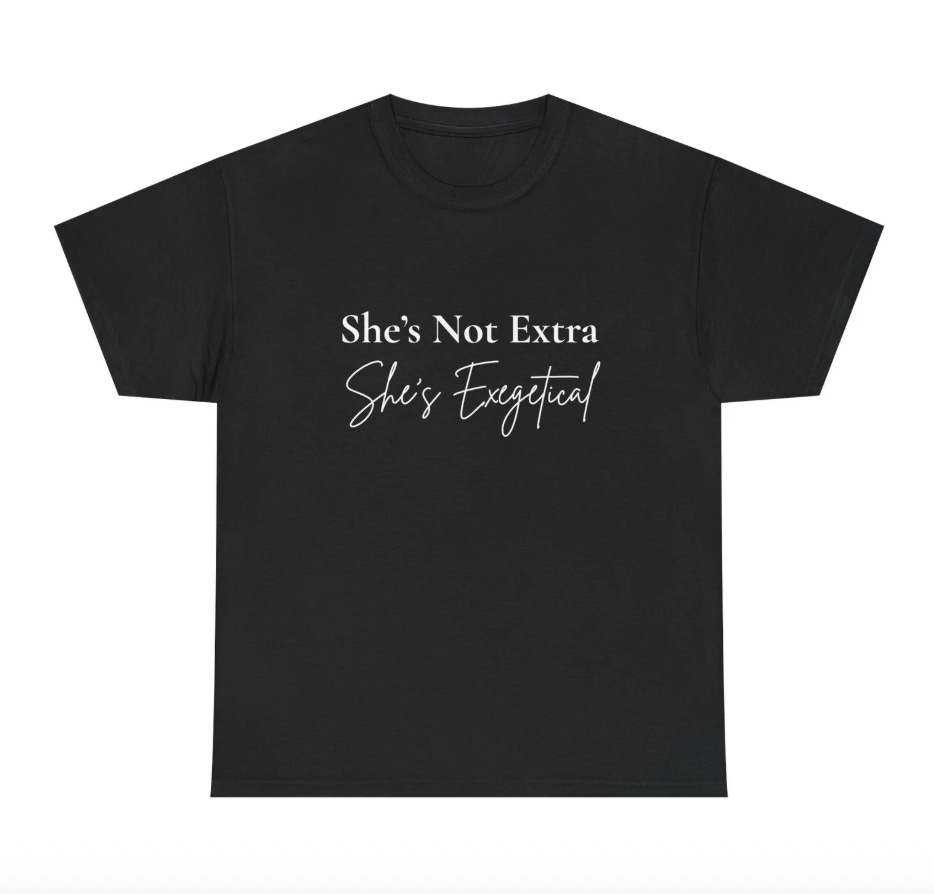
This is what we’re building here. Women who actually engage the text and don’t apologize for it.
If that’s “extra,” we’re fine with that.
In fact… we put it on a t-shirt.
“She’s not extra. She’s exegetical.”
You can get yours here.