



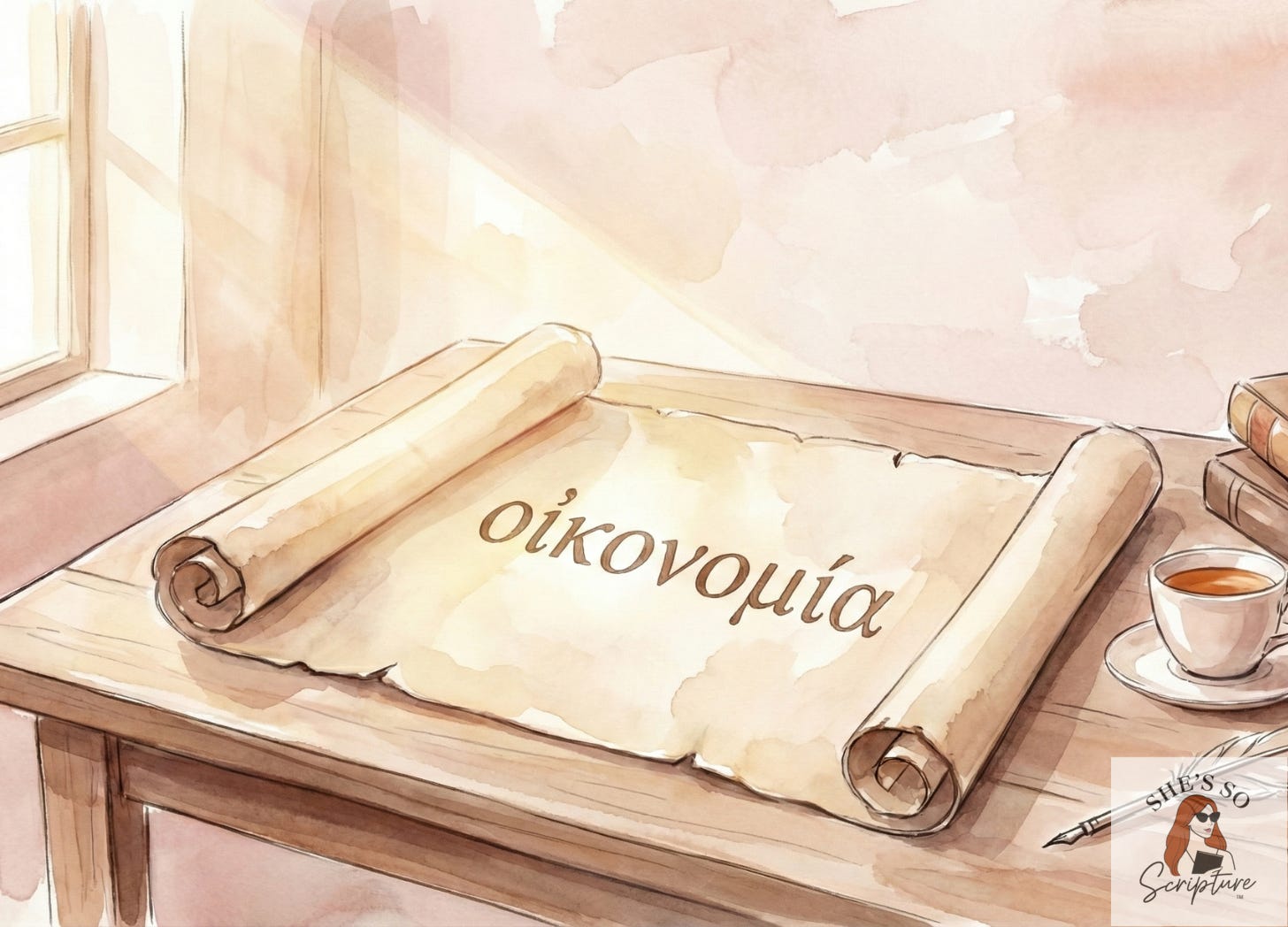
Pronounced: oy-koh-NOH-mee-ah
This is one of those words that shows up quietly in English Bibles and gets translated so smoothly that most people never realize how much weight it’s carrying. You’ll usually see it rendered as “stewardship,” “administration,” or “plan,” depending on the translation.
But oikonomia is doing far more work than any of those English words let on.
What the Word Actually Means
At its root, oikonomia (οἰκονομία) comes from two Greek words:
oikos meaning house
nomos meaning law or management
Put together, it literally means the management of a household.
Not ownership, not control.
Management.
In the ancient world, an oikonomos was someone entrusted with running a household that did not belong to them. They handled resources, relationships, timing, and responsibility on behalf of the owner.
That context matters more than we usually realize.
Why Paul Uses This Word So Intentionally
Paul uses oikonomia several times, especially when talking about his role and about God’s work in the world.
In Ephesians 3:2, he refers to “the stewardship of God’s grace” given to him. He’s not talking about a personal calling badge or a ministry title. What he’s describing is being entrusted with something that belongs to God and (here’s the key) must be handled according to God’s purposes.
An oikonomia assumes accountability, intention, and alignment with the owner’s desires.
This is entrusted responsibility and not some kind of passive faith.
This Is Bigger Than Personal Calling
But let’s not get it twisted.
We tend to reduce stewardship to personal gifts or money or time management. Paul is working on a much larger scale. When he talks about oikonomia, he’s talking about how God is ordering history, revelation, and redemption.
In Ephesians 1:10, oikonomia refers to God’s plan to unite all things in Messiah at the proper time.
That’s divine household management.
God is not improvising. He’s ordering. He’s overseeing. He’s bringing things into alignment within His economy, His household.
Why This Changes How You Read Scripture
Once you see this word clearly, Scripture stops feeling random. The covenants connect. The timing matters. The story unfolds with purpose.
God is not reacting to humanity. He’s managing His household toward restoration.
And when believers are described as stewards, it places us inside that larger framework. We’re participants, not architects. We handle what we’ve been given, but we don’t get to redefine the house rules. Yeah, let’s let that sink in!
That’s grounding.
And honestly, it’s relieving.
My Final Thoughts
Oikonomia reminds us that faith is not about ownership. It’s about trust. God entrusts people with responsibility within His story, not to control outcomes, but to handle what’s placed in their care faithfully.
You’re not carrying the weight of the whole house.
You’re carrying what you’ve been entrusted with.
And that distinction changes everything.
Bible Study Questions
Where do you see the word stewardship show up in the New Testament, and how does understanding oikonomia deepen its meaning?
How does seeing God as the manager of history reshape the way you read long biblical narratives?
What responsibilities has God entrusted to people in Scripture that required faithfulness rather than control?
Reflection Questions
Where do you feel pressure to act like an owner rather than a steward?
How does releasing control change the way you relate to God’s timing?
What part of God’s household have you been entrusted with right now?
Action Challenges
Read Ephesians 1 and 3 this week and underline every reference to God’s plan or purpose.
Practice naming what you’re responsible for and what you’re not.
Pray with the posture of stewardship instead of self-management.
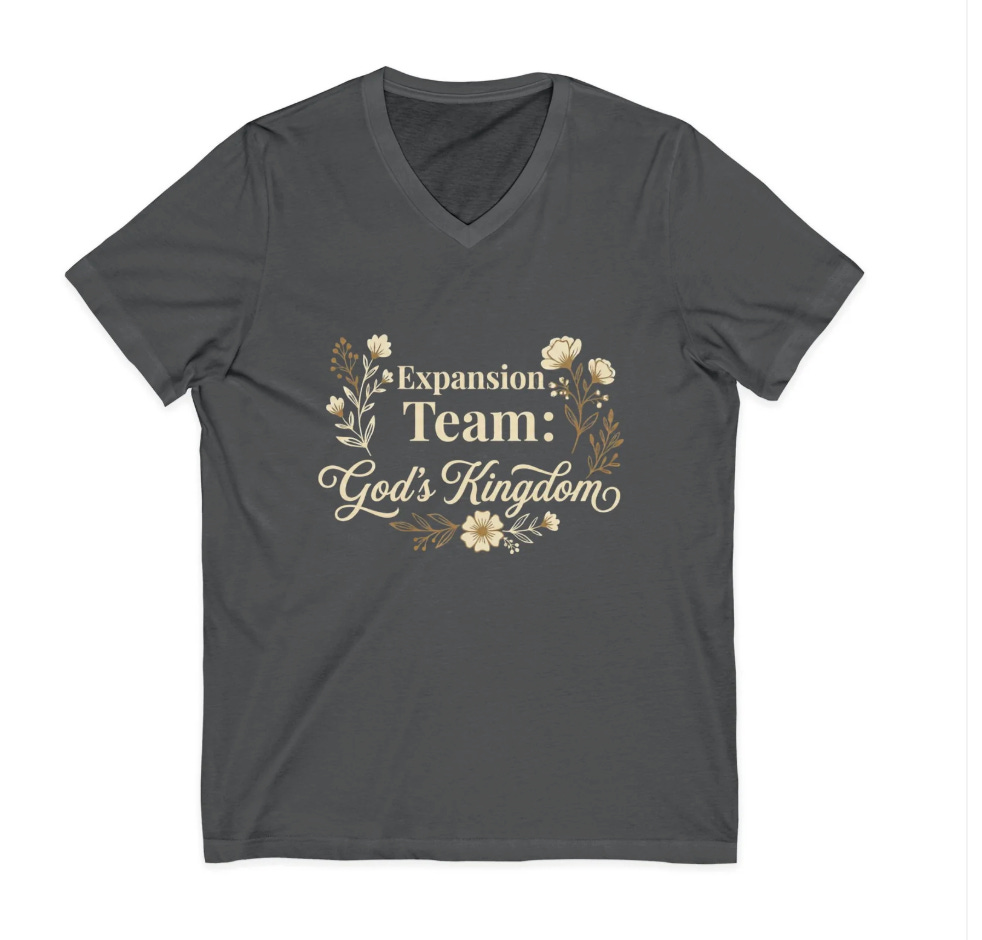
This Expansion Team: God’s Kingdom tee is a quiet declaration of where your allegiance lives. It’s a reminder that the Kingdom isn’t static, stalled, or shrinking. God is still expanding His work in the world, and His people are part of that movement. Wear it as a statement of hope, faithfulness, and forward motion. Not flashy. Not loud. Just steady truth woven into everyday life.
Get yours today!👉🏻 https://www.sheopensherbible.net/products/expansion-team-gods-kingdom-v-neck-tee
If this post hit home for you, send it to a friend who could use a little Bible-study glow-up today.
You’re reading one of Substack’s Bestseller Publications and that’s because of readers like you. Thank you for showing up, sharing, and growing with this community.
If a monthly subscription isn’t feasible but you’ve been blessed by this space and want to support the work, you can always leave a one time tip here. Every gift, big or small, keeps this ministry thriving. 💛
🔥 Want to go deeper?
Step further into the Word with our paid subscriber community. When you upgrade, you unlock The Vault… and if you’re ready to go all in, the Founders Level opens every door.
🔐 Inside The Vault:
💛 Weekly devotionals with depth and application
🌿 Monthly teachings on the Jewishness of Jesus
💬 Private community chats
✨ Our weekly spiritual disciplines program (Mussar)
🎁 30% off all digital products
🔥 FREE 4-Week Word Girl Faith Workout Study — a $12 value, included FREE for paid subscribers!
🚨 Access to our Peppery Bible Study Group in Signal
…and more!
👑 Founders Level includes everything in The Vault, plus:
🎧 Weekly audio teachings
💻 Monthly Bible Study Q&A Calls
📓 Printable studies & reflection tools
⏰ Early access to new releases
🖊️ Exclusive journal
🔥 FREE 4-Week Word Girl Faith Workout Study — a $12 value, included FREE for paid subscribers!
💸 50% off all digital products + 10% off merch
…and more!
👉🏽 Join now to unlock your access and walk deeper in truth, boldness, and biblical beauty.
Love how this unpacks the management vs ownership distinction. The household metaphor clicks way better than modern stewardship language becuz it emphasizes accountability without the weight of full ownership. When Paul uses oikonomia in Ephesians to describe God ordering history toward restoration, it reframes everything as intentional design rather than reactive adjustments. I've wrestled with control issues in my own spiritual walk, and that reminder that we're trusted managers, not architects, lands diferently than typical teachings on this subject.
Reflection question #3: Prophesy. Warning of the wrath soon to come. Directing non-believers to the messiah through my writings. Cautioning believers toward personal introspection in the hope that people perform teshuvah.