

Torah Portion Behar-Bechukotai - The Land Needs a Nap and Honestly, So Do You
Leviticus 25:1–27:34 | Jeremiah 16:19–17:14 | Matthew 21:1–17

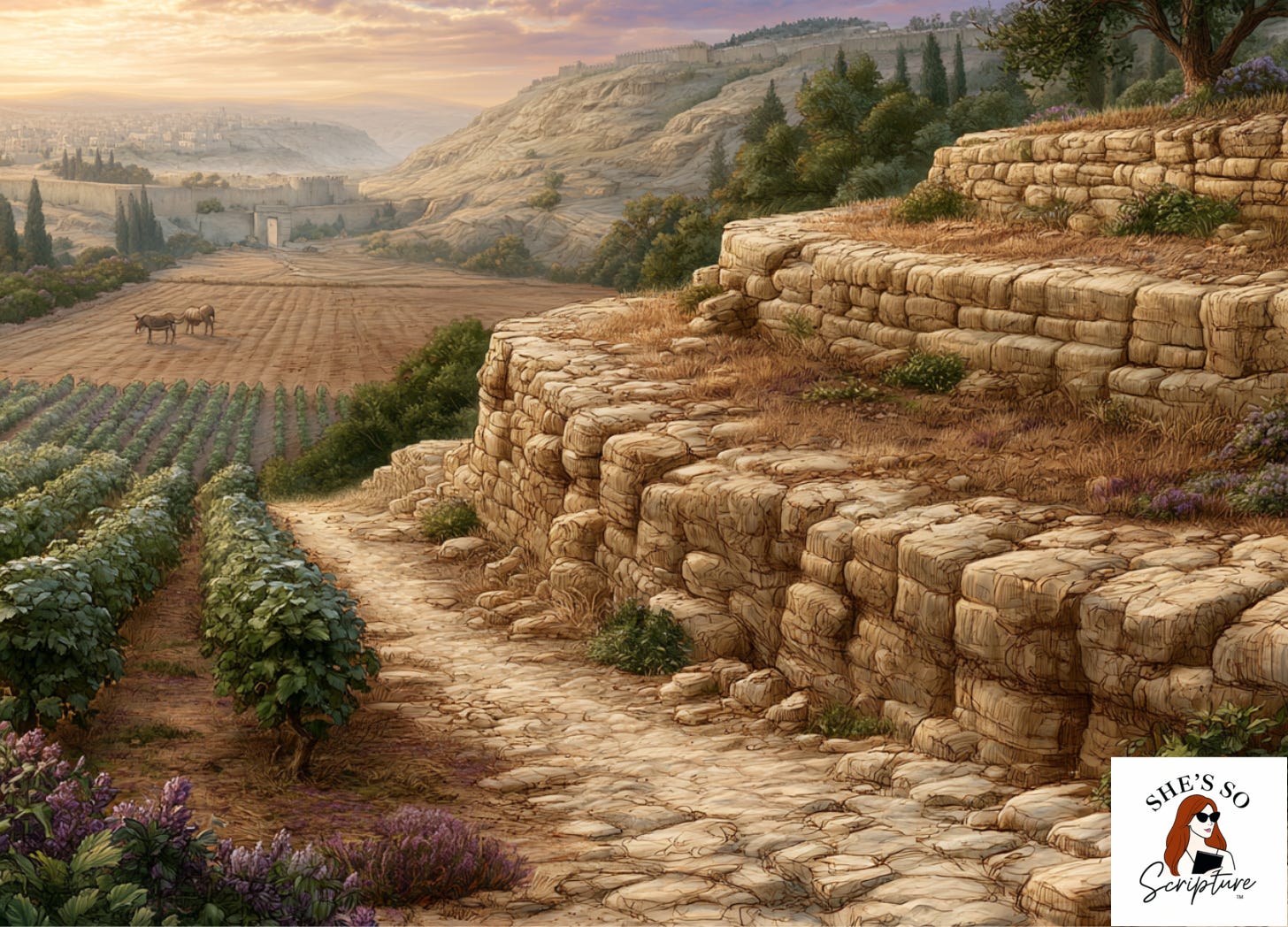
Imagine your boss walks in and tells you that every seventh year, you’re taking the entire year off. No work. No selling. No hustling. You can’t plant, you can’t harvest, you can’t side-gig your way around it. And just to keep things spicy, every fiftieth year there’s a bigger reset where debts get cancelled and people who lost their family land get it back.
Most of us would have a meltdown in the parking lot.
But that’s exactly what God told Israel to do. Behar opens with the Sabbatical year, the Jubilee, and the laws of redemption. Bechukotai follows it up with the blessings for walking in covenant and the warnings for walking away from it. Together they’re like one big covenant blueprint, and friends, the design is wild. It’s pretty much the opposite of how the rest of the world runs.
The world says produce. God says rest. The world says hoard. God says release. The world says the strong eat the weak. God says when your brother stumbles, you pick him up. Behar-Bechukotai is a covenant economy built on trust, and the rhythm of it is woven right into the dirt.
Word Study: Shemittah (שְּמִטָּה)
Shemittah
שְּמִטָּה
(sheh-mee-TAH)
Release. Letting go. Dropping it like it’s hot.
Shemittah comes from the root shamat, which means to release, to let drop, to let go. It’s the word picture you get when you’re carrying something heavy and you finally just open your hands and let it fall. That’s what the seventh year was. A holy letting go.
And catch this. In Leviticus 25:2, God says, “When you come into the land which I give you, then the land is to keep a Shabbat to the Lord.” The land. Not the people. The land itself was commanded to rest. The dirt under their feet got a Sabbath written into its job description.
That’s a wild theology when you sit with it. The land doesn’t belong to Israel. It belongs to God. They’re tenants, and the rent is trust. Every seventh year they had to prove they actually believed God could feed them without their hands forever on the plow. The shemittah was a yearlong faith exam, and the only way to pass was to stop working and watch God show up anyway.
And in the fiftieth year, the Jubilee, the release went next-level. Slaves walked free. Land returned to its original family. Debts dissolved. The whole social order hit reset. God built a recurring rhythm into His people that said, no one stays trapped forever. No family loses their inheritance permanently. No debt has the final word. Try finding that on Wall Street.
Torah: A Covenant Economy with Receipts
Behar lays out the framework. Six years on, one year off. Seven cycles of seven, then the Jubilee. And inside that framework, God packs in protection after protection for the brother who falls on hard times. He keeps using that word. Brother. Not employee. Not loser. Not deadbeat. Brother.
Look at Leviticus 25:35. “If your brother has become poor and his hand cannot support himself among you, then you are to uphold him.” The Hebrew there is doing some heavy lifting. The word for uphold means to strengthen, to hold up, to refuse to let someone hit the ground. In God’s economy, when your brother starts to slip, you don’t step over him on your way to brunch. You stoop down and lift.
Then verse 23 drops the mic. The land cannot be sold permanently because, God says, the land is His. Israel are sojourners and resident aliens with Him. They don’t own anything. They steward everything. That one sentence flips the whole economy on its head. If God owns the land, God sets the terms. And His terms are mercy.
Bechukotai then turns to the consequences side of the covenant. The blessings come first, and they are gorgeous. Rains in their season. Crops bursting. Peace in the land. Lying down at night with no one making you afraid. God walking among His people. That last one always gets me. The Creator of the universe, casually strolling among His own. That’s shalom in high definition.
Then come the warnings, and they are NOT playing. If Israel rejects His statutes, God says He will discipline them in stages, each one designed to wake them up and call them home. But here’s the part I keep coming back to. Even at the end of the worst warnings, God says He will not forget His covenant. He will not abandon them entirely. The covenant is sealed by His character, not their performance. Thank You, Jesus.
Haftarah: The Tree by the Water
Jeremiah 16:19 through 17:14 is the Haftarah, and the rabbis paired it with Behar-Bechukotai for a reason. Jeremiah is preaching to a Judah that did exactly what Bechukotai warned about. They forgot the covenant. They trusted in horses and foreign alliances and idols on every high hill. So Jeremiah pulls them back to the heart of it.
Cursed is the one who trusts in man, and depends on flesh as his arm, and whose heart turns from the Lord. For he will be like a bush in the desert. He cannot see goodness when it comes, but will dwell in parched places in the wilderness, a salt land where no one lives.
— Jeremiah 17:5-6 (TLV)
Blessed is the one who trusts in the Lord, whose confidence is in the Lord. For he will be like a tree planted by the waters, spreading out its roots by a stream. It has no fear when heat comes, but its leaves will be green. It does not worry in a year of drought, nor depart from yielding fruit. — Jeremiah 17:7-8 (TLV)
Two pictures. The bush and the tree. The bush is rooted in dry places, can’t recognize goodness when it shows up, lives in a salt land where nothing else grows. The tree has its roots stretched into the stream. When the heat comes, the tree doesn’t panic. When the drought hits, the tree keeps producing fruit. Same heat. Same drought. Different root system.
Now connect that to Behar. The Sabbatical year and the Jubilee were Israel’s training in becoming the tree. Every seventh year, God was teaching them how to send their roots deeper. How to keep producing fruit even when their hands weren’t busy. How to rest in His provision when their own provision was technically not happening.
Shemittah was a yearly drill in being the tree by the water. The Jubilee was a fifty-year masterclass. And Bechukotai’s blessings and warnings simply describe what happens to tree-people who trust their Owner versus bush-people who keep trying to outsmart Him. Spoiler. The bush always loses.
Besorah: The King Who Brings the Jubilee
Now we walk into Matthew 21. Yeshua is entering Jerusalem. The crowds are throwing their cloaks on the road. Branches are coming off the trees. The shouting starts, and it is loud.
Hoshia-na to Ben-David! Baruch ha-ba b’shem Adonai! Blessed is He who comes in the name of the Lord! Hoshia-na in the highest! — Matthew 21:9, TLV
Hoshia-na means save us, please. The crowd is quoting Psalm 118, the song the people of Israel sang as they processed up to the Temple for the festivals. They’re calling Yeshua the Son of David, the Messianic King. They’re mashing the language of pilgrimage and salvation into one big shout.
And then Yeshua walks straight into the Temple and starts flipping tables. He drives out the merchants and the moneychangers. He calls the place a den of thieves. He heals the blind and the lame right there in the courts, and the kids keep singing Hoshia-na while the religious authorities are clutching their pearls and side-eyeing each other.
Now stay with me. Why is this Behar-Bechukotai’s Besorah portion?
Because Yeshua is the embodiment of Jubilee. He’s the King who proclaims liberty to the captives. He’s the Kinsman-Redeemer who buys back what was lost. He’s the One who comes to release the debt no human could ever pay. Behar set the framework. Yeshua filled it with Himself.
The cleansing of the Temple is also peak Jubilee energy. The poor were getting fleeced at the Temple gates by exchange rates and sacrificial markups. The very system that was supposed to bring people near to God had turned into a place of extraction. Yeshua walked in and reset the room. He acted out Bechukotai’s warning and Behar’s promise in the same moment. The covenant economy of God will not tolerate the exploitation of the brother. Period.
And the kids kept singing, because somehow they got it when the religious experts couldn’t. The King had come, the Jubilee had begun, and the Temple was being repossessed by its rightful Owner.
Thematic Threads
Here’s what jumps out when you sit with all three readings together.
First, God owns it all. The land. The people. The Temple. The harvest. The future. Behar makes that very clear. Jeremiah reminds Judah they forgot it. Matthew shows Yeshua walking in to reclaim what was always His. Every economic, spiritual, and physical system in Scripture rests on that one truth. He’s Owner.
Second, trust is the proof of belonging. Shemittah was Israel’s annual trust-test. Jeremiah’s tree was rooted in trust. The crowd entering Jerusalem cried out Hoshia-na, the cry of trust. Covenant people are tree-people, the ones who send their roots deep into the One who owns them.
Third, the King brings the release. The Jubilee was always a preview. The trumpet that sounded on Yom Kippur in the fiftieth year was always pointing toward a greater trumpet, a greater release, a greater King. Yeshua walks into Jerusalem on a donkey because the King who brings the real Jubilee doesn’t need a war horse. He’s already won.
My Final Thoughts
What gets me about Behar-Bechukotai is that God refuses to separate worship from economics. He won’t let His people draw a line between their spiritual life and their wallet. The covenant covers everything. The way you treat your brother who’s drowning in debt is a worship issue. The way you steward the land is a worship issue. The way you handle your own striving and your own rest is a worship issue. There is no compartment in your life God isn’t interested in.
And the warnings in Bechukotai aren’t God being cranky. They’re God being faithful. He told Israel exactly what would happen if they wandered, and then He kept telling them through every prophet, every exile, every restoration. He never stopped pursuing them. The discipline was always meant to bring them home, never to crush them.
The Jubilee was always a trumpet aimed at the future. And when Yeshua entered Jerusalem with the crowds singing Hoshia-na, the trumpet was finally sounding for real. The land would be restored. The captives would be released. The brother who had fallen would be lifted up. The covenant would be sealed in the blood of the Kinsman-Redeemer who never lost track of what was His. And what was His included you.
We get to live in the season of that ongoing Jubilee. We get to be tree-people, rooted in the only stream that doesn’t run dry. We get to practice shemittah in our own lives, releasing our grip on the things we’ve been clutching, trusting that the One who owns the land also owns our seasons of rest. That’s good news worth sitting with.
Hebrew Letter Lesson: Mem (מ / ם)
Mem is the thirteenth letter of the Hebrew aleph-bet, sitting smack in the middle. It’s actually got two forms. There’s the regular mem (מ) you use at the start or middle of a word, and the final mem (ם), which has a closed, square shape and only shows up at the end of a word. Same letter, two faces. Hold that thought.
How it’s Written
מ
Mem
(beginning / middle)
ם
Mem Sofit
(final form)
The Meaning
Mem means water. The pictographic root is mayim (מַיִם), the Hebrew word for water, and the ancient Hebrew letter was literally drawn as wavy lines, like ripples. So every time mem shows up in a word, there’s a little echo of water in the bones of it.
In Scripture
Mem opens some of the biggest words in the whole Bible. Mayim, water. Moshe, Moses, the one drawn out of the water. Mashiach, Messiah. Mitzvot, the commandments. Melech, king. Midbar, wilderness. The letter shows up in places where life, leadership, and rescue collide.
The Connection to Behar-Bechukotai
Now stay with me, because this is where it gets good. The Haftarah for this week is Jeremiah 17, the tree planted by the mayim. Tree-people are mem-people. They’ve got their roots down in the water that doesn’t run out. And Behar is teaching Israel how to live as people whose source is mayim, not their own muscle. The Sabbatical year and the Jubilee are basically God saying, your life flows from My waters, not from your hustle. Stop white-knuckling the field. The water’s already there.
A Little Nugget
Here’s the part that’ll preach. The regular mem is open at the bottom, like flowing water. The final mem is closed, sealed up like a hidden spring. Jewish tradition picks up on this and says the open mem is the revealed truths of God, the things He’s shown us, while the final mem is the hidden things, the mysteries we’ll only understand on the other side. Some things God reveals. Some things He keeps. Both are gifts. And both are mem.
Application
• Tree-people are mem-people. If your roots aren’t down in living water, no amount of hustle will keep your leaves green when the heat comes.
• Mem reminds us that we don’t make our own water. We just have to root where the stream already runs. That’s the whole posture of shemittah.
• The two forms of mem teach us to hold both. What God has revealed, walk in it. What He’s hidden, trust Him with it. You don’t need every answer to drink from the stream.

Weekly Practice
This week, practice a little shemittah in one corner of your life. Pick one thing you’ve been gripping too tight. Could be a relationship you keep trying to fix, a money worry you keep rehearsing in the shower, a project you’ve been wrestling into the ground, a kid you’ve been trying to control with sheer willpower. Let it drop. Open your hands. Tell God out loud, this is Yours, the land is Yours, this season is Yours, and I am Yours.
Then watch how God feeds you in the year you don’t plant. Pay attention to the unexpected provision. The unforeseen rest. The small mercies that show up when you stop forcing the harvest. Shemittah is a muscle. The more you practice, the more you remember that the Owner is faithful and the stream isn’t drying up on your watch.
Before You Go
If this study made you want to put down something you’ve been carrying for too long, share it with a friend who needs to be reminded that the Owner is faithful and the Jubilee is real.
And if it left you wanting to go slower and deeper into the Word, I’ve got you. Paid subscribers get access to live Saturday Bible studies on Zoom, extended Torah portion studies, audio teaching lessons, devotionals, deeper theological teaching, spiritual formation practices, and a community that wants depth without pressure or performance. If you’re ready to step further into the Word, you’re welcome inside.
👉🏻 Join The Vault.
If a paid subscription isn’t feasible right now but this space has blessed you, you can leave a one-time tip. Every gift helps sustain this work. 💕
Download a printable version of this portion below!
Bible Study Questions
1. Read Leviticus 25:1-7. What does it mean that the land itself is commanded to keep a Sabbath? How does this shift our understanding of who actually owns the land?
2. In Leviticus 25:23, God says the land cannot be sold permanently because it belongs to Him. How does this verse function as the foundation for the entire system of redemption laid out in Behar?
3. Read Leviticus 26:3-13. List the blessings God promises for covenant faithfulness. What do these blessings reveal about His character and His vision for life with His people?
4. Compare Leviticus 26:14-39 with the warnings of the prophets. How does Bechukotai prepare Israel for what later happens in the exile?
5. Read Jeremiah 17:5-8. What’s the difference between the bush in the desert and the tree by the water? What kind of root system does each one have?
6. How does Yeshua’s entry into Jerusalem in Matthew 21:1-11 echo Jubilee themes from Leviticus 25?
7. Read Matthew 21:12-17. Why does Yeshua’s cleansing of the Temple connect to the covenant economy of Behar? What was being violated in the Temple courts?
Reflection Questions
8. Where in your life are you gripping a piece of land that was never really yours to own? What would it look like to release it back to the One who owns it?
9. Are you a tree by the water or a bush in the desert right now? What would it look like for your roots to go deeper this season?
10. Have you ever experienced a personal Jubilee, a moment when God released you from something that felt impossible to escape? How did it shape your faith?
11. Bechukotai promises that God will walk among His people. Where are you sensing His nearness right now, and where are you hungry for more of it?
12. Mem points us to living water. What practices help you stay rooted in the stream when life turns up the heat?
Action Challenges
13. Identify one financial, emotional, or relational area where you can practice shemittah this week. Write down what you’re releasing, and tell God you’re giving it back to Him.
14. Look at the people in your life and ask, who is my brother who has stumbled? Behar tells us to uphold him. Take one practical action this week to lift up someone who’s struggling, whether that’s a meal, a phone call, an act of service, or a written word of encouragement.
15. Spend ten minutes reading Jeremiah 17:7-8 slowly and prayerfully. Picture yourself as the tree. Where are your roots growing? What stream are they reaching for?
16. Choose one practice this week that physically embodies trust. Maybe it’s a screen-free Sabbath, a walk without your phone, an hour of silence, or saying no to a thing you’d normally over-function to fix. Let your body practice what your soul is learning.
Download This Portion
Download a printable version of this Torah portion along with the study and reflection questions for your study binder!

About the Author
Diane Ferreira is a Jewish believer in Yeshua, a published author, speaker, seminary student, wife, and proud mom. She is the founder of She’s So Scripture and She Opens Her Bible. She is the author of several books, including The Proverbs 31-ish Woman, which debuted as Amazon’s #1 New Release in Religious Humor, as well as Holy, Hormonal and Holding On.
She is currently pursuing her graduate degree in Jewish Studies in seminary, with her favorite topics being the early church and Biblical Hebrew. Diane writes and teaches from a unique perspective, bridging her Jewish heritage with vibrant faith in the Messiah to bring clarity, depth, and devotion to everyday believers.
When she’s not writing, studying, or teaching, you’ll find her curled up with a good book, crocheting something cozy, traveling, or playing her favorite video games.
Tree of Life (TLV) – Scripture taken from the Holy Scriptures, Tree of Life Version*. Copyright © 2014,2016 by the Tree of Life Bible Society. Used by permission of the Tree of Life Bible Society.
I will reread this tomorrow. Your studies are food for the soul and add to my understanding of Scripture
I enjoy your Hebrew word studies immensely. You are quite gifted in both simple presentation and wow effect application.