

Torah Portion Emor: Say Something
Leviticus 21:1–24:23 | Ezekiel 44:15–31 | Matthew 20:1–19

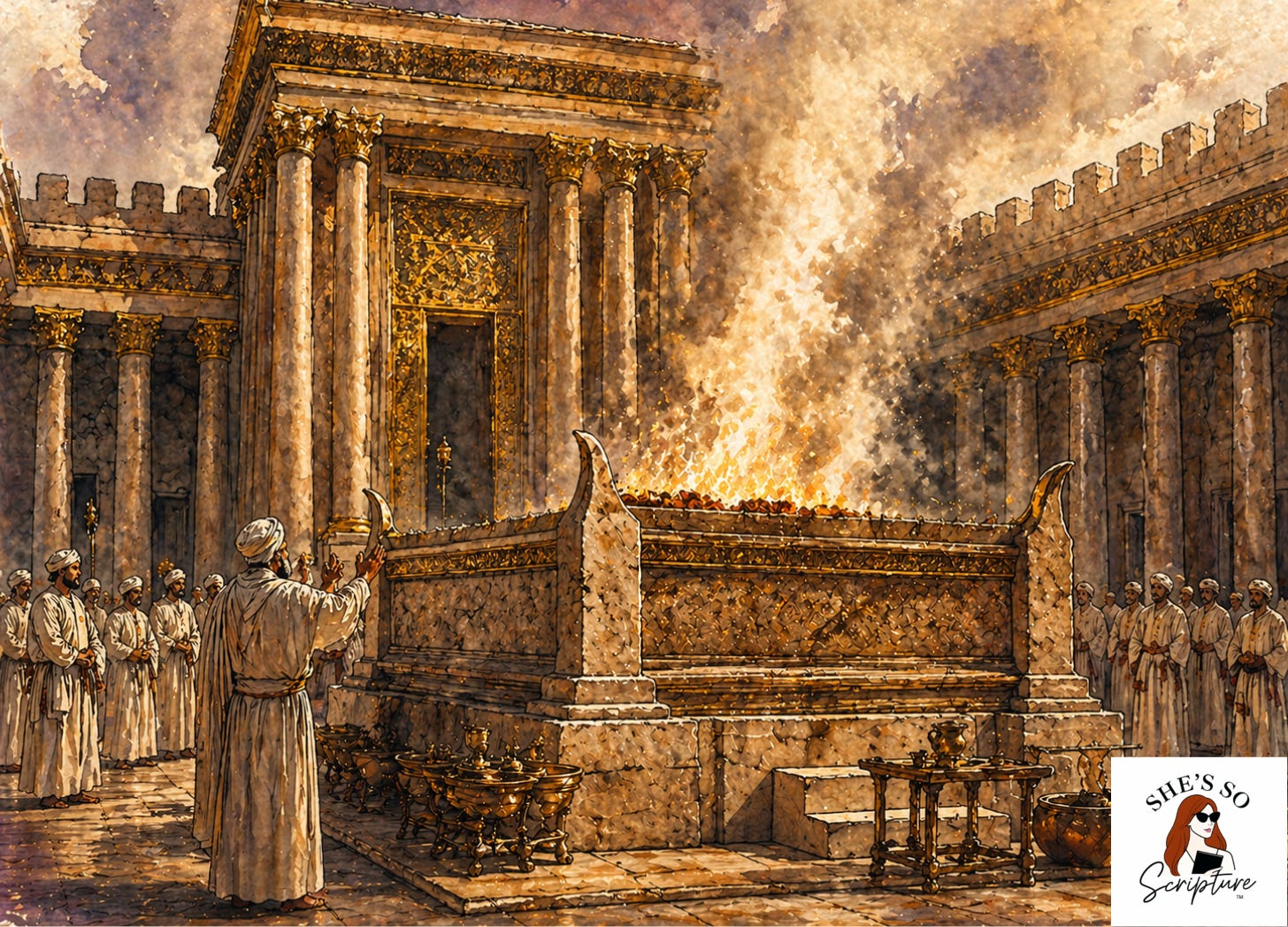
When God Tells You to Open Your Mouth
The name of this Torah portion is one word: Emor. אֱמֹר. It means “speak” or “say.” And it’s not the only Hebrew word for speaking. The word daber shows up constantly throughout Torah when God commands Moses to address the people in structured, formal speech.
Emor, from the root amar, is different in register. It tends toward direct, reported speech rather than legislative proclamation. Some commentators have noted that when God opens the priestly instructions with emor rather than daber, it suggests something about how Moses is to communicate these things: personally, directly, in a way that lands. Not just transmitted. Actually spoken.
God says to Moses: Emor to the priests.
And then He tells them everything that sets them apart.
This portion is a lot. I’ll give you a moment to brace yourself. Four chapters covering priestly purity regulations, what disqualifies a priest from service, what disqualifies an animal from sacrifice, a full sweep of the festival calendar, a blasphemy case, and laws about sacred speech. Whew! It reads like someone handed you the employee handbook and the entire company calendar at the same time. Multiple categories of law. But pull back and look at the shape of the whole thing and one thread runs through every single section: kadosh.
Holy. Set apart. Distinct.
And here’s what Emor has to say about holiness that might rearrange something in you: holiness isn’t only a moral category. It’s a relational and spatial one. To be kadosh is to be set apart for something. Consecrated. Designated. Appointed.
That changes how you read all of this.
The Priests and the Question of Fitness
The portion opens with laws specific to the kohanim, the priests, the sons of Aaron. They couldn’t just wander in and out of the sanctuary like they had a casual relationship with the presence of the Lord. There were restrictions on contact with the dead. Restrictions on who they could marry. Restrictions on what physical conditions disqualified someone from serving at the altar.
That last one gets uncomfortable fast for modern readers, and I want to address it directly. The text lists physical blemishes and conditions that would have disqualified a priest from active service at the altar. Reading it through a contemporary lens, it can feel like God is discriminating against disability. But the text itself gives us the frame we need.
Here’s what the text actually establishes: a priest with a physical blemish was not cut off from the community, not excluded from the sacred food, not stripped of identity or belonging. He just couldn’t serve at the altar in his blemished state. The distinction isn’t about his worth. One way to read this, and I find it compelling, is that the altar service was meant to picture something complete, an undivided presentation before a holy God. The priest who couldn’t serve in that function wasn’t diminished. He still ate the sacred food. He still held his priestly identity.
What the portion keeps repeating is the reason behind all of it:
“I am ADONAI who sanctifies you.”
The restrictions aren’t punishment. They’re boundary markers around something set apart.
The priests were set apart from Israel to serve for Israel. The regulations came proportional to the weight of the assignment. More access, more accountability. That’s the nature of a consecrated calling.
If you’ve ever been given a significant responsibility and had to say no to things you might otherwise have said yes to, this is the ancient version of that. The calling and the constraints come as a package deal.
The Appointed Times: Your Meetings Are Already on the Calendar
The center of Emor is Leviticus 23, and it is one of the most significant chapters in all of Torah. This is where God lays out the moedim, the appointed times.
מוֹעֵד (moed, plural moedim). The root of this word is יָעַד (ya’ad), which means to set a time or appoint a meeting. The same root gives us ohel moed, the tent of meeting, the place where God showed up to speak with Moses. When God says:
“These are the appointed times of ADONAI,”
He’s not posting a party calendar. He’s sending invitations to appointments He scheduled.
The festivals listed here: Shabbat, Passover, the Feast of Unleavened Bread, the counting of the Omer, Shavuot, Yom Teruah, Yom Kippur, Sukkot. They are not merely cultural celebrations. God calls them My appointed times. They belong to Him. He just invites His people to show up for them.
What hits me every time I read Leviticus 23 is the verb: proclaim. You shall proclaim them as holy convocations. The moedim don’t just happen to you. You have a role in declaring them, marking them, setting them apart.
The Hebrew word there is qara, meaning to call out or summon. You participate in the sanctification of time by naming it. Which means sitting it out isn’t neutral. It’s a choice.
The pattern of the moedim tells a story. The spring feasts move through redemption, separation from leaven, firstfruits, and later associated with the giving of the Spirit. The fall feasts move through an alarm call, a day of atonement, and dwelling with God.
At minimum, the connections we can trace with confidence: Yeshua was crucified at Passover time, rose at the feast of firstfruits, and the Spirit came at Shavuot. The fall feasts are still in front of us. Whether you hold every connection tightly or loosely, the shape of the calendar keeps pointing the same direction.
God doesn’t have throwaway dates. Every appointment He keeps with His people is intentional, layered, and pointing forward.
The Haftarah: When the Priests Come Back to Their Calling
Ezekiel 44 takes us to the Temple Ezekiel sees in vision, a Temple not yet built, which readers have understood variously as a future literal Temple, an idealized picture of restored worship, or both. Whatever your read on the vision itself, what God is doing inside it is striking. He’s giving instructions to a reconstituted priesthood.
The Levitical priests who had gone astray, who had led Israel into idolatry, are given specific but restricted roles. But the sons of Zadok, the ones who held their post when everyone else wandered, those priests are restored to the innermost place.
The language of Emor echoes here. Purity requirements. Marriage restrictions. Separate garments for entering the sanctuary. Instructions about what to eat and what to avoid. Ezekiel’s future priesthood is living Leviticus 21 again, in a new context. God doesn’t change His standards based on how low the bar around them has dropped.
What the Lord is saying through Ezekiel is this: faithfulness is remembered. The priests who didn’t drift when the culture drifted, who stayed in their lane when it was costly to do so, those are the ones who get the restored altar. Their distinctiveness wasn’t wasted. It was preparation.
That’s worth thinking about for a minute. Especially if you’ve ever wondered whether holding your convictions while everyone else around you loosens theirs is actually doing anything. It is. Ezekiel says so.
The Besorah: The Owner of the Vineyard
Matthew 20 opens with the parable of the workers in the vineyard, and it sits right next to Yeshua’s third and most detailed prediction of His own death and resurrection. Reading them together, the parable isn’t abstract kingdom theology. It’s preface to the cross.
The parable is familiar: a landowner goes to the marketplace at dawn, hires workers for the full day at an agreed wage, goes back at 9 AM and hires more, again at noon, at 3 PM, and finally at 5 PM, one hour before the end of the day. When evening comes and the wages are paid, everyone gets the same: one denarius. The workers who showed up at dawn are furious.
Yeshua drops the parable right after Peter asked, “We’ve left everything to follow you. What do we get?” Peter, bless him, is out here trying to negotiate a merit package with the Son of God.
And the landowner’s answer is the same as the Lord’s answer in Emor: I am doing no wrong. I am being faithful to my covenant. The question isn’t what you deserve. The question is whether you can bear my generosity toward someone else.
Here’s the connection to Emor I keep returning to: the entire festival calendar in Leviticus 23 is structured around appointed times, moments when the landowner shows up and says “come in.”
Some people have been working the vineyard since sunrise. Some people show up in the last hour of history. But the appointment is kept with everyone who comes, and the covenant He honors is the same. That’s not an explicit link the texts draw for you. It’s the shape you see when you hold them together.
The workers who grumbled weren’t wrong that they’d worked longer. They were wrong about how grace works. The parable isn’t really about labor economics. It’s about the freedom of a generous God to give as He chooses, and the posture that expects to negotiate rather than receive.
And if you want a through-line from Emor into the Besorah: kadosh isn’t earned. It’s given to those who show up to the appointment.
Word Study: Emor vs. Daber
אָמַר | Amar | ah-MAR
Hebrew: אָמַר
Transliteration: amar (verb) | emor (imperative command form)
Phonetic breakdown: ah-MAR (verb) | eh-MORE (command)
Strong’s: H559
Root: אמר (aleph-mem-resh)
Hebrew has multiple words for speech and they’re not interchangeable. The two that matter most for this portion are daber (דִבֵר | dee-BEAR) and amar (אָמַר | ah-MAR).
Daber tends toward formal, structured address. You’ll find it in legislative pronouncements and official declarations to the whole assembly. When God says “daber to all of Israel,” think town hall. Amar, the root behind emor, tends toward direct, personal speech: reporting, stating, telling someone something to their face.
That distinction is important, even if it’s subtle. Some commentators have observed that when God uses emor to open instructions to the priests rather than the more declarative daber, it suggests Moses is to speak to them personally, not just issue a directive down the chain.
The instructions that follow are demanding. They require something real from these men. And the word used to introduce them carries with it the quality of actual communication rather than top-down proclamation.
However you take that reading, the first word of this portion isn’t incidental. God is telling Moses not just what to say, but to actually speak. Personally. Directly. In a way that arrives.
Thematic Threads: What Emor Is Actually About
Running through all four chapters is a single conviction: God is the one who sanctifies, and the call to holiness is a call to be positioned with Him rather than with the common, the profane, the indistinguishable.
The priests were set apart from the people. The moedim were set apart from ordinary time. The sacred food was set apart from common meals. The offerings were to be without blemish, set apart from ordinary animals. The Name of the Lord was to be set apart from casual use.
The blasphemer at the end of Leviticus 24 is the portrait of what happens when nothing is treated as distinct, nothing is protected from profanation, nothing is held apart. Everything is just… fine. Common. Interchangeable. And that posture, Leviticus says, is its own kind of catastrophe.
In the priestly and sacrificial context of Leviticus, the opposite of kadosh is chol: common, ordinary, undifferentiated. The call of Emor is don’t let everything collapse into sameness. Some things are designated. Some times are appointed. Some callings require you to handle your ordinary life differently than people who haven’t received those callings.
And if you are in Yeshua, brought near to the Holy One, clothed in His righteousness, given access to the inner court through His priesthood, then 1 Peter 2:9 is speaking directly to you: a royal priesthood. Made kadosh.
The regulations of Emor aren’t entirely foreign to you. They’re describing the architecture of belonging that Yeshua walked into on your behalf. And the moedim are still a calendar of encounter available to anyone who wants to show up.
Emor.
Say something about that.
My Final Thoughts
This portion has a weight to it that I think we miss when we read it as a list of ancient regulations. What God is doing in Emor is teaching His people through the priesthood, through the calendar, through the restrictions on offerings and speech, that not everything is equivalent. Some things are set apart. Some people are designated. Some moments are appointments.
That’s architecture, plain and simple.
When God tells Moses to emor to the priests about their calling, He’s not being soft about the demands. He’s modeling that the weight of a high calling doesn’t require harshness in its communication. You can hold high standards with tenderness. Those two things are not in conflict, no matter how many leaders in your life may have operated like they were.
And when He lays out the moedim, He’s saying that time itself can be sanctified. That there are weeks and Sabbaths and seasons where the normal stops and the sacred takes over. Not because ordinary time is bad, but because appointed times are different. Designated. Consecrated for meeting.
You have appointments with the Lord on His calendar. Show up to them.
The last will be first and the first will be last. Not because the first didn’t matter, but because the vineyard owner is generous and the wage was never about measuring who worked harder. It was always an invitation to belong.
Emor. Speak it. Live it. Show up to the meeting.

Hebrew Letter Lesson: Samekh (סָמֶך)
The Basics
Samekh is the fifteenth letter of the Hebrew aleph-bet. Its numerical value is 60. The very name samekh comes from a root meaning “to support” or “to uphold.”
How It’s Written
ס
Spiritual Meaning
Samekh is visually distinctive in the aleph-bet. It has a circular, enclosed shape, at least in traditional script forms. Jewish mystical tradition has long read that shape as significant: the circle suggesting something surrounding, encompassing, without gap.
The Amidah prayer, the central standing prayer in Jewish liturgy, contains this phrase: Somech noflim. “He supports those who fall.” The word somech comes from the same root as samekh. And within the aleph-bet sequence, the samekh follows directly after the nun. Nun, as we’ve learned, represents the soul bowed low, the one who has fallen. Immediately after the fallen one comes the support.
That sequencing, whether intentional in the formation of the alphabet or simply a beautiful pattern in the tradition, reads like a sermon in two letters.
A Little Nugget
נֵס (nes), spelled nun and samekh, originally means banner or standard (as in Numbers 21:8, the bronze serpent on a pole). Over time, in later Jewish usage, it took on the meaning of miracle, a sign lifted high. The fallen one, held up and made into a banner: that layered meaning is worth sitting with.
Application
• Emor lands on a calendar full of appointed times, moedim where the Lord meets His people. And through all of it, Shabbat, Passover, the Omer, Yom Kippur, Sukkot, the samekh is underneath it all. God encircles every appointed time.
• He is not absent from the ordinary days between the feasts. But He wraps the circle of His presence around the moments He has designated for meeting.
• Where do you need the support of the samekh this week? Where have you been in the nun, bent, fallen, needing to be held up, and not yet seen the samekh that was already surrounding you?
Weekly Practice
Consider choosing one of the moedim you’ve encountered in this study: Shabbat, Passover, Shavuot, or any of the appointed times, and simply marking it intentionally this week. Light a candle. Stop work for an hour. Name the appointment out loud. Practice the act of proclaiming sacred time, even in a small way, and notice what shifts when you treat an ordinary moment as a designated one.
✨ New Study Now Available: Holy vs. Profane
I’ve opened up my 8-lesson study for all subscribers: Holy vs. Profane — Exploring Holiness and Profanity in Scripture.
This study traces how Scripture defines what is holy, what is common, and how those distinctions shape the way we understand God’s presence, His people, and everyday life. Each lesson has printables as well as an audio lesson.
If you’ve been wanting to go deeper into the language and framework of holiness in the Bible, it’s now available for you to begin.
Download This Portion
Download a printable version of this Torah portion along with the study and reflection questions for your study binder!
Bible Study Questions
1. Leviticus 21 opens with the word emor rather than the more authoritative daber. Why do you think God chose the more direct, personal word when addressing the priests about their demanding calling? What does that suggest about how high standards should be communicated?
2. The priests were set apart in a way that required real sacrifice: limitations on relationships, on proximity to death, on their public life. What does it mean to you personally that a calling can be accompanied by constraints?
3. Leviticus 22 repeatedly says the Lord is the one who sanctifies. What’s the difference between trying to make yourself holy and positioning yourself to be sanctified by God?
4. The moedim in Leviticus 23 are described as God’s appointed times, not merely Israel’s cultural holidays but God’s own calendar. How does it change your perspective on the biblical feasts to see them as divine appointments rather than ancient religious customs?
5. The counting of the Omer, the 49 days between Passover and Shavuot, was built into the festival calendar as an intentional season of anticipation. What would it look like to build seasons of intentional anticipation into your own spiritual life?
6. In Ezekiel 44, the sons of Zadok are restored to serve at the altar because they held their post when others wandered. What does their faithfulness suggest about the relationship between ordinary, day-to-day obedience and long-term spiritual positioning?
7. In Matthew 20, the workers who arrived first were upset not because they were underpaid, but because others received the same. How does the parable challenge a transactional view of relationship with God?
8. The blasphemer in Leviticus 24 is the portrait of speech that treats the sacred as common. Where in your own speech, about God, about His Word, about sacred things, do you need to practice greater intentionality?
Reflection Questions
9. Samekh, in the tradition, is read as a circle representing God’s surrounding support. Where in your life do you struggle to believe that His support has no gaps in it?
10. The moedim are built into time itself, recurring appointments God keeps with His people. Do you have regular, recurring moments of intentional encounter with God, or does your spiritual life tend toward the reactive and occasional?
11. Think about the word emor and the quality it suggests: speaking personally, directly, in a way that actually arrives. Is there someone in your sphere of influence who carries a significant calling and needs to hear about it that way? How might that shape the conversation?
Action Challenges
12. Read Leviticus 23 this week in its entirety. As you read, make a simple list of each moed, what it commemorates, and where you see Yeshua in it. Use this as a prayer guide for the week.
13. Practice the spirit of emor in a real conversation this week. Think of something difficult, high-standard, or weighty that needs to be said to someone you love or lead, and say it in a way that is personal and direct rather than declarative. Notice how the tone shapes the reception.
14. Take ten minutes this Shabbat, or set aside ten minutes before the week ends, to simply sit in the presence of God and say: I’m here for the appointment. No agenda. Just showing up for the moed.
Share + Support This Work
If this study stirred something in you, share it with a friend who’s been looking for Bible teaching that takes the whole Word seriously, not just the comfortable parts.
And if it left you wanting to go slower and deeper into the Word, I’ve got you! Paid subscribers get access to live Bible studies, extended studies, devotionals, theological teaching, spiritual formation practices, and a community of women who want depth without pressure or performance. If you’re ready to step further into the Word, you’re welcome inside.
👉🏻 Join The Vault.
If a paid subscription isn’t feasible right now but this space has blessed you, you can leave a one-time tip here. Every gift helps sustain this work. 💕

About the Author
Diane Ferreira is a Jewish believer in Yeshua, a published author, speaker, seminary student, wife, and proud mom. She is the founder of She’s So Scripture and She Opens Her Bible. She is the author of several books, including The Proverbs 31-ish Woman, which debuted as Amazon’s #1 New Release in Religious Humor, as well as Holy, Hormonal and Holding On.
She is currently pursuing her graduate degree in Jewish Studies in seminary, with her favorite topics being the early church and Biblical Hebrew. Diane writes and teaches from a unique perspective, bridging her Jewish heritage with vibrant faith in the Messiah to bring clarity, depth, and devotion to everyday believers.
When she’s not writing, studying, or teaching, you’ll find her curled up with a good book, crocheting something cozy, traveling, or playing her favorite video games.
Tree of Life (TLV) – Scripture taken from the Holy Scriptures, Tree of Life Version*. Copyright © 2014,2016 by the Tree of Life Bible Society. Used by permission of the Tree of Life Bible Society.
These teachings stir my heart. ❤️
Do you cry as you write these?!? Because I sure cry reading them 😭😭😭🙌🏻🙌🏻🙌🏻🙌🏻