First, I apologize that this post is later than usual. Yom Kippur just passed so everything got pushed off until today.
Now… let’s get into this week’s portion: Ha’azinu.
Moses is at the end of his life. He has led, he has prayed, he has interceded, and now he knows he won’t enter the Promised Land. What does he leave Israel with? Not a speech. Not a battle plan. A song.
“Give ear, O heavens, and I will speak; let the earth hear the words of my mouth.” (Deut. 32:1)
This is a covenant witness. Heaven and earth are called into the courtroom as testimony. Moses sings of God’s goodness, Israel’s rebellion, God’s discipline, and finally God’s mercy.
It’s blunt. Israel has been carried on God’s shoulders like an eagle with its young. He gave them honey from a crag, oil from the rock, milk, grain, and wine. And what did they do? They grew fat, complacent, and turned to idols. Moses doesn’t soften the blow: their betrayal will bring judgment. God will hide His face. Enemies will rise against them.
But the song doesn’t end in despair. God says He will not utterly forsake His people. His covenant will stand, not because Israel is faithful, but because He is faithful. Judgment may come, but mercy will have the last word. Very fitting message after Yom Kippur.
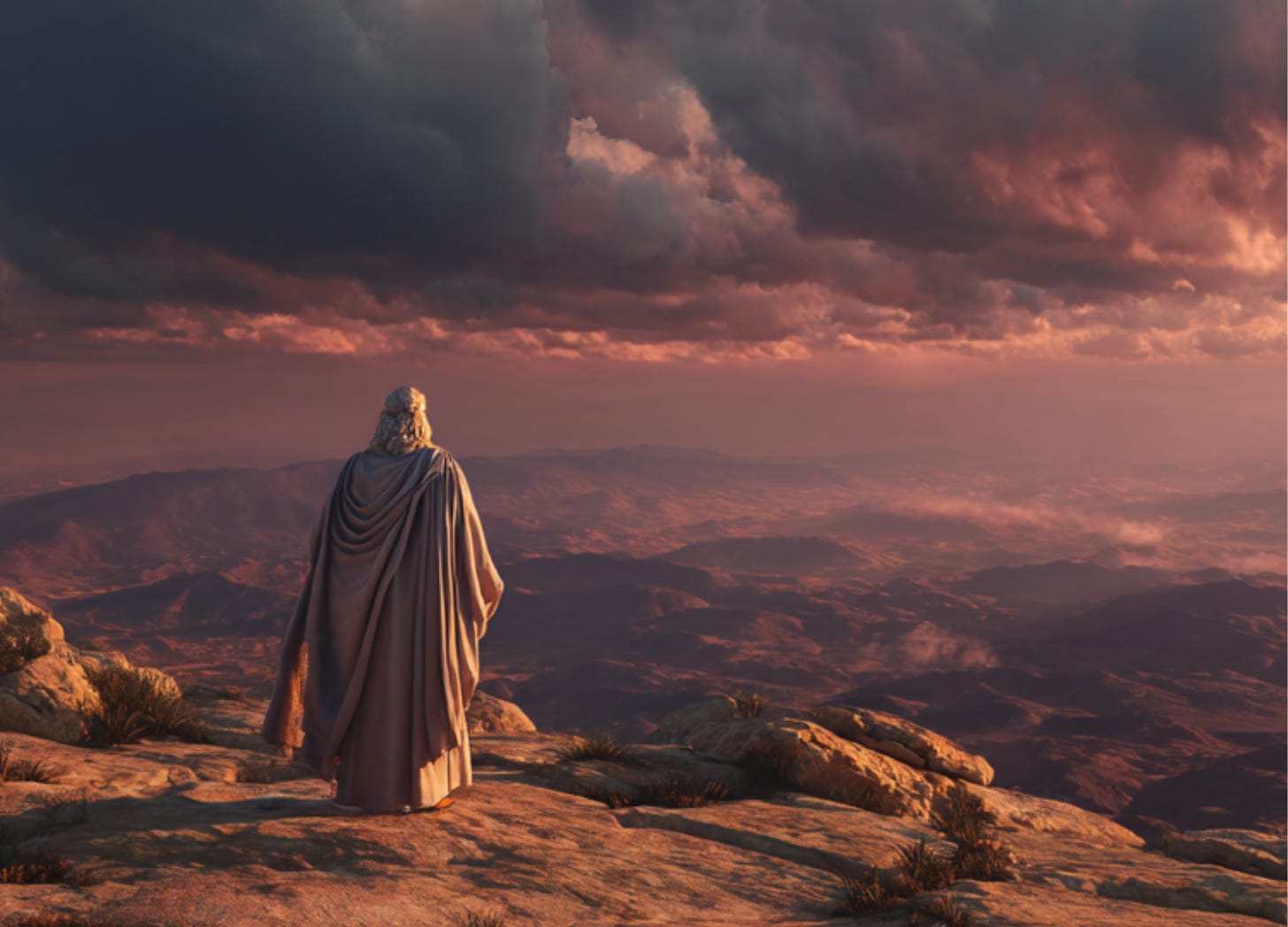
And at the end, God tells Moses to climb Mount Nebo. He can see the land, but he won’t step in. His work is complete. His final act is leaving this song, a testimony Israel can’t ignore, a melody that will echo for generations.
The Haftarah puts David’s voice beside Moses’. Where Moses sings of warning, David sings of deliverance:
“The Lord is my rock, my fortress, and my deliverer.” (2 Sam. 22:2).
David piles up images: God is his rock (tzur), his shield (magen), his stronghold, his salvation (yeshua). It’s almost like David is answering Moses’ song: “Yes, we’ve rebelled. Yes, we’ve faced enemies. But God rescues. God defends. God saves.”
And isn’t that the very tension we live in? We wander, He redeems. We fall, He lifts. We rebel, He restores. Moses sings the reality of sin. David sings the reality of salvation. And both are true.
Then Paul steps in with the Besorah and says: this song isn’t just for Israel. It’s for the nations too. In Romans 15, Paul actually quotes from the Song of Moses itself:
“Rejoice, O Gentiles, with His people.” (Deut. 32:43).
Paul is saying: the covenant has always been about more than one people. God’s plan was always global. And through Yeshua, Jew and Gentile are invited to sing the same song of redemption.
Here’s the question: What song are you singing with your life?
Moses sang a song of warning. David sang a song of rescue. Paul sang a song of inclusion. And Yeshua? He is the song made flesh.
But too many of us are still singing the old tunes:
Some of us sing the song of shame — rehearsing every failure and every fall.
Some sing the song of self-reliance — “I can do this myself, I don’t need God.”
Some sing the song of despair — “It will never get better, God has forgotten me.”
But that’s not the song of the covenant. That’s not the song Moses left us, or David declared, or Paul proclaimed.
The song of the covenant says: Yes, we stumble. Yes, there is judgment. But mercy is stronger. Redemption is greater. God is faithful.
Even Moses, standing on Nebo, not entering the land, sings anyway. Why? Because the promise is bigger than him. Because the covenant doesn’t depend on him. Because the faithfulness of God will outlive him.
And that’s the word for us: even if you don’t see the promise fulfilled in your lifetime, sing anyway. Sing His mercy. Sing His deliverance. Sing His salvation. Because your song will echo long after you’re gone.
Hebrew Letter of the Week: ש (Shin)
Sound: “Sh” as in shine (or “S,” depending on dot placement).
Numerical Value: 300
Meaning: Fire, tooth, divine presence, Shaddai.
Shin is carved onto mezuzot because it stands for Shaddai, the Almighty. It looks like three flames rising, a picture of God’s consuming fire.
ש
And Shin begins the Shema:“Shema Yisrael” … the central prayer that says: Hear. Listen. Pay attention. That’s what Moses is saying in his song. Heaven and earth, Israel and the nations, you and me: Hear this. Don’t forget. Pass it on.
Download the Portion and Study Questions