Please note that this article may contain affiliate links. As an Amazon Associate, I earn on qualifying purchases at no additional cost to you.
Life is full of crossroads. And this week’s Torah portion, Nitzavim (“You are standing”), puts Israel right at one of those defining crossroads. Moses has led them through the wilderness, carried them through rebellion, fed them with God’s Word, and now they’re about to enter the land. But before they go in, he pulls the whole community together.
And when I say the WHOLE community, I mean everybody. Leaders and elders, men and women, children and strangers, woodcutters and water-drawers (Deut. 29:9–11). Moses is making it clear: this covenant is not just for the elite or the spiritual superstars. It’s for every single person. Nobody gets to say, “That’s not for me.”
Then he warns them:
“Beware in case there is among you a man or woman, or family or tribe, whose heart turns away today from Adonai our God to go serve the gods of those nations. Beware in case there is among you a root producing poison and bitter fruit.” (Deut 29:(17)18 TLV)
That’s heavy. Moses knows that rebellion doesn’t start big… it starts small, like a hidden root. The Hebrew word here is shoresh (root). That same root language shows up later in Hebrews 12:15:
“See to it that no one falls short of the grace of God; and see to it that no bitter root springs up and causes trouble, and by it many be defiled.” (TLV)
The Torah is telling us: watch your roots, because what’s hidden WILL grow.
And then comes the climax:
“I call the heavens and the earth to witness about you today, that I have set before you life and death, the blessing and the curse. Therefore choose life so that you and your descendants may live,” (Deut. 30:19 TLV).
The Hebrew word for life, chayim, is plural. It’s not just breath in your lungs, it’s fullness: spiritual, physical, relational, eternal. To choose life means to choose God Himself, because He is the source of all life.
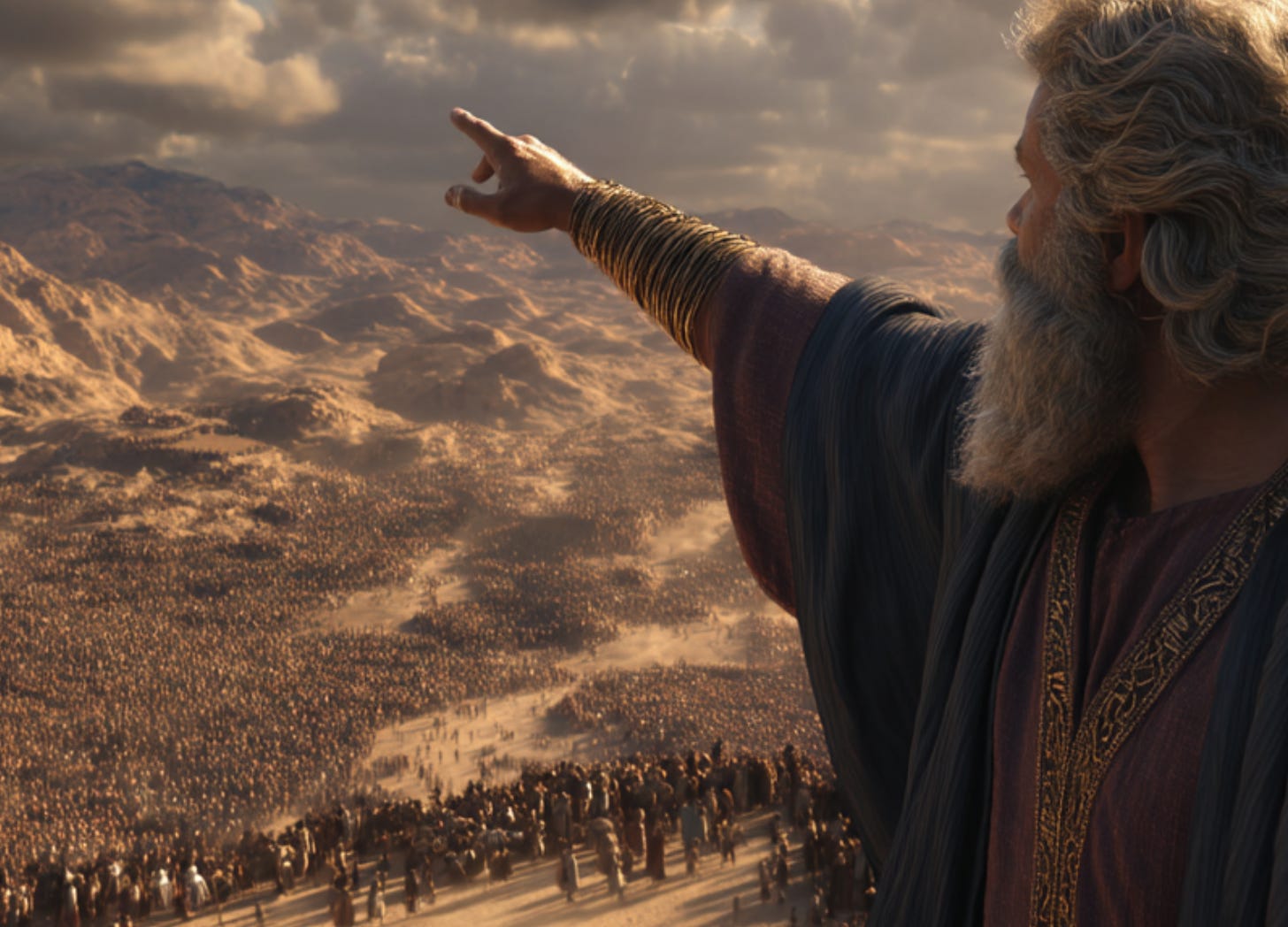
Now let’s pause here and notice something: Moses is standing on a mountain, speaking his last words before his people cross into their inheritance. Fast forward to Matthew 28. Yeshua, after His resurrection, gathers His disciples on a mountain. He too gives final words. Moses says: Choose life. Yeshua says: Go give life.
Moses says:
“No, the word is very near to you—in your mouth and in your heart, to do it.” (Deut. 30:14 TLV).
Yeshua says:
“All authority in heaven and on earth has been given to Me. Go therefore and make disciples of all nations, immersing them in the name of the Father and the Son and the Ruach ha-Kodesh, teaching them to observe all I have commanded you.” (Matt. 28:18–20 TLV).
Same heartbeat. Moses roots Israel in covenant obedience; Yeshua launches His followers to carry covenant life to the nations.
The Haftarah takes it even deeper. Isaiah 61 pictures God’s people clothed in salvation like garments. The Hebrew word is yeshuah (salvation)… yes, the very name of our Messiah.
Then in Isaiah 63:9 we read:
“In all their affliction He was afflicted. So the angel of His presence saved them.
In His love and in His mercy He redeemed them, then He lifted them and carried themall the days of old.” (TLV)
That’s covenant love. God doesn’t just hand down laws from heaven and say “figure it out.” He enters into their suffering, carries them, redeems them.
So here’s the thread we can tie all these things together with:
Moses says: choose life by loving and obeying God.
Isaiah says: God will cover you with salvation and carry you in your affliction.
Yeshua says: go carry that salvation to the world, and remember: “I am with you always.”
And the Hebrew word that holds this together is devekut (דבקות) - clinging, holding fast. Moses says: “Love the Lord your God, obey His voice, and hold fast (davek) to Him” (Deut. 30:20). Yeshua promises: “I am with you always, to the end of the age.” In other words, as you cling to Him, He clings to you.
Nitzavim is not just ancient history. It’s the same covenant call for us today. Choose life. Remember your roots. Cling to God. And then carry His life into the world around you.
Hebrew Letter of the Week: ק (Kuf)
Sound: “K” as in king
Numerical Value: 100
Meaning: Holiness, kedusha
How to Write Kuf
ק
Draw a vertical line down.
Add a curved stroke that dips below the line.
Kuf is the only letter that breaks the baseline… a reminder that God’s holiness reaches down into the mess of the world to lift us up.
Spiritual Meaning
Kuf points to kedusha (holiness). Real holiness is not about separating ourselves in pride. It’s about reflecting God’s character; being set apart for Him while still reaching into the world with His love.
Download This Portion and Study Questions
Would you like to read prior Torah Portions? You can find them here.