

Torah Portion Pinchas - Fire and Shalom
Torah: Numbers 25:10–30:1 | Haftarah: Jeremiah 1:1–2:3 | Besorah: Matthew 27:27–32

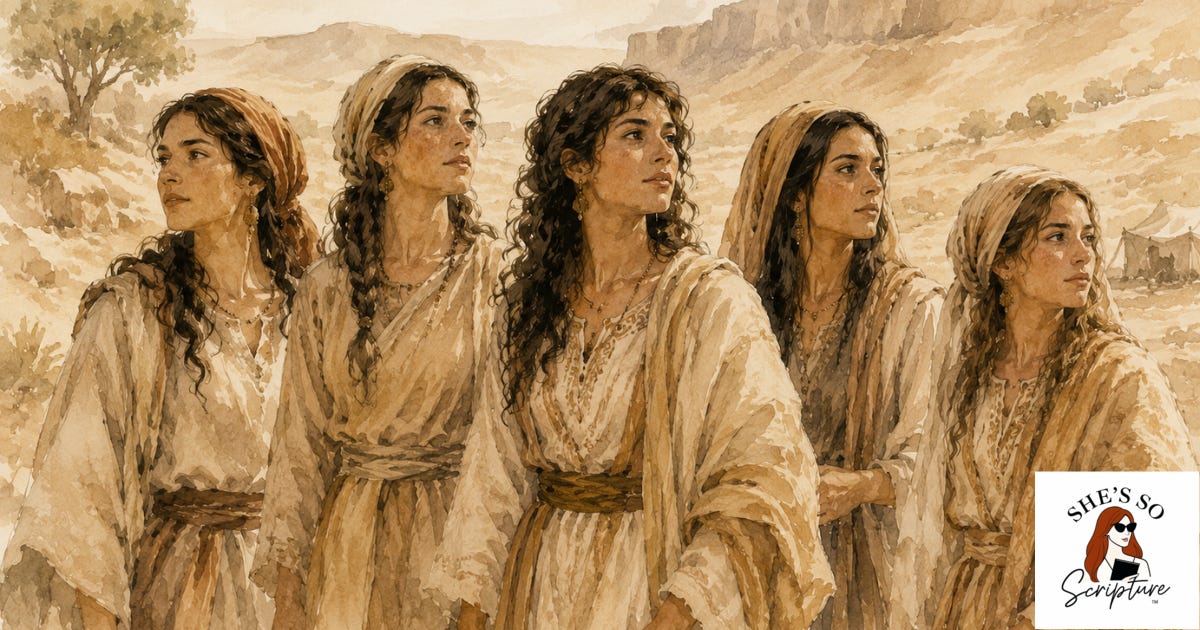
There is a man in this parasha whose name has made Bible readers uncomfortable for three thousand years.
His name is Pinchas. And what he did was drive a spear through two people.
GOD’s response? A covenant of peace.
Yeah. We’re going there.
Because Parashat Pinchas isn’t just about a priest with a spear. It’s about what happens when zeal meets covenant. It’s about women who walked up to Moses and changed the actual law. It’s about a prophet who was known before he took his first breath and still had the nerve to say he wasn’t qualified. And it’s about one man from Cyrene who never, not once, asked to carry a cross.
All of it is connected. All of it is for us. Stay with me.
Torah: Numbers 25:10–30:1
The Act That Started Everything
The parasha opens mid-crisis. Balak ended with something that honestly should have been front-page news. Israel had been seduced into worshipping Baal of Peor, a plague was tearing through the camp, and then, while Moses and the whole congregation are weeping at the entrance of the Tent of Meeting, an Israelite named Zimri walks right past all of them with a Midianite woman named Cozbi.
Not sneaking. Not apologetic. Defiant. In front of everyone.
Phinehas, grandson of Aaron, saw it. Grabbed a spear. Followed them in. The plague stopped. Twenty-four thousand people had already died.
And then GOD opens this parasha with this:
“Phinehas son of Eleazar son of Aaron the kohen has turned away My anger from Bnei-Yisrael because he was very zealous for Me among them, so that I did not put an end to Bnei-Yisrael in My zeal. So now say: See, I am making with him a covenant of shalom! It will be for him and his descendants after him a covenant of an everlasting priesthood because he was zealous for his God and atoned for Bnei-Yisrael.” Numbers 25:11–13 (TLV)
A Covenant of Shalom from an Act of Violence?
This is the verse that gives people pause. It stopped the rabbis too, and they weren’t easily stopped.
The Talmud wrestles hard with Pinchas. His action halted the plague, yes. But the rabbis in Sanhedrin 82a are careful to say his act was only justified because it happened in the moment. Had Zimri walked out of that tent, and Pinchas killed him then? Murder. The window was that specific.
There’s something important in that rabbinic restraint. The text doesn’t hold Pinchas up as a general model for anything. It holds him up as a man whose passion mirrored GOD’s own passion for covenant fidelity. GOD’s response is specific and personal: I’m making a covenant of peace with him.
The word in Hebrew is shalom, and it’s worth sitting with that tension for a minute. I always endorse sitting with tension and not avoiding it because it is there for a reason. Pinchas was given peace precisely because his act was not motivated by personal rage or self-interest. It looked like GOD’s own grief over a broken covenant. That’s a very different thing.
The Masoretes, the scribes who standardized the Hebrew text, preserved something unusual here. The vav in the word shalom here is traditionally written broken in a Torah scroll, cut through. Some read this as a theological note: even when righteous zeal is necessary, true peace can’t be born cleanly from violence. The shalom Pinchas received was real. And it was marked.
The Census and the Daughters Who Changed the Law
From fire, the Torah pivots to a census. GOD commands Moses and Eleazar to count every man able for battle. The wilderness generation is almost entirely gone. A new generation is standing at the edge of the Promised Land, and it is time to count who’s here.
And then five women walk into the story and change everything.
The daughters of Zelophehad. Their father died in the wilderness, not in Korah’s rebellion, just for his own sin, but he left no sons. Under existing law, his inheritance would pass out of his family line entirely. So Mahlah, Noah, Hoglah, Milcah, and Tirzah, all five of them, stood before Moses, Eleazar the kohen, the princes, and the entire assembled congregation and made their case.
“Our father died in the wilderness. But he was not one of the followers banding together against ADONAI with Korah, though he died for his own sin. Yet he had no sons. Why should our father’s name diminish from his family just because he had no son? Give to us property among our father’s brothers.” Numbers 27:3–4 (TLV)
Moses doesn’t argue. He doesn’t tell them to sit down and wait. He takes their case directly to GOD. And GOD says:
“The daughters of Zelophehad are right in saying you should give them property by inheritance among their father’s relatives. You are to turn over the inheritance of their father to them.” Numbers 27:7 (TLV)
Five women asked. GOD said they were right. The law was expanded.
In a world where women had almost no public legal standing, these five showed up anyway. They knew the stakes. They prepared their argument carefully. They named their father’s honor, their family’s covenant claim to the land, and the gap in the law that made no sense. And GOD used their petition to expand Torah’s reach toward justice.
The Talmud in Bava Batra 119b says the daughters of Zelophehad were wise because they knew how to time their appeal. Their case lands right after a discussion of inheritance law, at exactly the right legislative moment. They paid attention. They positioned themselves. Wisdom, it turns out, doesn’t always look like patient waiting.
Joshua’s Commissioning and the Moedim
Moses, knowing he won’t enter the land, asks GOD to appoint a leader for the people so they won’t be like sheep without a shepherd. GOD appoints Joshua. Moses lays his hands on him before Eleazar the kohen and the entire assembly. The torch passes publicly, in front of everyone.
The parasha then closes with a detailed catalog of the moedim, the appointed times: daily offerings, Shabbat, Rosh Chodesh, Pesach, Shavuot, Rosh Hashanah, Yom Kippur, Sukkot, Shemini Atzeret. Every festival, every rhythm, every required sacrifice.
This isn’t just administrative housekeeping going on here. Right before entering the land, Israel gets handed the calendar of encounter with GOD again. Not just a territory. A whole way of living inside time, shaped around holiness and appointed meetings with the One who called them.
Haftarah: Jeremiah 1:1–2:3
A Man Who Was Known Before He Was Formed
The connection between Pinchas and Jeremiah isn’t obvious at first. But listen to how GOD speaks to Jeremiah and then think about what GOD said about Pinchas.
To Pinchas: you were zealous for Me.
To Jeremiah: I knew you before you were formed.
Both men are called by something that precedes them entirely. Both are given a role that feels vastly larger than themselves. Both are marked by GOD before the world has a chance to weigh in.
“Before I formed you in the womb, I knew you, and before you were born, I set you apart— I appointed you prophet to the nations.” Jeremiah 1:5 (TLV)
The Hebrew word for ‘set you apart’ here is kadashticha, from the root kadosh. Holiness. Consecration. Set aside for a specific purpose before you existed. Jeremiah was kadosh before he breathed.
And Jeremiah’s response is honestly one of my favorite moments in all of Scripture:
“Alas, Adonai Elohim! Look, I don’t know how to speak! For I’m still a boy!” Jeremiah 1:6 (TLV)
Do not say you are only a boy, GOD tells him. To everyone I send you, you will go. GOD then reaches out and touches his mouth. The word of GOD physically placed in a mouth that just said it wasn’t qualified.
Pinchas was given a covenant. Jeremiah was given an appointment. In both cases, the calling showed up before the person felt ready. In both cases, GOD supplied the gap.
Besorah: Matthew 27:27–32
The One Who Bore It
Matthew places us in the Praetorium. Yeshua has already been condemned. The soldiers are gathered. And what follows is brutal.
“Then the governor’s soldiers took Yeshua into the Praetorium and gathered the whole cohort around Him. They stripped Him and put a scarlet robe around Him. And after braiding a crown of thorns, they placed it on His head and put a staff in His right hand. And falling on their knees before Him, they mocked Him, saying, ‘Hail, King of the Jews!’ They spat on Him, and they took the staff and beat Him over and over on the head. When they finished mocking Him, they stripped the robe off Him and put His own clothes back on Him. And they led Him away to crucify Him. As they came out, they found a man from Cyrene, Simon by name. They forced him into service, to carry Yeshua’s cross-beam.” Matthew 27:27–32 (TLV)
Simon of Cyrene gets five words. A man from Cyrene. Forced. To carry the cross-beam.
He didn’t volunteer. He didn’t show up that morning with a theology of suffering and a sense of divine purpose. He was just there. Minding his own business on a road. In Jerusalem for Passover most likely. And that was enough for history to conscript him.
Pinchas was zealous for GOD and acted. The daughters of Zelophehad prepared their case and showed up. Jeremiah tried to say he wasn’t qualified. Simon had no say at all.
Four different ways GOD’s purposes intersect with human lives. A covenant. A legal petition that changes Torah. A calling that lands before readiness. A compulsion with no warning and no choice.
And over all of it, Yeshua: the High Priest in the order of Melchizedek, the one whose zeal for the Father’s house consumed Him, the one appointed before the foundation of the world, the one who carried what none of us ever could.
Thematic Threads
1. Zeal That Looks Like GOD’s Zeal
The word translated ‘zealous’ in Numbers 25:11 is qanna, related to the word used for GOD Himself throughout Torah. English translations often render it ‘jealous,’ which lands wrong for our modern ears. But the covenant context is everything. Qin’ah is the fierce, exclusive devotion of a party who has bound themselves to a relationship, GOD protecting what He has committed Himself to.
Pinchas wasn’t operating from personal anger. He was operating from something that looked like GOD’s own grief over covenant breach. When Yeshua overturned the tables in the Temple courts, John 2:17 records His disciples remembering that ‘zeal for Your house will consume Me.’ That’s Psalm 69, a psalm of one who suffers for GOD’s sake. The thread runs straight through.
2. Covenant as the Shape of GOD’s Response
GOD’s response to Pinchas is a brit, a covenant. That word is everywhere in Torah, but covenants there are almost always corporate. This one is personal. GOD makes a covenant with one man in the middle of a plague.
It anticipates the covenant Yeshua establishes through His own blood. Individual and communal at once. Costly, personal, and permanent.
3. Who Gets to Inherit?
The daughters of Zelophehad expand the answer. So does Yeshua. The inheritance of the kingdom is not limited by gender, lineage, or whatever legal precedent was on the books last Monday. GOD extends His instruction to make room for those the system forgot.
Paul will say later that in Yeshua there is neither Jew nor Greek, slave nor free, male nor female. That’s not the erasure of identity. It’s the expansion of inheritance. Their story anticipates the way Scripture repeatedly shows God ensuring that covenant inheritance is not lost because of human limitations.
4. Called Before You Were Ready
Jeremiah wasn’t ready. The daughters had no legal precedent. Pinchas acted in a moment nobody planned for. Simon had no warning at all.
GOD’s call does not wait for your readiness. It arrives. You respond to it, or you don’t.
Verse Mapping Aid
Word Study: Qanna / Zealous (קַנָּא)
The Hebrew root behind ‘zealous’ in Numbers 25:11 is qin’ah (קִנְאָה), and the adjective applied to GOD is qanna (קַנָּא). English translations tend to reach for ‘jealous’ when this word shows up with GOD as the subject, and I understand why, but it doesn’t quite get there. Jealousy in English sounds petty. Qin’ah in Hebrew sounds covenantal.
Pronunciation: qin-AH (noun) / qan-NA (adjective). Stress falls on the final syllable in both.
In covenant context, qin’ah is the passionate, exclusive devotion of a party who has bound themselves to a relationship, someone fiercely protective of that bond’s integrity. It appears in the Ten Words: ‘I, the LORD your GOD, am a qanna GOD’ (Exodus 20:5). GOD is not threatened or insecure. He is ferociously committed to a relationship He initiated and will not let go of lightly.
When Pinchas acts at Shittim, GOD says his passion mirrored that same exclusive devotion. The covenant of shalom reflects God’s affirmation that Pinchas’ zeal aligned with His concern for covenant fidelity. That is not a small thing.
For a rich Jewish source on the theological complexity here, see the discussion in Talmud Yerushalmi, Sanhedrin 9:7, where the rabbis carefully fence off when zealotry is even permissible. They were not handing out blank checks for religious violence. But they also were not willing to strip qin’ah of its weight as a divine attribute, and neither should we.
My Final Thoughts
Pinchas is a hard parasha. It’s supposed to be.
It holds zeal and shalom in remarkable tension. Justice and inheritance in the same chapter. The weight of calling and the ordinary shock of getting conscripted by GOD on a random Friday.
The daughters of Zelophehad are my favorites here, if I’m honest. They didn’t wait for someone to notice the gap in the law. They walked up to the front of the assembly, all five of them, and made their case. GOD said they were right. The law was expanded. Just like that!
There’s something in that for anyone who has ever been told to wait their turn, to be patient about a wrong that was just the way things were. Sometimes the faithful thing is to walk up to Moses.
Jeremiah’s honesty is a gift too. ‘I don’t know how to speak. I’m still a boy.’ GOD doesn’t argue him into readiness. GOD touches his mouth and says go. The gap between your sense of inadequacy and what you’re actually called to is GOD’s problem to solve, not yours.
And Simon of Cyrene. No sermon. No applause. Just a man who was there, who got pressed into service, who carried what was put in front of him. Sometimes faithfulness looks like that. Not zeal, not a bold legal petition, not a prophet’s fire. Just carrying what showed up.
GOD is faithful to all of them. Pinchas, Mahlah and her sisters, Jeremiah, Simon. And Yeshua above all. The One whose zeal for the Father consumed Him, who inherited everything and gave it away so we could share in it.
That’s the covenant of shalom. Marked, real, and purchased at a cost none of us could pay.

Hebrew Letter Lesson - Shin (שׁ)
שׁ
Name and Shape: Shin (pronounced sheen, rhymes with seen). The 21st letter of the Hebrew alphabet. Its numerical value is 300. The shape of Shin is three prongs rising from a common base. In ancient pictographic tradition, Shin represented either flames of fire or teeth. Both work: fire consumes and refines; teeth break down what can’t be swallowed whole.
What Shin Means: Shin is the first letter of shalom (שָלוֹם, peace), shaddai (שַדַּי, the Almighty), Shekinah (שְכִינָה, the indwelling presence of GOD), and shamayim (שָמַיִם, heaven). In a very real sense, Shin opens the vocabulary of GOD’s presence and GOD’s peace. It also opens the word sheker (שֶקֶר), falsehood. The letter holds both, which should give us all a moment of pause.
Shin and This Parasha: The covenant of shalom in Parashat Pinchas begins with Shin. The shalom given to Pinchas wasn’t ceremonial or cheap. It was the genuine article: covenantal peace forged through fire. And fire is exactly what the Shin is made of.
Shin on the Mezuzah: A Shin is printed on the outside of every mezuzah, the small case Jews affix to their doorposts in obedience to Deuteronomy 6. Some understand it as an abbreviation for Shaddai, the Almighty. Others for Shomer Daltot Yisrael, Guardian of the Doors of Israel. Every time a Jewish person touches the mezuzah going in or out, they touch a Shin. The fire of GOD, marking the threshold of ordinary life.
Shin and the Priestly Blessing: Kohanim form the letter Shin with their hands during the Priestly Blessing. Both hands raised, fingers spread in a specific pattern. If that gesture looks familiar, yes, Leonard Nimoy borrowed it from the synagogue he grew up in. The Vulcan salute is a Shin. You’re welcome.
A Little Nugget
Later Jewish tradition holds that in the world to come, the Shin will gain a fourth prong, completing a shape not quite present in this age. The four-pronged Shin already appears on the head tefillin. The rabbis read this as a hint that what we see now is still being written. Shalom that is real but partial. Peace that is genuine but not yet whole. Pinchas received a covenant of shalom that was marked and true. But the full shalom, the unbroken vav, the four-pronged letter, comes with the one who said ‘Peace I leave with you, My shalom I give you’ (John 14:27, TLV). The fire is real. The peace is real. And both are still being completed.
Application
• Where in your life do you feel the broken vav, peace that is real but not yet whole? What would it mean to trust that GOD is not finished writing that part of the story?
• Shin opens shalom. It also opens sheker, falsehood. This week, pay attention to what the fire of GOD might be refining in your own speech or your internal narrative.
• The Shin is on the doorpost. Holiness is not reserved for the sanctuary. Where is GOD asking you to mark the threshold of ordinary space?
Weekly Practice
Choose one of the five daughters of Zelophehad and spend some time with her name this week. Mahlah means sickness or affliction. Noah means movement or wandering. Hoglah means partridge, or some say limping. Milcah means queen. Tirzah means she is pleasing. Five women with five different names walked up together and changed a law. Their individual identities didn’t dissolve into the group petition. Each of them was known.
This week, ask GOD what you are afraid to bring to the front of the assembly. Write it down. Then ask: what would it mean to bring it anyway?
Bible Study Questions
1. Numbers 25:11 says Pinchas was ‘very zealous for Me.’ What does the text indicate about what motivated his action? How does that differ from religious zeal driven by anger or ideology?
2. How does the everlasting priesthood promised to Pinchas help us understand the significance of priesthood in Scripture?
3. The Masoretes preserved the broken vav in the word shalom in Numbers 25:12. What do you think the Torah is signaling by preserving that scribal detail?
4. The daughters of Zelophehad built their case on three things: their father’s honorable death, the absence of a male heir, and the covenant promise of land to his family. What does GOD’s response in Numbers 27:7 tell us about how GOD interacts with human legal systems and petitions?
5. Jeremiah 1:5 uses the language of being ‘set apart’ before birth. What Hebrew root is behind that word, and where else does this vocabulary appear in Torah? What does it mean theologically for someone to be set apart before they even exist?
6. In Matthew 27:32, Simon of Cyrene is ‘forced into service’ to carry Yeshua’s cross-beam. How does that involuntary conscription into a sacred moment reflect anything about how GOD’s purposes intersect with ordinary human lives in this parasha?
Reflection Questions
7. Pinchas acted. The daughters acted. Jeremiah was called. Simon was compelled. Have you experienced a calling that felt chosen, or one that felt like you had no say? What did you do with the moment?
8. The daughters of Zelophehad walked to the front of the assembly instead of waiting for the system to notice the gap. Is there something you’ve been waiting for permission to bring before GOD or community? What would it mean to bring it anyway?
9. Shin opens both shalom and sheker, peace and falsehood. What does it mean that the same letter carries both? Where in your own life are peace and falsehood close enough to cause confusion?
10. The covenant of shalom given to Pinchas has a broken vav, a mark of something still incomplete. How does your own experience of shalom feel like something real but still becoming? What would ‘complete’ even look like?
11. GOD told Jeremiah ‘I am with you to deliver you’ before sending him into hard places. Has that promise carried you through a season where the calling felt larger than your capacity? What happened?
Action Challenges
12. Read Psalm 69:9 and John 2:17 together this week. These verses connect Pinchas’s zeal to Yeshua’s zeal for the Temple. Write a paragraph about what ‘zeal for GOD’s house’ would look like in your own home or community context.
13. The daughters of Zelophehad appealed to Moses, who took it to GOD, and GOD changed the law. Is there a justice issue in your community that needs a Zelophehad moment? Spend time in prayer asking GOD what you’re called to bring forward.
14. Place your hand on your doorpost this week and say the word Shin out loud. Let it be a small physical reminder that shalom and fire are not opposites. GOD’s presence is with you at the threshold.
Download This Portion
Download a printable version of this Torah portion along with the study and reflection questions for your study binder!
Join the Conversation
If this study stirred something in you, share it with a friend who is still waiting for permission to walk up to the front of the assembly.
And if it left you wanting to go slower and deeper into the Word, I’ve got you! Paid subscribers get access to live Saturday Zoom Bible studies, extended Torah portion studies, audio lessons, devotionals, theological teaching, spiritual formation practices, and a community of people who want depth without pressure or performance. If you’re ready to step further into the Word, you’re welcome inside. 👉🏽 Join The Chavurah.
If a paid subscription isn’t feasible right now but this space has blessed you, you can leave a one-time tip here. Every gift helps sustain this work. 💕

About the Author
Diane Ferreira is a Jewish believer in Yeshua, a published author, speaker, seminary student, wife, and proud mom. She is the founder of She’s So Scripture and She Opens Her Bible. She is the author of several books, including The Proverbs 31-ish Woman, which debuted as Amazon’s #1 New Release in Religious Humor, as well as Holy, Hormonal and Holding On.
She is currently pursuing her graduate degree in Jewish Studies in seminary, with her favorite topics being the early church and Biblical Hebrew. Diane writes and teaches from a unique perspective, bridging her Jewish heritage with vibrant faith in the Messiah to bring clarity, depth, and devotion to everyday believers.
When she’s not writing, studying, or teaching, you’ll find her curled up with a good book, crocheting something cozy, traveling, or playing her favorite video games.
Tree of Life (TLV) – Scripture taken from the Holy Scriptures, Tree of Life Version*. Copyright © 2014,2016 by the Tree of Life Bible Society. Used by permission of the Tree of Life Bible Society.
I'm loving all I'm finding in your resources. Thank you so much for your deep dives and critical thinking across Scripture. Would you mind sharing your source for your nugget on shalom? I've been studying it for the past few years and yet I've seen new things this week through your writing and the Hebrew study resource tool. I'd like to keep digging if you don't mind pointing me in the right direction.
“Qin’ah is the fierce, exclusive devotion of a party who has bound themselves to a relationship, GOD protecting what He has committed Himself to.” Oh, how I love this reminder of God’s faithfulness to complete what He begins! (Philippians 1:6)