


We’re in the Ten Days of Awe, that sacred stretch between Rosh Hashanah and Yom Kippur. It’s the season when the shofar shakes us awake and God whispers, “Return to Me.”
And the Haftarah this week opens with that cry:
“Shuvah Yisrael ad Adonai Elohekha” — “Return, Israel, to the Lord your God.” (Hosea 14:2)
That’s not some polite suggestion. That’s a desperate plea from the very heart of God: Come home. Stop running after lovers who will never love you back. Stop wounding yourself. Come back where you belong.
Hosea: A Scandalous Love Story
Hosea’s whole life was a sermon. God tells him: “Go, take for yourself a wife of harlotry” (Hosea 1:2). He marries Gomer, a woman marked by zenunim (זְנוּנִים) - not just a mistake, but a pattern of unfaithfulness.
They have three children, and their names themselves preach:
Yizre’el (יִזְרְעֶאל – God sows) — reminding Israel of the bloody judgment at Jezreel.
Lo-Ruchamah (לֹא רֻחָמָה – No mercy) — a sign that compassion will be withheld.
Lo-Ammi (לֹא עַמִּי – Not my people) — a declaration that the covenant has been fractured.
Can you imagine naming your children like that? God made Hosea feel in his own flesh what divine heartbreak looks like.
And sure enough, Gomer runs after other lovers. She thinks they’ll provide her with security and gifts, but instead, she ends up stripped, abandoned, and enslaved.
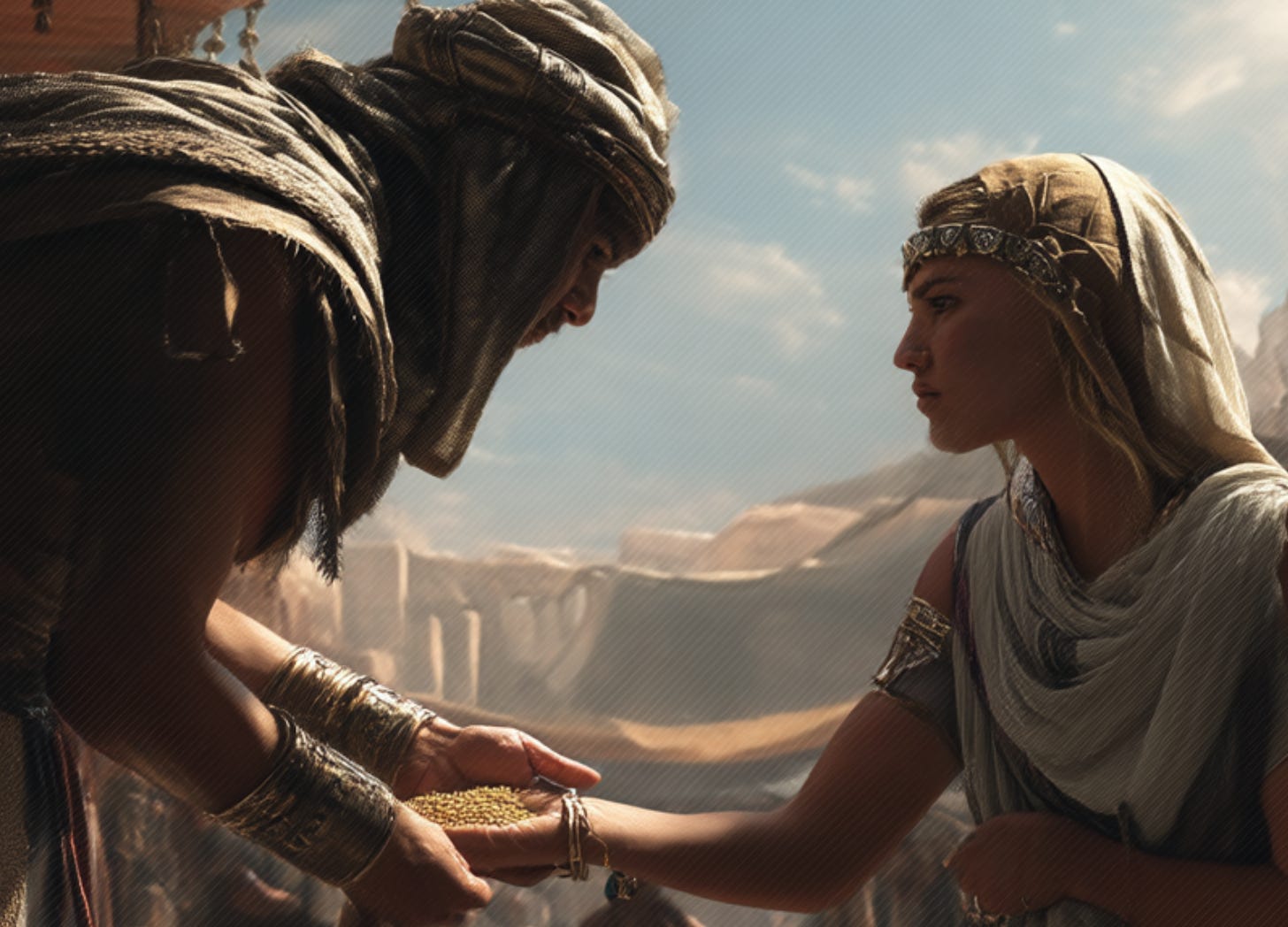
Here comes the scandal of grace: Hosea goes and buys her back. Fifteen shekels of silver and a measure of barley (Hosea 3:2). He redeems her. He restores her.
The Hebrew word is geulah (גְּאוּלָה): redemption at a price. Hosea pays it for an unfaithful wife. God pays it for an unfaithful people. And Yeshua pays it for an unfaithful world; not with silver or barley, but with His own blood.
That’s covenant love. That’s chesed (חֶסֶד): mercy, kindness, steadfast love that doesn’t quit. Even when we run, God says, “You are still mine.”
Micah: God’s Mercy Runs Deeper
The Haftarah ends with Micah’s breathtaking words:
“Who is a God like You, pardoning iniquity… You will cast all our sins into the depths of the sea.” (Micah 7:18–19)
God doesn’t forgive with reluctance. He’s not rolling His eyes, sighing, “Here we go again.” Micah says He delights in mercy.
That word again? Chesed. God’s covenant mercy isn’t stingy. It’s abundant. It’s joyful. He takes pleasure in throwing our sins into the sea, never to be dragged back up.
Vayelech: Moses’ Farewell
Now let’s look at the Torah portion. Moses is finishing his race. He’s 120 years old, and God has told him he won’t cross the Jordan. But he leaves Israel with this charge:
“Be strong and courageous. The Lord your God goes with you; He will never leave you nor forsake you.” (Deut. 31:6)
He writes down the Torah, places it beside the Ark, and warns Israel they will stray. Yet even in that warning, he points to return. The Hebrew word is shuv — turn back, return. God knows our weakness, but He also knows His mercy will call us home.
Yeshua’s Drash: The Prodigal Son
Then we turn to the Besorah, where Yeshua tells the story that ties it all together. A son demands his inheritance early, runs off, wastes it all, and hits rock bottom feeding pigs. And then it says: “He came to himself.” That’s teshuvah; a turning, a returning.
He goes back home rehearsing his apology, but the Father runs to him, throws His arms around him, clothes him, restores him, and throws a feast.
That’s Hosea and Gomer. That’s Israel and God. That’s us and Yeshua. The scandal of grace: the faithful One redeeming the unfaithful, not because we earned it, but because He loves us.
Shabbat Shuvah in the Days of Awe
Here’s the truth, friends. We are all Gomer. We are all the prodigal. We’ve all chased false lovers…money, approval, success, politics, distraction…thinking they’ll satisfy. But they don’t. They leave us empty.
And God is saying: Shuvah. Return. Not later. Not once you’ve cleaned yourself up. Now. While the gates of mercy are open.
The word of this season is teshuvah (תשובה): return. Not just turning away from sin, but turning back to Him.
The sound of the shofar is still echoing. The Father is still waiting. The Redeemer has already paid the price. The only question left is: Will you come home?
If you want to learn more about Hosea and Gomer, visit our blog post!
We also have a detailed post on the Prodigal Son for you!
Hebrew Letter of the Week: ר (Resh)
Sound: “R” as in run (a softer sound than the English “R”; in Hebrew it’s more from the throat).
Numerical Value: 200
Meaning: Head, beginning, poverty, humility.
How to Write Resh
ר
Start at the top left, draw a horizontal line right.
Curve it down into a vertical stroke.
Resh is simple… one smooth curve, no sharp corners. Unlike its look-a-like Dalet (ד), Resh has no little “tag” or corner; it’s rounded, symbolizing humility.
Spiritual Meaning of Resh
The word resh (רֵאשׁ) comes from rosh; head, beginning, first. It reminds us of leadership and direction. But in Hebrew thought, Resh also hints at reshut (poverty, need). Together, Resh is the paradox of the head who bows low.
It’s a reminder that true leadership in God’s kingdom isn’t about pride or position, it’s about humility. It looks like a person with their head bowed. The head that lowers itself is the one God exalts.
A Little Nugget
Resh teaches us that God begins with the humble. “God opposes the proud but gives grace to the humble” (James 4:6). In the same way, the story of Hosea, the cry of Micah, the call of Moses, and Yeshua’s parable all remind us that the way back to God starts with humility; a bowed head and a repentant heart.
Download the Portion and Study Questions

🔥 Want to go deeper?
Step beyond the surface and into the Word with our paid subscriber community. When you upgrade, you unlock The Vault — and if you’re ready to go all in, Founders Level brings even more.
🔐 Inside The Vault:
💛 Weekly devotionals with depth and application
🌿 Monthly teachings on the Jewishness of Jesus
💬 Private community chats
🎁 30% off all digital products
🚨 Access to our Peppery Bible Study Group in Signal
👑 Founders Level includes everything in The Vault, plus:
🎧 Weekly audio teachings
💻 Monthly Bible Study Q&A Calls
📓 Printable studies and reflection tools
⏰ Early access to studies and new digital products
🖊️ Exclusive journal
💸 50% off all digital products + 10% off physical merch
👉🏽 Join now to unlock your access and walk deeper in truth, boldness, and biblical beauty.