


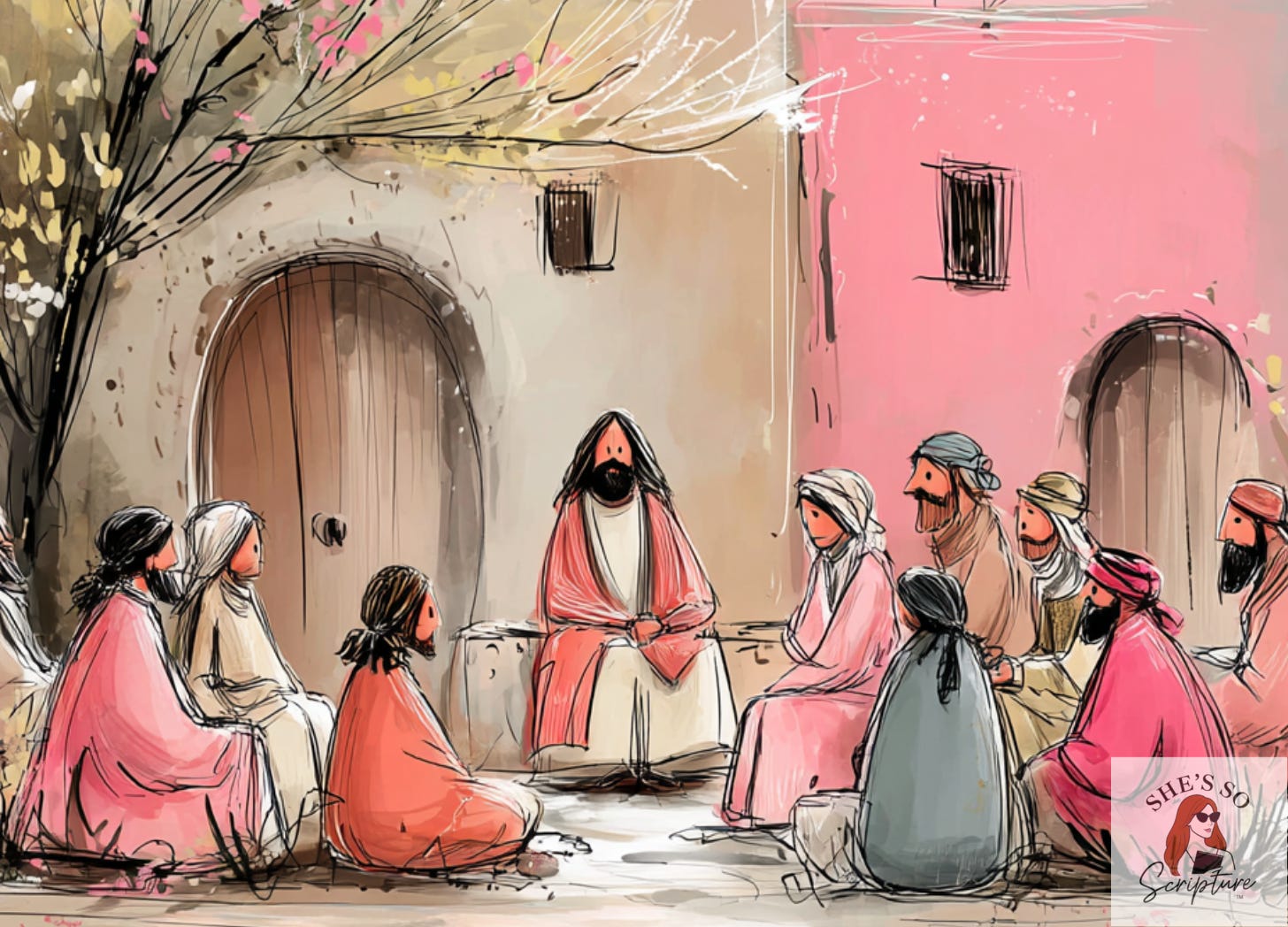
This verse gets used everywhere. People quote it as if Jesus was handing out spiritual affirmations and reminding everyone to look within. It sounds lovely in English, but that reading does not survive once you step into the scene where Jesus actually says it.
He was talking to the Pharisees.
Not His disciples.
Not a crowd of people eager to follow Him.
A group that seemingly resisted everything He was doing.
So whatever this verse means, it is not a warm encouragement. It is a correction wrapped in revelation. And once you see that, the whole thing reads differently.
The Pharisees Wanted a Kingdom With Sparkle
When the Pharisees asked Jesus when the kingdom of God would arrive, they were imagining something loud, visible, and politically satisfying. They wanted proof. They wanted Rome gone. They wanted God to move in a way that fit their expectations.
Jesus tells them they are not going to pinpoint the kingdom by watching for dramatic signs. It will not arrive the way they assume it should. Then comes the line everyone loves to quote.
“The kingdom of God is within you.”
Except the Greek does not support that translation when it is put in the context of the surrounding text. The phrase can mean “in your midst” or “right here among you.” In other words, Jesus is saying the kingdom is already present because He is present. They are looking straight at the work of God, and they still cannot recognize it.
Yeshua was talking to the Pharisees, a collective group, not individuals privately.
The broader context in Luke 17 is about watching for external signs of the Kingdom, and Yeshua is pointing out that the Kingdom isn’t coming in a way that can be observed like that because it’s already present.
Rabbinic thought often frames the Kingdom of Heaven as a reality that begins inwardly with submission but is ultimately communal and external in impact.
This is not an internal empowerment moment. It is a call to open their eyes.
Many translations DO have it correct.
The Tree of Life version (one of my favorite versions AND one of its editors is a friend and one of my professors in seminary) says:
Now when Yeshua was asked by the Pharisees when the kingdom of God would come, He answered them and said, “The kingdom of God does not come with signs to be seen. Nor will they say, ‘Look, here!’ or ‘There!’ For behold, the kingdom of God is in your midst.”
Luke 17:20-21 (TLV)
The ESV says:
Being asked by the Pharisees when the kingdom of God would come, he answered them, “The kingdom of God is not coming in ways that can be observed, nor will they say, ‘Look, here it is!’ or ‘There!’ for behold, the kingdom of God is in the midst of you.”
But then we have the NKJV:
Now when He was asked by the Pharisees when the kingdom of God would come, He answered them and said, “The kingdom of God does not come with observation; nor will they say, ‘See here!’ or ‘See there!’ For indeed, the kingdom of God is within you.
Interestingly, in Bible Gateway, they added a footnote that says “in your midst”. That makes my heart happy.
Translations can vary, but here’s the thing: every Bible version reflects a set of interpretive choices. It’s not just swapping words; it’s deciding what the author meant in context.
Some translations, like the Tree of Life Version (TLV), English Standard Version (ESV), and New International Version (NIV), render Luke 17:21 as “the Kingdom of God is in your midst.” That fits the Greek word entos AND the larger scene, especially when you consider who Yeshua was speaking to, the Pharisees, and how He was revealing Himself right in front of them.
Other versions, such as the New King James Version (NKJV), translate it as “within you.” That’s grammatically possible, but it doesn’t quite line up with the moment, because Yeshua wasn’t describing an inner, spiritual reality among people who were actively opposing Him.
Translation isn’t just about matching words; it’s about meaning. It’s grammar, context, audience, and theology all working together. In this case, the clearest reading points to Yeshua’s presence, not an invisible feeling inside His critics, but the literal King standing right there among them.
