


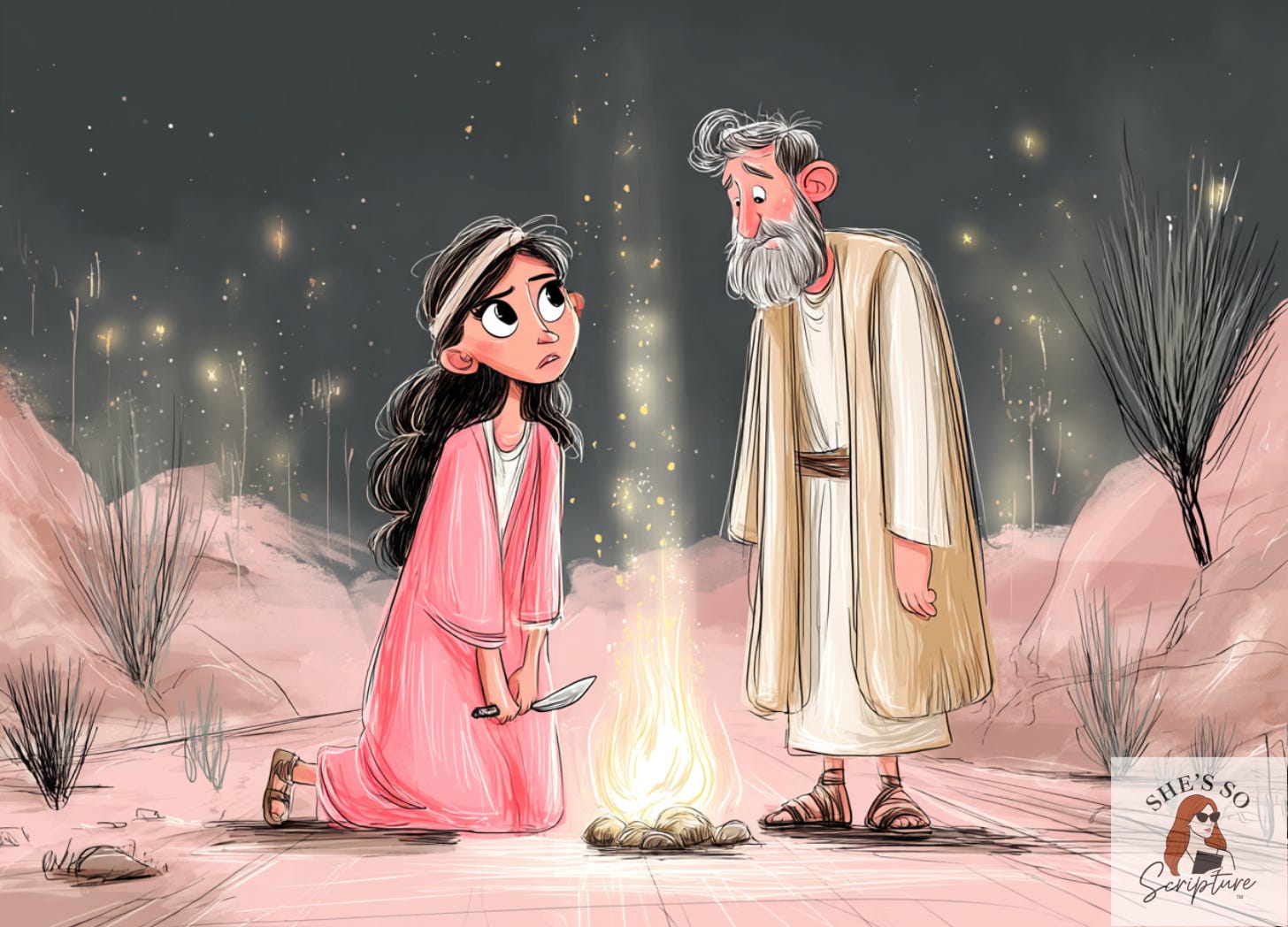
“It happened along the way, at a lodging place, that Adonai met him and sought to kill him! But Zipporah took a flint, cut off the foreskin of her son, and threw it at his feet, saying, “You are surely a bridegroom of blood to me.” She said, “A bridegroom of blood” because of the circumcision. Then He let him alone. — Exodus 4:24–26 (TLV)
This is one of the most startling moments in Scripture. Moses is fresh off the burning bush encounter, on his way to Egypt with a divine assignment, when out of nowhere the Lord meets him on the road and almost kills him.
Wait… what?
God had just called Moses. Empowered him. Sent him. And now He’s about to strike him down? It sounds like a contradiction until you realize what’s actually happening.
The Covenant Moses Forgot
To understand this, we have to rewind back to the beginning. When the Lord appeared to Abraham in Genesis 17, He established the covenant that would define the entire story of Israel.
“This is My covenant that you must keep between Me and you and your seed after you: all your males must be circumcised. You must be circumcised in the flesh of your foreskin, and this will become a sign of the covenant between Me and you.” — Genesis 17:10–11 (TLV)
That mark wasn’t optional, it was identity. Circumcision said, “We belong to God.” To neglect it was to step outside His covering (Genesis 17:14).
Somewhere along the way, Moses had never circumcised his son. Maybe he hesitated because Zipporah, his Midianite wife, found the practice foreign. Maybe he just got complacent.
Whatever the reason, the man who was about to stand before Pharaoh as God’s representative had ignored the very sign that proved his own family was part of the covenant.
So God stopped him. Not because He’d changed His mind about the mission, but because Moses wasn’t aligned with it yet.
Before Moses could speak for God, his life had to reflect God.
When Calling Collides with Covenant
This is one of those uncomfortable truths about walking with God: He doesn’t separate mission from holiness. He’ll pause your progress before He lets you carry His name without His character.
Israel’s deliverer couldn’t lead a covenant people while ignoring the covenant in his own home. So God met him on the road… not to punish him, but to purify him.
It’s a pattern we see over and over. Before Joshua led Israel into the Promised Land, every uncircumcised man had to be marked again (Joshua 5:2–9). Before Isaiah could prophesy, a coal from the altar had to touch his lips (Isaiah 6:6–7). Before the priests could serve, they had to be washed, anointed, and set apart (Leviticus 8:1–6).
God always prepares the vessel before He releases the assignment.
The Woman Who Saved the Mission
Zipporah saw what was happening before Moses did.
“But Zipporah took a flint, cut off the foreskin of her son, and threw it at his feet, saying, “You are surely a bridegroom of blood to me.” — Exodus 4:25 (TLV)
In that moment, she understood what was required. She took action Moses should’ve taken long ago. It was quick, messy, and holy. She covered her family in covenant blood, and immediately, the text says, “So He let him alone.”
Zipporah’s words…“You are surely a bridegroom of blood to me”…sound strange to us, but they reveal something powerful. She recognized that covenant with God always costs blood. Always has, always will. From Abraham to Passover to the cross, the pattern is the same: life is preserved through sacrifice.
God’s Fierce Mercy
God wasn’t trying to destroy Moses. He was protecting the integrity of His mission.
Before Moses could confront Pharaoh’s pride, he had to confront his own disobedience. God’s mercy is not soft; it’s strong enough to stop you before your calling outruns your character.
It was fierce love. The kind that says, “I won’t let you carry My name half-covered.”
David learned this same truth the hard way when Uzzah died trying to steady the Ark (2 Samuel 6:6–7). David had to stop, return to Scripture, and start over the right way. Holiness before progress. Covenant before success.
The Blood That Marks and Covers
Zipporah’s act didn’t just save Moses. It re-marked him. By touching the blood to his feet, she symbolically restored his walk before God. In Scripture, feet often represent one’s path or journey. It was her way of saying, “We walk covered again.”
“Then He let him alone.” — Exodus 4:26 (TLV)
From that moment, Moses could go forward not just called, but consecrated.
Centuries later, Paul would tell the believers in Colossae that they, as Gentiles, didn’t need physical circumcision to belong to God’s people. Their inclusion came through a different kind of mark… the inner work of the Spirit.
“In Him you were also circumcised with a circumcision done not by hand, in the stripping away of the body of the flesh through the circumcision of Messiah.” — Colossians 2:11 (TLV)
Different covenant, same principle. God still calls His people to live marked by obedience.
My Final Thoughts
This story still shakes me. Not because it shows a harsh God, but because it shows a holy one. The same God who calls us will confront us if what’s private doesn’t match what’s public. That’s mercy, not meanness.
God didn’t cancel Moses… He corrected him. He stopped the mission until the man was ready to carry it without compromise. And when the blood was applied, the journey continued.
We like to think of God’s grace as comfort, but sometimes it comes as interruption. Sometimes His love stands in the road and says, “Not yet.” Because what’s out of order at home can’t carry His name in Egypt.
If you’ve felt the sting of divine interruption, don’t run from it. That pause might be His protection. His correction shouldn’t be seen as a rejection… it’s preparation.
Moses went on to face Pharaoh, part seas, and lead generations. But first, he met the God who would rather stop him than let him go uncovered.
That’s covenant love. Fierce. Faithful. Holy.
Bible Study Questions
Read Genesis 17:9–14. Why was circumcision such an important part of Israel’s covenant identity?
Compare Exodus 4:24–26 with Joshua 5:2–9. Why does God stop both leaders before major missions?
How does Zipporah’s act point forward to the role of blood in Exodus 12:7–13 and Hebrews 9:22 ?
What do Romans 2:28–29 and Colossians 2:11–12 teach about covenant in the New Testament?
What does this story reveal about the link between holiness, obedience, and calling?
Reflection Questions
Has God ever paused your plans to deal with unfinished obedience first?
Where might He be inviting you to bring your private life into alignment with your public calling?
Who has acted like a “Zipporah” in your life… someone whose obedience protected your purpose?
How does this story reshape the way you understand God’s mercy and holiness working together?
Action Challenges
Read Genesis 17, Exodus 4, Joshua 5, and Romans 2 this week. Trace how God connects covenant and calling.
Ask God to show you one area where obedience has lagged behind faith. Bring it to Him honestly and let Him realign your heart.
Write a prayer thanking God for His mercy that stops you before you drift too far, and for the people He sends to stand in the gap for you.
Key Cross References:
Genesis 17:9–14 • Exodus 12:7–13 • Leviticus 17:11 • Joshua 5:2–9 • Isaiah 6:6–7 • 2 Samuel 6:6–7 • Romans 2:28–29 • Colossians 2:11–12 • Hebrews 9:22
If this study stirred something in you, share it with a friend who might need it too.
And if it left you wanting to go slower and deeper into the Word, I’ve got you!
Paid subscribers get access to extended studies, devotionals. theological teaching, spiritual formation practices, and a community of women who want depth without pressure or performance.
If you’re ready to step further into the Word, you’re welcome inside.
If a paid subscription isn’t feasible right now but this space has blessed you, you can leave a one-time tip here. Every gift helps sustain this work. 🤍
G-d could have taken Moses out immediately by a single thought and yet He waited patiently for compliance.
I find it interesting how often women have come to the rescue of their family.
When G-d calls a disciple to a task, He “breaks” down all dross standing in the way of effectiveness. There is good reason to fear G-d in the manner that Zipporah did.
Do you so your own art work? It's adorable 🥰