



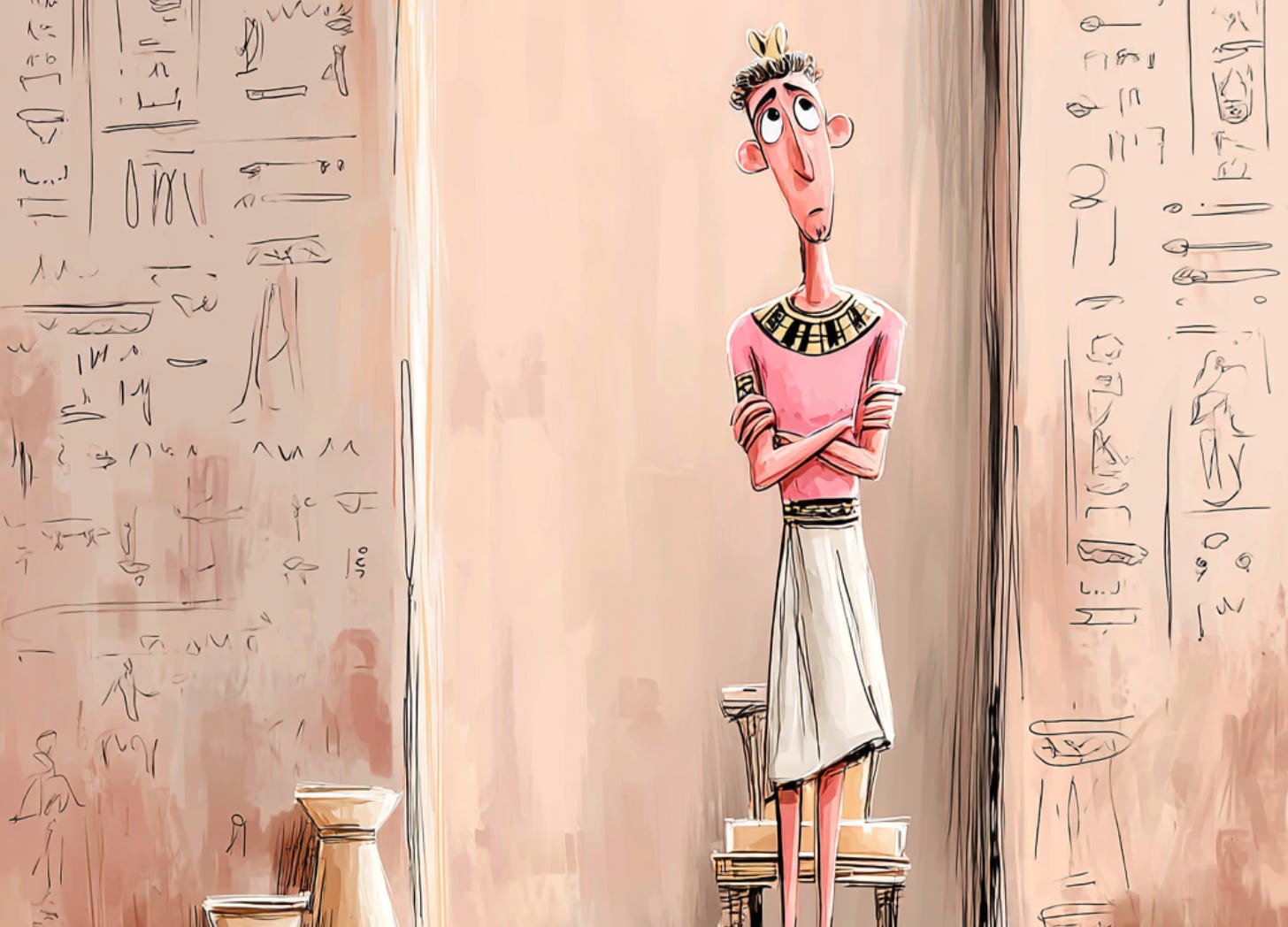
Exodus 9:12
“Adonai hardened Pharaoh’s heart.”
If you grew up hearing this story, you probably heard a version that made God look unpredictable. Pharaoh wanted to repent, God said “absolutely not,” and the plagues rolled out like judgment fireworks. But that’s not what the text shows when you slow down and read it with the nuance, context, and historical clarity it deserves.
This isn’t a story about a God who blocks repentance.
It’s a story about a king who kept resisting mercy until the resistance shaped him from the inside out.
Let’s walk through it with open eyes and open Bibles.
What Does Scripture Actually Mean by a “Hardened Heart”?
Before you interpret the phrase through English eyes, you have to step into the Hebrew world where the term comes from.
Hebrew uses three different words to describe Pharaoh’s heart during the plague narratives.
Kaved which means “heavy.”
Chazak which means “strengthened” or “stiffened.”
Qashah which means “hard” or “unyielding.”
These aren’t medical descriptions. These are moral descriptions. They speak to stubbornness, spiritual resistance, and willful refusal to change. Pharaoh isn’t a passive victim. He’s active in his own hardening long before God participates in it.
And if you trace the timeline carefully, the pattern becomes unmistakable.
When Did the Hardening Actually Begin?
Here’s where the detail matters.
People often skip right to “God hardened Pharaoh’s heart,” but the text tells us that Pharaoh hardened his own heart first, repeatedly, stubbornly, and publicly.
Exodus 7:13
Exodus 8:15
Exodus 8:32
Exodus 9:7
Every early hardening is Pharaoh’s decision.
Every refusal is his own choosing.
God doesn’t start hardening anything until halfway through the plagues, long after Pharaoh has already committed to resisting.
So instead of picturing God forcing Pharaoh’s rebellion, the text shows something closer to God confirming what Pharaoh kept choosing. Almost like God saying, “If this is the path you insist on, I will let you see the full weight of it.”
Divine hardening isn’t coercion. It’s God allowing Pharaoh’s character to fully mature into what Pharaoh already embraced.
Why Would God Let a Wicked Ruler Dig That Deep?
This is where the ancient world matters.
Egypt’s monarch wasn’t just a political leader. He was considered divine. He embodied the state religion. He represented the gods of Egypt. And Egypt’s gods claimed dominance over Israel’s God.
That means this conflict isn’t a simple moral story.
It’s a theological showdown.
God is confronting an empire, a worldview, and a pantheon. The plagues aren’t random disasters. They are targeted dismantlings of Egyptian deities:
• the Nile god
• the frog goddess
• the god of livestock
• the sun god
• the god of healing
Every plague is a sermon aimed at showing Israel and Egypt who actually runs creation.
Pharaoh’s stubbornness becomes the stage where God reveals His power to a watching world.
And that leads to the verse many Christians misunderstand.
What Does God Mean When He Says, “I Raised You Up for This Purpose”?
Exodus 9:16
“I have raised you up to show you My power.”
This doesn’t mean God created Pharaoh to be evil.
And it doesn’t mean Pharaoh was denied free will.
The Hebrew idea is more like, “I kept you in office long enough to reveal My justice and My mercy through what unfolds.” Pharaoh’s role is not predestined rebellion. His role is continued opportunity.
He could have humbled himself early. The Egyptians who feared God did.
But Pharaoh’s pride ran deeper than fear of consequences.
God isn’t creating Pharaoh’s stubbornness.
He’s using Pharaoh’s stubbornness to show His sovereignty.
Two very different ideas.
Why Does God Shift From Pharaoh Hardening Himself to God Hardening Pharaoh?
Think of the early stage like Pharaoh gripping the steering wheel in the wrong direction. He’s determined to resist God, even when his advisors beg him to stop.
After enough resistance, God removes His restraining grace and lets Pharaoh feel the full weight of his own choices.
Scripture shows this pattern elsewhere:
• In Proverbs 29:1
• In Romans 1
• In Psalm 81
When someone repeatedly rejects correction, God sometimes stops softening their heart and allows them to settle into what they’ve chosen.
This isn’t God blocking repentance.
It’s God honoring human agency.
Pharaoh keeps saying, “No.”
God eventually says, “If that is your answer, I will let it stand.”
Why Does This Matter for Believers Today?
People often assume Pharaoh is an extreme example with no connection to modern life. But hardened hearts happen quietly now. They don’t need plagues, royal thrones, or ancient Egypt.
A heart hardens slowly.
It hardens through:
• repeated refusal
• constant defensiveness
• chronic excuses
• selective listening
• pride that won’t let truth land
Pharaoh is an extreme case of a pattern that shows up everywhere: when someone resists God long enough, the resistance becomes identity.
This story isn’t about God blocking repentance.
It’s about the danger of refusing grace.
What Does This Reveal About God?
When you read the story through ancient eyes instead of modern assumptions, the character of God becomes clearer.
He is patient.
He is persistent.
He is slow to anger.
He offers warnings long before consequences.
He gives Pharaoh multiple opportunities to soften.
He makes room for repentance after almost every plague.
And keep this detail close to your heart.
Even during the judgment narratives, God protects the land of Goshen.
Judgment and mercy run side by side.
The God of Exodus doesn’t delight in hardness.
He delights in deliverance.
Why Was Hardening Necessary at All?
Because Israel needed more than rescue.
They needed revelation.
Slaves who had been told for generations that Egyptian gods ruled the universe needed to witness the downfall of those gods with their own eyes. Their liberation wasn’t just physical. It was theological, emotional, communal, and generational.
Sometimes God brings people out of bondage by confronting the lie that held them there.
Pharaoh’s hardened heart became the stage where God dismantled the lie.
Nothing about this story is accidental.
Nothing is cold.
Nothing is unjust.
It is a story of divine patience, human resistance, and a God who refuses to let evil write the final chapter.
My Final Thoughts
Pharaoh’s hardening isn’t about God forcing rebellion.
It’s about God giving a ruler the freedom to choose, and then holding him to the choice he kept making.
It’s about a God who confronts oppression, exposes false gods, rescues the oppressed, and lets stubbornness reveal its own fruit.
This isn’t a story about a cold God and a warm Pharaoh.
It’s a story about a merciful God and a king who would rather cling to pride than humble himself.
And it’s a reminder for every believer:
softness is a spiritual discipline.
Receptivity is a posture.
Humility is protection.
A tender heart is not weakness. It’s wisdom.
Pharaoh shows us what resistance becomes when it goes unchecked.
The God of Exodus shows us what mercy becomes when it goes unresisted.
Bible Study Questions
Read Exodus 7 to 10. Where do you see Pharaoh hardening his own heart?
How do the plagues confront the Egyptian gods?
How does this story connect to Romans 1 and the idea of God “giving people over” to their choices?
What differences do you notice between the early hardenings and the later ones?
Where in your life does God keep inviting softness?
Reflection Questions
How do you personally define a “soft heart” before God?
Where have you resisted God out of fear or pride?
What helps you stay spiritually receptive during challenging seasons?
How does this story change your view of divine judgment?
Action Challenges
Spend ten minutes asking God to show you any area that has started to harden.
Choose one relationship where you can practice softness this week.
Meditate on Psalm 95 and notice how it speaks about hearing God’s voice today.
Journal a moment when God softened something in you that resistance once controlled.

Because you asked… If a monthly subscription isn’t feasible but you’ve been blessed by this space and want to support the work, you can leave a one-time tip here. Every gift is appreciated and helps us keep serving this community with love.
🔥 Feeling the pull to go deeper?
Our paid subscriber community is where the real digging happens. When you upgrade, you step straight into The Vault, which is basically the Scripture-nerd dream space I always wished existed. And if you decide to go all the way, the Founders Level brings even more.
🔐 Inside The Vault
Weekly devotionals with actual depth
Monthly teachings that explore the Jewish world of Jesus
A private space for real conversation
Our Mussar spiritual formation rhythm
Thirty percent off digital products
Access to our Peppery Bible Study group over on Signal
👑 Founders Level includes everything above, plus:
Weekly audio teachings (yes, the ones Sue was supposed to help with…)
Monthly Bible Study Q&A calls
Printable study tools
Early access to studies and digital releases
A premium journal
Fifty percent off digital products and ten percent off physical merch
If you’re ready for the deeper, richer, nerdier, more nourishing side of Scripture, come join us. I would love to have you in the room with us.