



We throw the word “discipline” around like it’s so obvious. Eat your vegetables. Exercise. Read your Bible. Show up. And yes, sure, those things are discipline in the modern English sense. But the Hebrew word sitting underneath so much of our Scripture? Well, it’s doing something much bigger than a morning routine.
The word is mussar (מוּסָר). Pronounced moo-SAR. And once you understand what this word actually is, a few passages you've been confidently quoting are going to turn around and introduce themselves properly.
What Does Mussar Mean?
Mussar (Strong’s H4148) comes from the root verb yasar (יָסַר), which means to discipline, to correct, to instruct, to chasten. The noun form, mussar, can be translated as discipline, correction, instruction, chastisement, or reproof, depending on the context and the translator.
The thing is, none of those English words on their own capture it. Discipline sounds like a punishment system. Correction sounds like a red pen on a test. Instruction sounds like a seat in Miss Patty’s classroom.
Often, though not always, mussar is the father who corrects the son he loves. It’s the teacher who won’t let the student stay comfortable in their wrong thinking. It’s the shepherd who uses the staff not to punish the sheep but to redirect it.
There’s usually a relational quality in this word, a sense that the person doing the correcting is invested in who you’re becoming. But mussar can also refer to severe divine chastisement in Scripture, so the full range of the word is pretty wide. What stays consistent is the purpose: this is discipline aimed at formation, not punishment aimed at destruction.
Where You’ll Find It
Mussar is essentially the vocabulary of Proverbs. It shows up in the opening lines of the whole book:
“The proverbs of Solomon son of David, king of Israel: to acquire wisdom and discipline, to understand the words of insight...” (Proverbs 1:1-2, TLV)
That word “discipline” there? Mussar. The entire wisdom tradition of Proverbs begins here. Wisdom and mussar are introduced as companions, moving together from the very first chapter.
Then Proverbs 3 brings the warmth that makes the whole concept land:
“My son, never despise the Lord’s discipline or dread His correction. For the Lord loves those He reproves, even as a father, the son in whom he delights.” (Proverbs 3:11-12, TLV)
This is mussar as love language. The discipline isn’t evidence that God is harsh. It’s evidence that He’s paying attention. A father who doesn’t correct his child isn’t being kind, he’s being absent. God’s mussar is presence, not punishment.
The Phrase That Changes Everything
Here’s where it gets genuinely stunning. Isaiah 53:5 in the TLV reads:
“But He was pierced because of our transgressions, crushed because of our iniquities. The chastisement for our shalom was upon Him, and by His stripes we are healed.” (Isaiah 53:5, TLV)
“The chastisement for our shalom.” That word chastisement in the Hebrew text? Mussar. The full phrase is mussar shelomenu (מוּסַר שְׁלוֹמֵנוּ), which literally means “the chastisement that brought us peace” or “the discipline that secured our shalom.”
The mussar that should have been ours fell on Him. That’s the plain meaning of the text. What flows from that theologically, the healing, the formation, the wholeness available to us because of what He absorbed, is breathtaking.
But we should let the Hebrew say what it says first: the chastisement that brought us shalom was upon Him. Everything else grows from there.
Mussar as a Practice
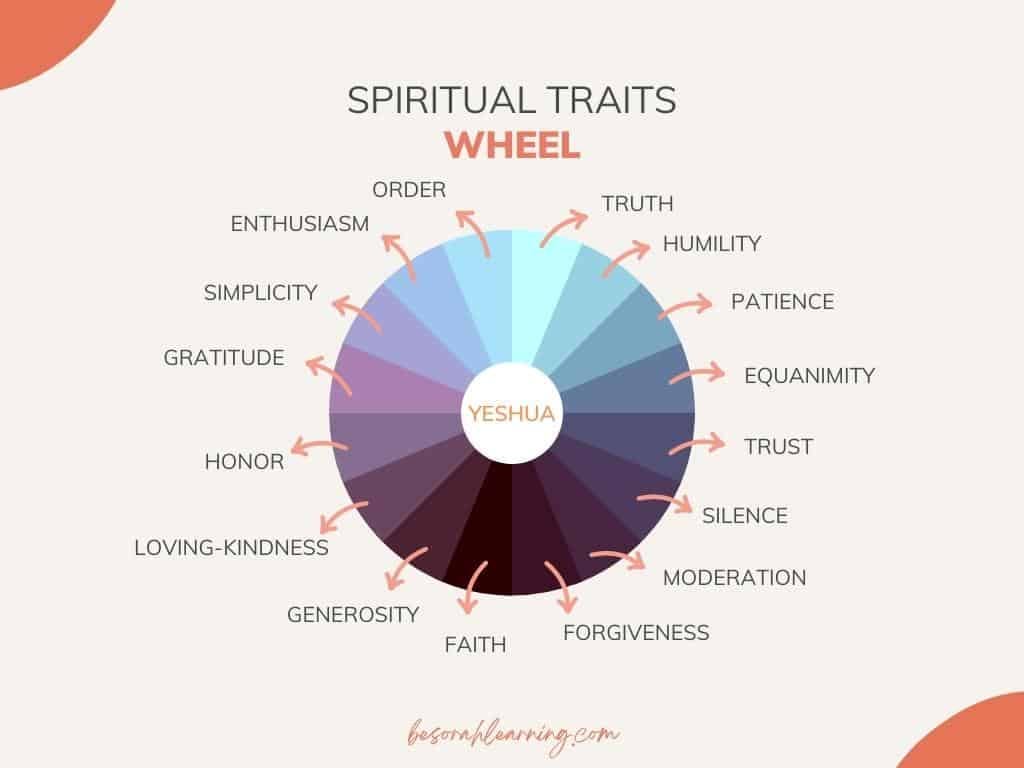
Because this word points toward something so much bigger than behavior management, Jewish tradition built an entire spiritual formation practice around it.
The Mussar movement as we know it formally emerged in 19th-century Lithuania, founded by Rabbi Yisrael Salanter. He looked at a Jewish community that knew the Torah but wasn’t always living it from the inside out and said: knowing isn’t enough. We need a practice.
The movement he launched asked a deceptively simple question: if we’re made in the image of God, why doesn’t that show up more clearly in how we actually live?
The answer, they said, was in the work of the middot (מִדּוֹת, pronounced mid-OHT). Middot is the plural of middah (מִדָּה, mid-AH), which literally means “measure.” In the Mussar tradition, middot refers to the soul traits, the inner character qualities each of us carries in varying measure.
Things like humility (anavah), patience (savlanut), generosity (nedivut), courage (ometz lev), equanimity (menucha hanefesh), and trust (bitachon). The work of Mussar is learning which of these traits are operating in excess or deficit in your own inner life, and then deliberately, prayerfully working to bring them into balance.
This isn’t self-help. It’s soul work. And the sages who developed this practice understood that character is formed through repeated practice, honest self-examination, and accountable community. You can’t think your way into transformation. You have to practice your way there.
The traditional container for Mussar practice is called a va’ad (וַעַד, pronounced vah-AHD), which means “gathering” or “committee.” A va’ad is a small, committed group that meets regularly to study a soul trait together, share honestly from their own lives, hold each other accountable, and encourage the work of formation. It’s not a therapy group. It’s not a debate. It’s something older and more intentional: people who have agreed to become more by doing the work together. I have done this form of Mussar practice with my rabbi and congregatin for several years.
There’s also the practice of hevruta (חַבְרוּתָא, pronounced khev-ROO-tah), a traditional Jewish model of paired study where two people learn together, question each other, and sharpen each other’s thinking.
The word actually comes from the Aramaic root for “friend” or “companion,” which tells you something important about what kind of study this is. Proverbs 27:17 had it figured out long before anyone named it:
“As iron sharpens iron, so one person sharpens another.”
The combination of word study, honest self-examination, and accountable community is what makes Mussar different from just reading a good book about character. Many believers struggle with the idea that transformation requires practice, but this ancient tradition understood that formation is not a passive process. It asks something of you, consistently, over time, with other people watching and helping.
We Do This in The Vault
We practice Mussar together every week inside The Vault.
Every week, Vault members work through a middah together. We study it from a Hebrew perspective, we consider how it’s showing up (or not showing up) in our actual lives, and we do the honest, sometimes uncomfortable work of asking God to form those things in us for real. We also have a Mussar Journal we work in (that I give members for free) and we rotate through tried and tested Mussar books.
If that kind of deep, deliberate, Scripture-rooted formation sounds like what you’ve been missing, keep reading.

Verse Mapping Aid
Word: מוּסָר / Mussar Pronunciation: moo-SAR Strong’s: H4148 Root: יָסַר (yasar) — to discipline, chasten, instruct, correct Core meaning: Corrective discipline with formational intent; ranges from relational parental correction to severe divine chastisement; always purposeful, always aimed at something
Related vocabulary:
Middot (מִדּוֹת, mid-OHT) — soul traits; the inner character qualities Mussar practice works to refine
Middah (מִדָּה, MID-ah) — a single soul trait; literally “measure”
Va’ad (וַעַד, vah-AHD) — a Mussar study and accountability group
Hevruta (חַבְרוּתָא, khev-roo-TAH) — paired study; from the Aramaic for “fellowship” or “companionship”
Key appearances of mussar:
Proverbs 1:2 — paired with wisdom at the opening of the entire wisdom tradition
Proverbs 3:11-12 — the discipline of a loving father
Proverbs 6:23 — “corrective discipline is the way of life” (TLV)
Isaiah 53:5 — mussar shelomenu, the chastisement that secured our shalom
Mussar Isn’t Just for Adults
Here’s something that might surprise you. Proverbs wasn’t written for scholars. It was written for children.
The entire book opens with a father speaking to a son. Shema beni mussar avicha, “Hear, my son, the mussar of your father” (Proverbs 1:8). The wisdom tradition of Israel was always meant to be passed down, taught young, practiced early. The idea that character formation is adult work is actually a fairly modern assumption. The ancient world knew better.
Which means Mussar practice is genuinely accessible to kids, and not in a watered-down way. Children are already working their middot every single day. Every time a child has to wait their turn, that’s savlanut, patience. Every time they share something they didn’t want to share, that’s nedivut, generosity. Every time they tell the truth when a lie would have been easier, that’s emet, truth. They’re already doing the work. Mussar just gives it a name and a framework.
For families, the practice can be beautifully simple. Pick one middah for the week, maybe patience or gratitude or courage. Name it at the dinner table. Talk about where it showed up that day, where it didn’t, what it felt like to try. That’s a va’ad. A very small one with juice boxes, but still a va’ad.
Here are great resource for kids:
The Mussar sages understood something Proverbs has been saying all along: you don’t wait until a person is fully grown to start forming them. You start when they’re young, you make it part of the rhythm of daily life, and you do it together. Formation was always a family project.
My Final Thoughts
The reason mussar matters for us as believers isn’t academic. It’s deeply practical.
We live in a faith culture that tends to want comfort without correction. We want the peace without the process. But the Hebrew word underneath “peace” in Isaiah 53:5 is shalom, and shalom means wholeness, completeness, nothing broken or missing.
And the route to that wholeness? It went through mussar. Through the corrective, costly, purposeful discipline that Yeshua absorbed on our behalf.
That’s an invitation. To receive correction. To lean into it rather than run from it. To not just read the Word but acquire it. Because the God who disciplines you is the same God who looks you in the eye and says: you can become more than this, and I’m going to help you get there.
Wisdom and mussar. Proverbs had them paired from the very first chapter. Turns out that wasn’t an accident.
Let’s Talk in the Comments
Drop your thoughts below:
What English word have you been using as a substitute for mussar, and does knowing the full Hebrew range shift anything for you?
Which of the middot, humility, patience, generosity, courage, trust, feels most alive or most stretched in your life right now?
Have you ever experienced correction from God that you later recognized as love? Tell us about it if you feel comfortable sharing!
If this word study stirred something in you, share it with a friend who’s in a season of being pruned and isn’t sure what to make of it.
And if it left you wanting to go slower and deeper into the Word, and into this kind of intentional formation, I’ve got you. Vault members practice Mussar together every week: working through soul traits from a Hebrew perspective, sitting with honest self-examination, and doing the real work of formation in community.
On top of that, paid subscribers get access to live Bible studies, extended studies, devotionals, theological teaching, spiritual formation practices, and a community of women who want depth without pressure or performance. If you’re ready to step further into the Word, you’re welcome inside.
👉🏻 Join The Vault.
If a paid subscription isn’t feasible right now but this space has blessed you, you can leave a one-time tip here. Every gift helps sustain this work. 💕

About the Author
Diane Ferreira is a Jewish believer in Yeshua, a published author, speaker, seminary student, wife, and proud mom. She is the founder of She’s So Scripture and She Opens Her Bible. She is the author of several books, including The Proverbs 31-ish Woman, which debuted as Amazon’s #1 New Release in Religious Humor, as well as Holy, Hormonal and Holding On.
She is currently pursuing her graduate degree in Jewish Studies in seminary, with her favorite topics being the early church and Biblical Hebrew. Diane writes and teaches from a unique perspective, bridging her Jewish heritage with vibrant faith in the Messiah to bring clarity, depth, and devotion to everyday believers.
When she’s not writing, studying, or teaching, you’ll find her curled up with a good book, crocheting something cozy, traveling, or playing her favorite video games.
Tree of Life (TLV) – Scripture taken from the Holy Scriptures, Tree of Life Version*. Copyright © 2014,2016 by the Tree of Life Bible Society. Used by permission of the Tree of Life Bible Society.
Is joining the vault a practical option for folk in UK please?
Where do we find the Mussar teachings? I'm a paid subbie.