


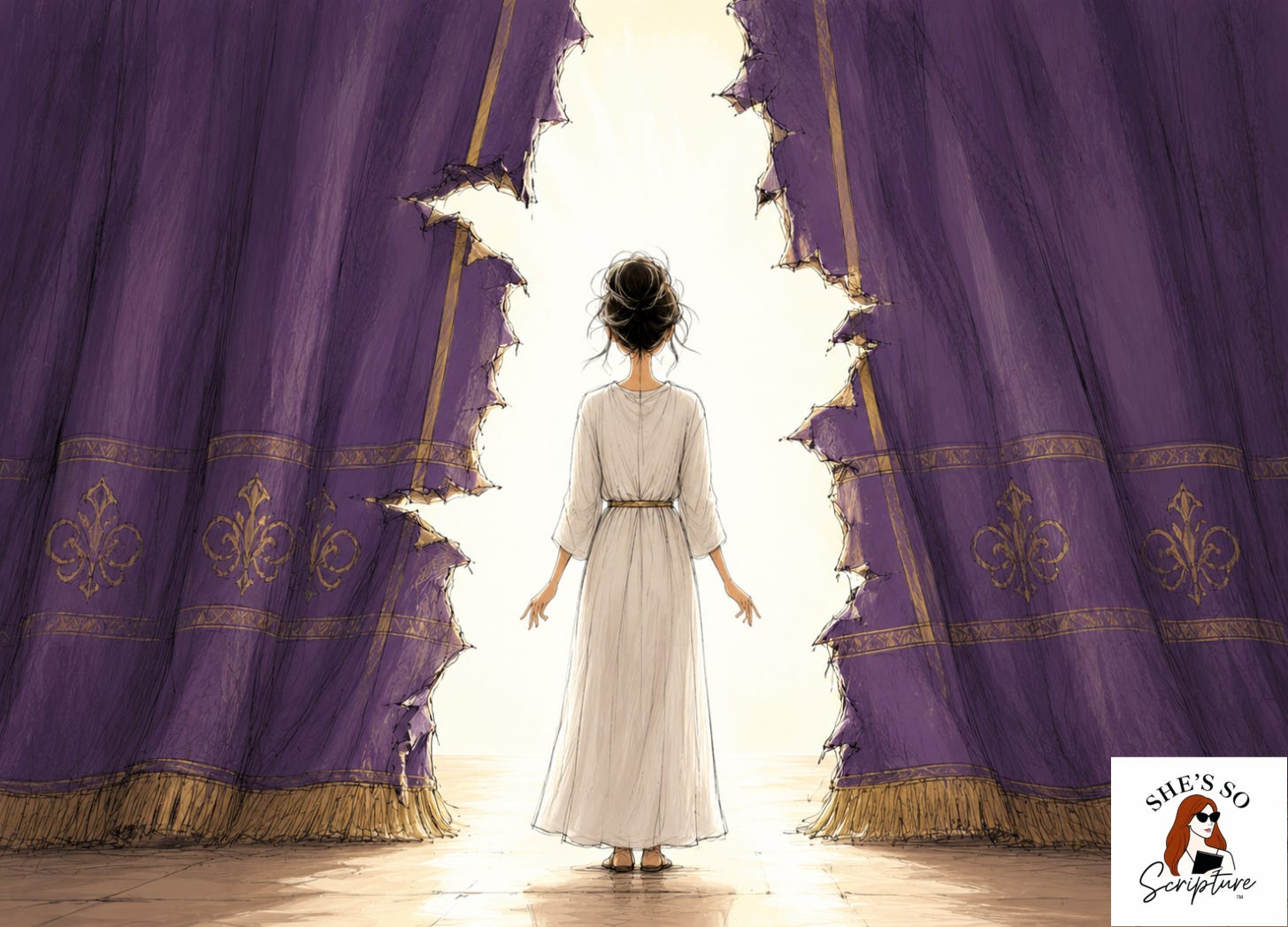
There’s a chapter in Leviticus that most people skip.
Not because it’s boring, but because it’s dense. Because it’s full of specific instructions about linen garments and bull’s blood and incense clouds and a curtain you absolutely cannot walk through unless you want to die, and somewhere around verse six the average reader closes their Bible and decides they’ll come back to it later. They don’t come back to it later.
But here’s what you’re missing if you skip it. Leviticus 16 is one of the most important chapters in all of Scripture, and the entire book of Hebrews is essentially a running commentary on it. Once you learn that, both books crack open in a way they never did before.
So we’re going back in.
What is Yom Kippur?
Yom Kippur. You’ve probably heard it. You might even know it’s the Jewish Day of Atonement, the most solemn day on the Jewish calendar. But do you know what the word itself means?
The Torah often calls it Yom HaKippurim, the Day of Atonements. Plural. A massive, comprehensive, everyone-at-once covering of an entire people’s sin.
Kippur comes from the Hebrew root kapar (כָּפַר), a root associated with covering, ransom, and atonement. It appears over 100 times in the Old Testament and gets translated as atone, purge, forgive, pardon, cleanse, appease.
All of those are attempting to capture the same idea: guilt dealt with, a protective barrier formed between what is vulnerable and what would otherwise destroy it.
Here’s the detail that will made my jaw drop: the very first time this root appears in Scripture is in Genesis 6:14. God tells Noah to build the ark and then says:
“Make for yourself an ark of gopher wood. You shall make the ark with compartments and smear pitch on it, both inside and out.” (Genesis 6:14, TLV)
That word for “smear pitch” is from the same root k-p-r. The sealing of the ark that kept the waters of judgment out shares a root with the atonement that seals off the judgment of sin. One covers wood. One covers people. Both are God saying: what would destroy you will not get through this.
The High Priest Strips Down
Leviticus 16 opens with a warning. God tells Moses to tell Aaron that he cannot enter the Most Holy Place whenever he wants. Not today, not this week, not on a whim of religious enthusiasm.
The access is restricted to one day per year, and even then the protocol is VERY precise.
“Tell Aaron your brother not to come at just any time into the Holiest Place behind the curtain — before the atonement cover which is on the Ark — so that he would not die. For I will be appearing in the cloud over the atonement cover.” (Leviticus 16:2, TLV)
The reason this restriction matters isn’t just that God is protective of His space. It reveals the nature of the problem. A holy God and sinful humanity cannot simply coexist without mediation.
Something has to deal with the gap. Yom Kippur is how the gap was maintained and managed, year after year, within the covenant life of Israel.
Now look at what the high priest wears on this day, because this is where people miss something.
He doesn’t wear his official garments. Not the elaborate breastplate with twelve stones for the twelve tribes. Not the ephod. Not the gold.
He strips all of that off, bathes his body, and puts on simple white linen: a linen tunic, linen undergarments, a linen sash, a linen turban.
“He is to put on the holy linen garment, have the linen undergarments on his body, put on the linen sash, and wear the linen turban — they are the holy garments. He shall bathe his body in water, and put them on.” (Leviticus 16:4, TLV)
The most important man in Israel on the most important day of the year walks in wearing the same garments as the lowest-ranking priest. No display of status. No visible authority. Just white linen and washed skin, and an offering for his own sins before he can touch anyone else’s. He has to atone for himself and his household first. He cannot carry the people’s sin before he has addressed his own.
Two Goats, One Sin Offering
Then come the goats.
Two of them, as identical as possible, brought to the entrance of the Tent of Meeting. Lots are cast.
“Aaron will then cast lots for the two goats — one lot for Adonai, and the other lot for the scapegoat.” (Leviticus 16:8, TLV)
That word translated as “scapegoat” in the TLV is Azazel in Hebrew (עֲזָאזֵל). Scholars have debated it for centuries. Some read it as a compound word meaning something like “complete removal.” Some read it as a proper name for a wilderness entity. What’s not debatable is the function: this goat leaves. It doesn’t come back.
The first goat is slaughtered. Its blood is taken behind the curtain into the Holy of Holies, sprinkled on the kapporet, the atonement cover, which sits on top of the Ark of the Covenant. Notice that word: kapporet, from the same root as kippur. The mercy seat is literally the covering. The blood goes on the covering.
The covering was being covered.
Then the second goat. Aaron lays both hands on its head and confesses over it. Every iniquity. Every transgression. Every sin of the entire nation of Israel. All of it is placed on the head of this goat and it’s led out into the wilderness.
“The goat will carry all their iniquities by itself into a solitary land and he is to leave the goat in the wilderness.” (Leviticus 16:22, TLV)
Here’s what most readers miss: Leviticus 16:5 describes both goats together as a single sin offering. They’re not two separate things. They’re two halves of one action: sin dealt with at the altar and sin removed from the community. Together, they paint a complete picture of what atonement required within the covenant.
For believers, the two goats become a powerful lens through which the gospel is later understood. Sin judged. Sin removed. Both things necessary. And Yeshua, as we’ll see, the one who fulfills both movements.
The Weight of That Moment
When the high priest went behind the curtain, nobody was in the Tent of Meeting.
“No one is to be in the Tent of Meeting when he enters to make atonement in the Holy Place until he comes out, and has made atonement for himself and for his household, and for all the assembly of Israel.” (Leviticus 16:17, TLV)
The Torah warns that unauthorized approach could result in death, underscoring the seriousness of the moment. The people waited. The priest worked. He came back out… hopefully.
Within Torah, the annual repetition of this ritual wasn’t a failure. Repetition is part of covenant life. This was how Israel maintained its relationship with a holy God year after year. The covenant was intact. The community was clean. For now.
Hebrews later reads that repetition as pointing beyond itself.
“By this the Ruach ha-Kodesh makes clear that the way into the Holies has not yet been revealed while the first tent is still standing.” (Hebrews 9:8, TLV)
The writer of Hebrews takes the annual structure itself and says: the ongoing necessity of it is a message. The door isn’t fully open yet.
The Kohen Gadol Who Doesn’t Die
The book of Hebrews opens its ninth chapter by walking through the entire layout of the Tabernacle. Outer tent, inner tent, curtain, ark, mercy seat. Not because the readers didn’t know it, but because the writer is about to show them something they hadn’t fully seen.
“But into the inner, once a year, the kohen gadol alone — and not without blood which he offers for himself and for the unintentional sins of the people.” (Hebrews 9:7, TLV)
Then the pivot:
“But when Messiah appeared as Kohen Gadol of the good things that have now come, passing through the greater and more perfect Tent not made with hands (that is to say not of this creation), He entered into the Holies once for all — not by the blood of goats and calves but by His own blood, having obtained eternal redemption.” (Hebrews 9:11-12, TLV)
Every element of Leviticus 16 finds its counterpart here. The high priest who bathed and stripped his official garments and walked in alone. The blood brought into the most sacred space. The fact that only one person could do this, and only under very specific conditions. Hebrews reads all of it as a form: the shape of what Yeshua would do, in the real thing rather than the earthly copy.
And then this:
“For Messiah did not enter into Holies made with hands — counterparts of the true things — but into heaven itself, now to appear in God’s presence on our behalf.” (Hebrews 9:24, TLV)
He walked into the actual presence of God, with His own blood, as both the priest AND the offering. And He came back through a different curtain entirely: not the earthly one, but the one that was torn from top to bottom when He died. The way into the Holies, which Hebrews 9:8 says was not yet revealed while the earthly system was still standing, is now open.
“And just as it is appointed for men to die once, and after this judgment, so also Messiah, was offered once to bear the sins of many. He will appear a second time, apart from sin, to those eagerly awaiting Him for salvation.” (Hebrews 9:27-28, TLV)
Once. It was done once.
Verse Mapping Aid: Kapar (כָּפַר)
Root: כָּפַר (kapar)
Pronunciation: kah-PAR
Kapar is a root associated with covering, ransom, and atonement. Related words include kippur (atonement), kapporet (the mercy seat, literally the covering), and kofer (a ransom price). Its first appearance in the Hebrew Bible is in Genesis 6:14, where God tells Noah to seal the ark with pitch. The same root does the heavy theological lifting all the way through Leviticus and into the name of the holiest day on the Jewish calendar.
When the blood of the sacrifice was placed on the kapporet in the Holy of Holies, the covering was being covered. The place where God’s presence met Israel was sealed with blood so that what holiness required could be satisfied and the covenant community could continue to live in relationship with Him.
Hebrews 9 works in the same theological territory. Every use of “purified,” “cleansed,” and “redeemed” in that chapter is doing the work that kapar was always doing. The vocabulary shifts from Hebrew to Greek but the theology is the same thread: what our sin exposed, God covered. First provisionally. Then permanently.

My Final Thoughts
What’s amazing about Leviticus 16 is how honest it is about the problem.
God doesn’t soften the gap between His holiness and human sin. The restrictions in this chapter aren’t arbitrary. They’re accurate. Sin creates real separation. We know this. Holiness is not casual. And the solution has to be costly, specific, and real. The elaborate ritual of Yom Kippur was never performance. It was necessity.
Within Torah, that necessity was met year after year through the faithfulness of the covenant system God established. Israel was not left on its own. The high priest went in, came out, and the community continued to live in covenant with God.
Hebrews looks at that faithful annual rhythm and sees something else embedded in it: a shape. A preview. The form of what was still coming.
The Kohen Gadol who would walk in with His own blood and not need to do it again, not because the problem wasn’t serious, but because this time the solution was complete.
“For by one offering He has perfected forever those being made holy.” (Hebrews 10:14, TLV)
One offering. Forever. The form found its fulfillment.
Dig Deeper
Leviticus 16:1-34 / Hebrews 9:1-28 / Hebrews 10:1-14 / Exodus 26:31-35 / Isaiah 53:4-6 / Romans 3:21-26 / 1 John 2:2
God’s Appointed Times: A Practical Guide for Understanding and Celebrating the Biblical Holy Days - Barney Kasdan
Let’s Talk
What detail from the Yom Kippur ritual was new to you today? And where do you see the structure of Leviticus 16 showing up in the New Testament texts you’ve read? Drop it in the comments.
If this study resonated with you, share it with a friend who’s been reading the New Testament without the Old Testament key to unlock it.
And if it left you wanting to go slower and deeper into the Word, I’ve got you! Paid subscribers get access to live Bible studies, extended studies, devotionals, theological teaching, spiritual formation practices, and a community that wants depth without pressure or performance. If you’re ready to step further into the Word, you’re welcome inside.
👉🏻 Join The Vault.
If a paid subscription isn’t feasible right now but this space has blessed you, you can leave a one-time tip here. Every gift helps sustain this work. 💕

Represent She’s So Scripture and Your Love of Exegesis!
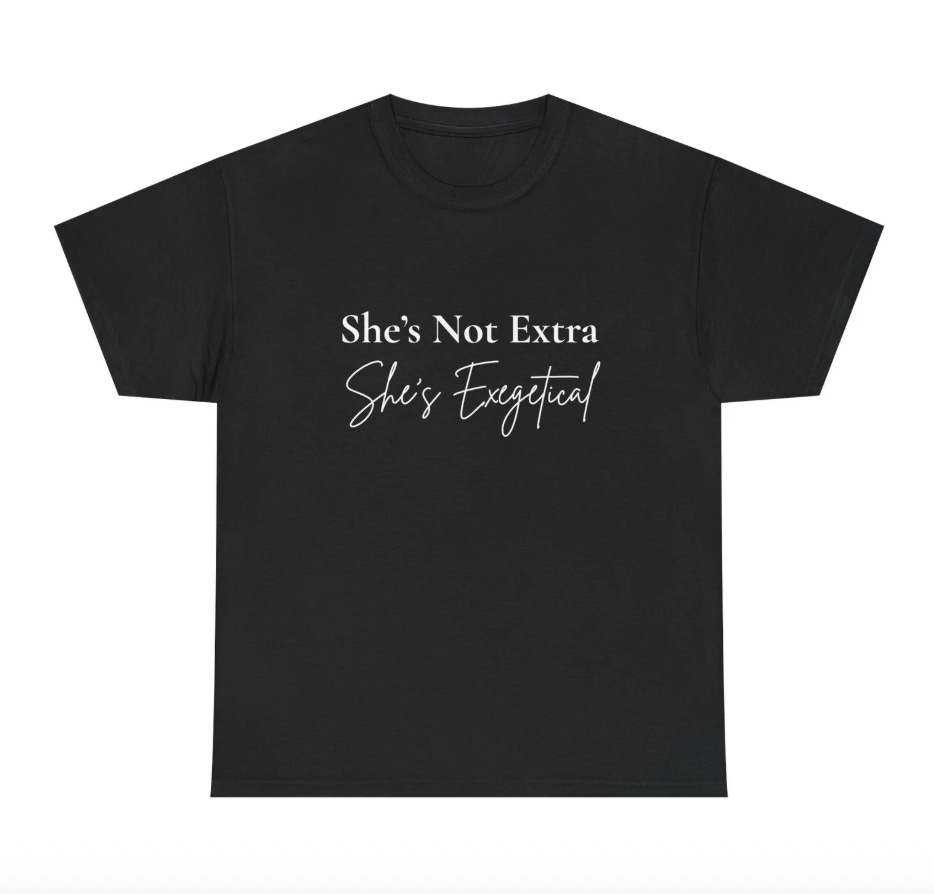
This is what we’re building here. Women who actually engage the text and don’t apologize for it.
If that’s “extra,” we’re fine with that.
In fact… we put it on a t-shirt.
“She’s not extra. She’s exegetical.”
You can get yours here.
About the Author
Diane Ferreira is a Jewish believer in Yeshua, a published author, speaker, seminary student, wife, and proud mom. She is the founder of She’s So Scripture and She Opens Her Bible. She is the author of several books, including The Proverbs 31-ish Woman, which debuted as Amazon’s #1 New Release in Religious Humor, as well as Holy, Hormonal and Holding On.
She is currently pursuing her graduate degree in Jewish Studies in seminary, with her favorite topics being the early church and Biblical Hebrew. Diane writes and teaches from a unique perspective, bridging her Jewish heritage with vibrant faith in the Messiah to bring clarity, depth, and devotion to everyday believers.
When she’s not writing, studying, or teaching, you’ll find her curled up with a good book, crocheting something cozy, traveling, or playing her favorite video games.
Tree of Life (TLV) – Scripture taken from the Holy Scriptures, Tree of Life Version*. Copyright © 2014,2016 by the Tree of Life Bible Society. Used by permission of the Tree of Life Bible Society.
The Kingdom truly has its strange moments. I have (many times) felt guilty that I can be so relaxed and just talk with the Father about things with no sense of awe. Also, that I have no sense of need for a temple. Truly felt guilty, then I chuckle.
>chuckle<
That's the New Covenant where it's all written on my heart, and I am enabled by the Ruach HaKodesh.
The Father's ways are so wonderful. The New Covenant was part of the plan before Creation. Think on that for a bit...
Now, I'm stunned. Just a drug-crazed hippy Gentile, saved by grace, rescued, and made whole.
The Lord's ways are so wonderful.
Please do not be horrified.
Coming back to this post after reading Ezekiel 9 and the man clothed in linen. A lot to meditate on…