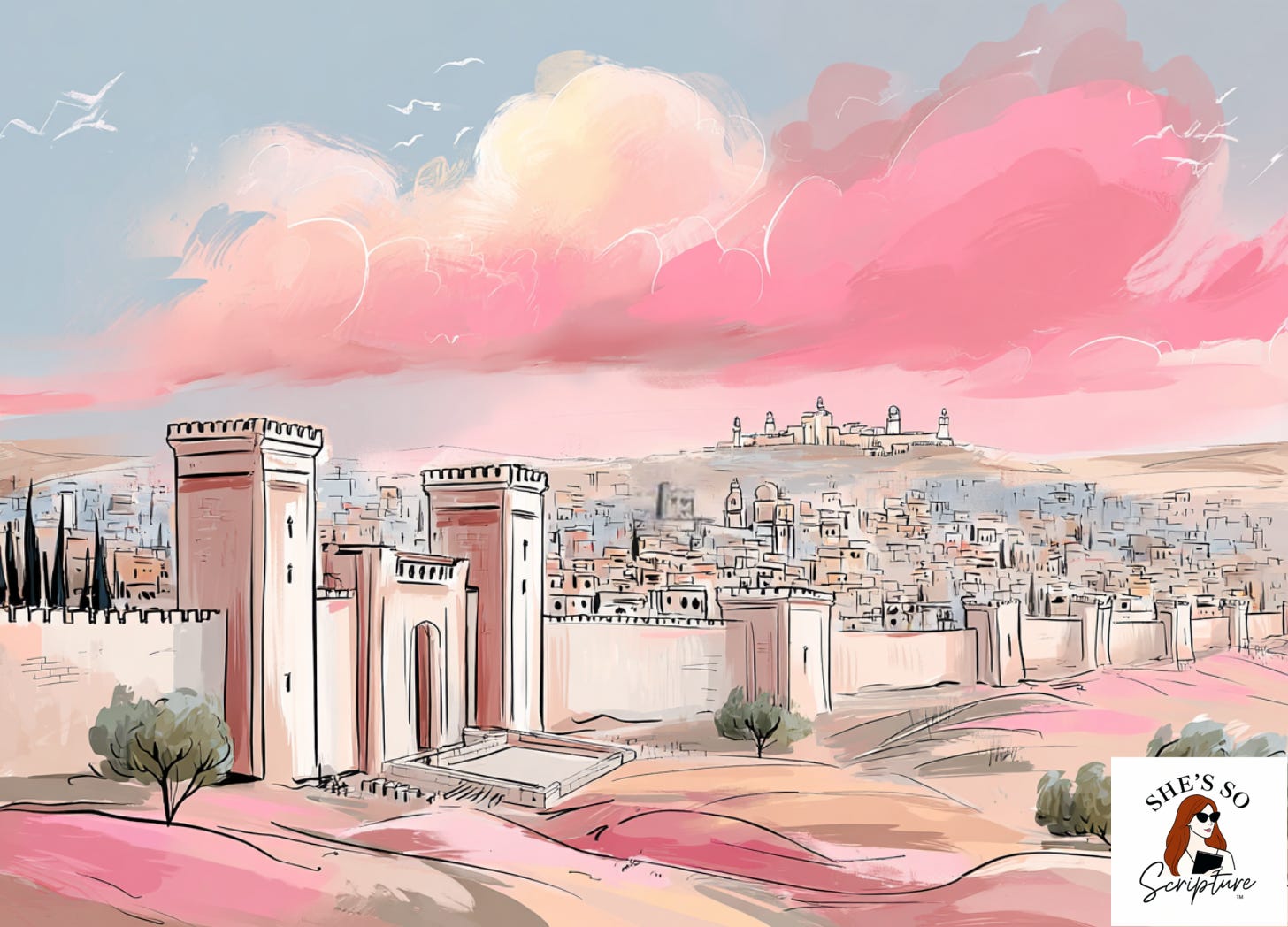
When Jesus taught His disciples to pray, “Your kingdom come,” He wasn’t offering some poetic line for their private devotions. He was placing a charged hope directly into their mouths.
By the first century, Jewish life was shaped by tension. The Temple stood in Jerusalem and sacrifices were offered daily, but Rome still ruled the land. Scripture was read faithfully in synagogues, and God was confessed as King, yet Caesar’s image circulated in the marketplace and Roman soldiers patrolled the streets. Everyone knew how to say that God reigned. It just didn’t always look like it.
Second Temple Judaism carried that ache openly. The prophets had promised that God’s reign would one day be unmistakable, that justice would take root and oppression would not have the final word.
Daniel spoke of a kingdom that would outlast every empire. Prayers such as the Kaddish (The Kaddish is an ancient Jewish prayer that exalts God’s name and expresses hope for His kingdom to be established, most commonly heard in synagogue worship and in times of mourning) asked God to establish His kingdom in their lifetime. They weren’t speaking symbolically or metaphorically. They were speaking with full expectation.
People were literally waiting (and praying) for history to turn.
The Hebrew word behind “kingdom” is malkut, which comes from melech, which is king. It refers less to territory and more to active rule; to authority that actually shapes events. The Greek word used in the Gospels, basileia, carries the same sense. This is about who gets to define reality, who determines what justice looks like, who sets the terms.
So when Jesus begins announcing that the kingdom of God has drawn near, He is stepping into an atmosphere already heavy with longing. His listeners weren’t looking for vague spirituality, they were looking for God to act.
And then He does something startling. He teaches ordinary people to pray for that reign to come.
“Your kingdom come.”
He doesn’t tell them to observe it from a distance or speculate and debate about its timing. He invites them to ask for it. And that really matters because once you pray for God’s reign to arrive, you’re no longer neutral. You’ve aligned yourself with it.

And this is where it stops being cute and demure. I am going to keep it real.
It’s easy to pray for God’s kingdom when we’re thinking about corrupt systems or distant injustice. It becomes more uncomfortable for people when we remember that God’s reign doesn’t stop at the borders of governments. It moves through homes, habits, ambitions, and motives.
Jesus describes the kingdom in ways that would have unsettled expectations. He speaks of seeds growing quietly in soil and leaven working through dough. He blesses the poor and the merciful. He elevates the meek. He talks about forgiveness as if it’s stronger than revenge. None of that resembles Rome’s version of authority.
It also doesn’t resemble the smaller kingdoms we construct around our own preferences and call wisdom.
To pray “Your kingdom come” in that world meant longing for God’s authority to become visible in real history. To pray it now still carries the same weight. It asks whether we actually want God’s way to define the spaces we currently manage very carefully.
Jesus’ first followers prayed those words under occupation. They knew what it meant to live beneath visible empire while confessing an invisible King. When Jesus told them the kingdom was drawing near, He wasn’t soothing them. He was inviting them to trust that God’s reign was already pressing into the world, even if it didn’t look like spectacle.
Once you hear it that way, the line stops sounding decorative. It starts sounding brave.
Keep reading below to see how Daniel shaped Second Temple kingdom hope, why Jesus’ announcement sounded both thrilling and confusing, and what happens when God’s reign refuses to look like force.
What They Thought Was Coming
By the time Jesus began teaching, Daniel 7 had been shaping Jewish imagination for generations. In that vision, empires rise like beasts from the sea, violent and grotesque, until God intervenes and establishes an everlasting kingdom. The message is not lost on anyone. Human power may look impressive, but it is temporary. God’s reign will outlast it.
In a world governed by Rome, that vision did not feel theoretical… it felt relevant.
Second Temple Jews read Daniel as a promise that oppressive rule would not have the final word. Some interpreted it politically. Some apocalyptically. Some expected cosmic upheaval. Many assumed that when God’s kingdom arrived, it would be unmistakable and immediate.
So when Jesus began saying that the kingdom of God had drawn near, His listeners already had categories in place. They knew what kingdom language meant. They knew what they were hoping for.
What they didn’t expect was the method.
Instead of gathering an army, Jesus gathered disciples. Instead of calling for revolt, He told stories. Instead of seizing power, He spoke about loving enemies and forgiving debts. He healed on Sabbaths and shared tables with the wrong people. None of that looked like Daniel’s beasts being overthrown by visible force.
And yet, He insisted that God’s reign was breaking in.
This is where the tension lives.
Jesus does not deny that God’s kingdom will ultimately outlast every empire. He simply reveals that its advance begins in places no empire can fully control. It begins in transformed hearts that start embodying the character of the King long before political structures change.
That would have been both thrilling and unsettling for His followers. Thrilling because it meant God had not forgotten them. Unsettling because it meant they could not wait passively for someone else to fix history.
Praying “Your kingdom come” in that context meant asking for God’s reign to take root in real time, even if it unfolded differently than expected. It meant trusting that power expressed through mercy was not weakness. It meant believing that seeds and leaven could outlast swords.
And here is where the prayer still confronts us.
If the kingdom is about active reign, then praying for it is an act of consent. It is saying, “Let Your authority shape what I value, how I respond, what I defend.” It is acknowledging that God’s rule may expose the small empires we have built in our own lives.
Jesus’ teaching doesn’t shrink the kingdom… it deepens it. He refuses to reduce it to spectacle. He presents it as something already moving, already claiming ground, already rearranging loyalties.
That is far more disruptive than a single dramatic overthrow.
When you pray, “Your kingdom come,” you are stepping into a hope that sustained people under occupation. You are aligning yourself with a reign that does not depend on headlines to be real. You are consenting to a rule that may not flatter your preferences but will always reflect the character of the King.
Once you understand how loaded that language was in the Second Temple world, this line of the Lord’s Prayer cannot remain a polite habit. It becomes a daily surrender.
And if we are honest, that kind of surrender still requires courage.
Study Questions
In Second Temple Judaism, what did malkut communicate that “kingdom” in modern English sometimes misses? How does understanding reign rather than territory shift your reading of Jesus’ teaching?
How did texts like Daniel 7 shape Jewish expectations about God’s kingdom? In what ways does Jesus affirm those hopes, and in what ways does He redirect them?
Why would announcing that the kingdom of God had “drawn near” feel both hopeful and unsettling in a Roman-occupied world?
Compare how earthly empires establish authority with how Jesus describes God’s reign in His parables. What differences stand out?
Why do you think Jesus places “Your kingdom come” before daily bread, forgiveness, and deliverance in the Lord’s Prayer?
Reflection Questions
When you pray “Your kingdom come,” what do you instinctively imagine changing first: the world around you, or something within you?
Where in your life do you feel most protective of control? What might it look like to invite God’s reign into that space?
Are there places where you’ve confused comfort with allegiance? Where God’s authority might gently challenge something you’ve justified?
If God’s kingdom grows quietly like seed and leaven, where might it already be at work in your life without dramatic signs?
What would it mean this week to live as if God’s reign is not distant, but near?