


Shalom friends,
By the time we reach Bo, the tone of the Exodus story has changed.
Earlier, Pharaoh still thought this was a negotiation. A back-and-forth. A power struggle where he might come out on top if he just stalled long enough. That’s cute.
Bo is where God makes it very clear that this conversation is no longer up for debate.
The question isn’t whether God is powerful. That’s already been wellestablished. The real question now is whether Pharaoh will ever yield, and whether Israel is ready to walk out of everything they’ve known.
Spoiler alert. Pharaoh doubles down. Israel steps forward. And God draws a big red line.
Torah: Exodus 10:1–13:16
When Stubbornness Finally Shows Its True Face
The portion opens with God telling Moses, “Bo el Paroh”, literally, “Go into Pharaoh.”
Not just go talk to him. Go into his space. His power center. His illusion of control.
Then comes the line that always makes people shift in their seats.
“I have hardened Pharaoh’s heart.”
The Hebrew verb here is חִזַּקְתִּי (chizakti), from the root חזק (chazak), meaning to strengthen or reinforce. God isn’t creating stubbornness out of thin air. Pharaoh’s already chosen resistance again and again. Now that resistance is being allowed to fully solidify.
Pressure doesn’t change Pharaoh. It exposes him.
As the plagues intensify, darkness falls over Egypt. Not a gentle dimming of the lights, but חֹשֶׁךְ אֲפֵלָה (choshech afelah), a thick, heavy darkness that immobilizes people. They can’t move. They can’t see. They’re stuck.
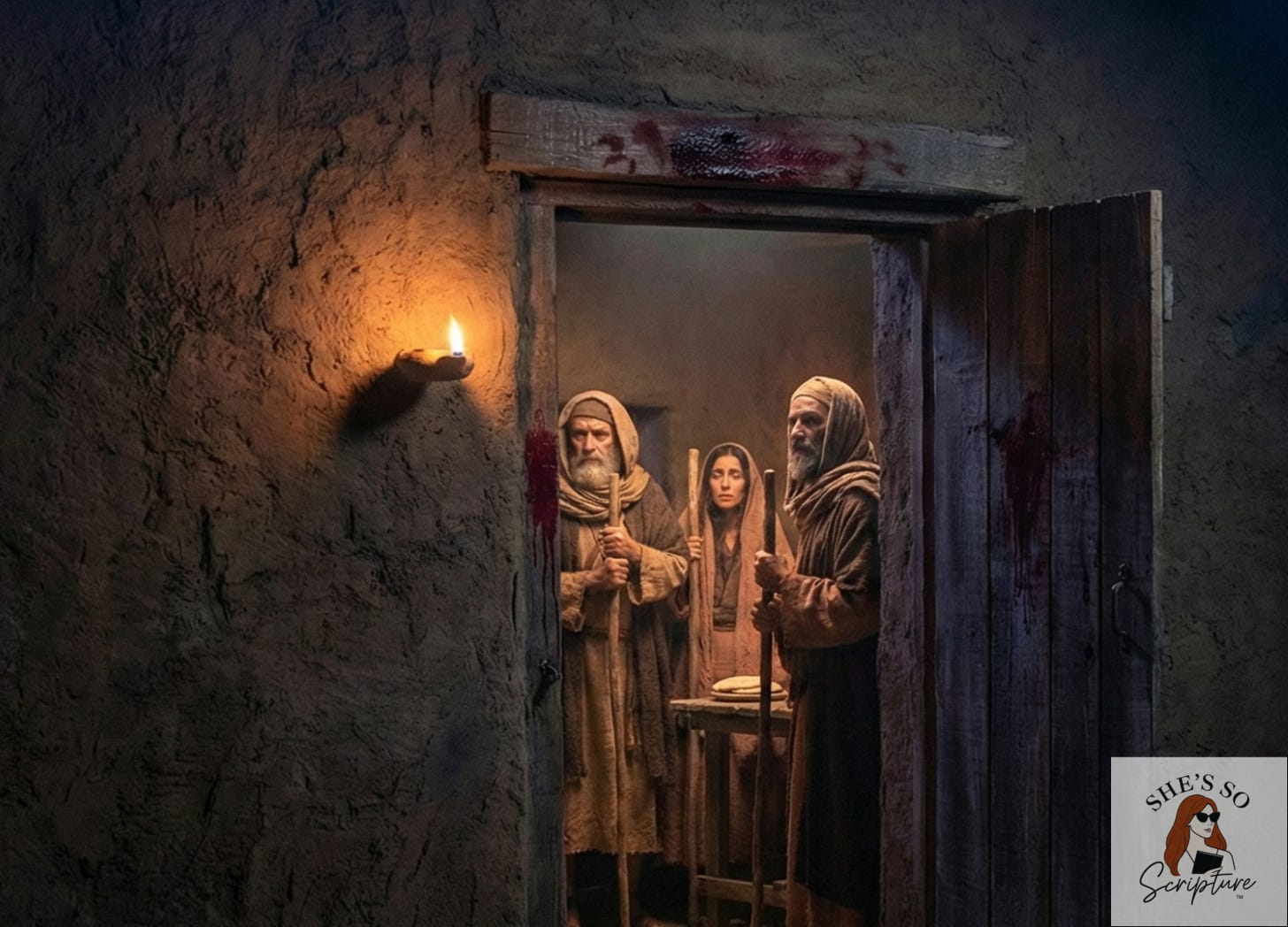
And then the Torah quietly drops this detail. “All the children of Israel had light in their dwellings.”
This isn’t just atmospheric, it’s theological. Egypt is spiritually paralyzed while Israel is being marked for redemption.
Pharaoh tries one more compromise. Israel can go, but the livestock stays.
Moses doesn’t blink.
No.
Because you don’t leave slavery halfway. You don’t serve God while keeping one foot in Egypt. Partial obedience still keeps you tethered to bondage.
Pharaoh explodes! He tells Moses to get out of his sight and never return. Moses calmly agrees. This power struggle is already over, Pharaoh just hasn’t realized it yet.
Then comes the final plague.
The death of the firstborn isn’t random cruelty. In the ancient world, the firstborn represented strength, legacy, and divine favor. Pharaoh himself was considered a son of the gods. God isn’t just dismantling Egypt’s economy. He’s dismantling its theology.
And yet, even here, God provides protection.
The instructions for Passover are precise. Blood on the doorposts. A lamb without blemish. A meal eaten in haste. Shoes on. Staff in hand. No settling in. No getting comfortable.
The Hebrew word פֶּסַח (Pesach) means to pass over or protect. God doesn’t remove Israel from danger. He covers them within it.
And here’s the faith piece we often miss.
Israel has to act before freedom is visible. They mark their doors while they’re still in Egypt. Faith moves first.
When the cry rises across Egypt, Pharaoh finally releases them. And Israel leaves boldly. Not sneaking. Not apologizing. Walking out as a people being formed by redemption.
That’s why Bo ends with instructions to remember and retell the story. Redemption that isn’t remembered eventually gets reshaped.
Haftarah: Jeremiah 46:13–28
When an Empire Learns It Isn’t Eternal
Jeremiah’s prophecy against Egypt feels like déjà vu, and that’s the point.
Egypt is still standing and still confident. They are still convinced it’s untouchable. History, power, and alliances have given them a false sense of permanence.
Jeremiah just dismantles that illusion.
The imagery is almost ironic. Noise without direction, strength without stability and a nation that looks impressive but is already unraveling.
And just like in Exodus, Egypt’s downfall is paired with reassurance for Israel.
God tells His people not to fear. Exile doesn’t erase covenant. Discipline doesn’t cancel promise. Egypt’s collapse doesn’t mean Israel has been forgotten.
Judgment and mercy appear together, just as they do in Bo. God confronts false power while preserving His people. Always.
Besorah: Matthew 7:13–29
When Hearing the Truth Stops Being Enough
Yeshua ends the Sermon on the Mount with zero interest in being misunderstood.
There’s a narrow gate and a wide road. One is crowded, one is costly, and one leads to life.
Then He talks about fruit.
Not intention.
Not sincerity.
Not good feelings.
Not whether you carry your Bible, quoting the Book of Acts with a “Honk if you love Jesus” bumper sticker on your car.
Fruit.
Because belief eventually shows up in how you live. And if it doesn’t, something’s off.
Yeshua warns that proximity to holy things doesn’t equal relationship. People will be shocked to learn that doing religious things never replaced surrender.
And then He closes with the image that ties directly back to Bo.
Two houses. Same storm. Very different foundations.
Egypt heard the warnings and refused to move. Israel heard instructions and acted. The difference wasn’t information, it was obedience.
Faith that never moves is still keeping your feet planted in Egypt.
My Final Thoughts
Bo is where God stops entertaining compromise.
Pharaoh keeps negotiating. Israel is invited to trust. God makes the path unmistakably clear.
Light and darkness. Freedom and bondage. Obedience and resistance.
God doesn’t draw lines to trap His people. He draws them to rescue them.
Hesitation delays freedom. Compromise prolongs bondage. Obedience opens the door.
And once God opens that door, the only faithful response is to walk through it.
Because freedom always begins with a decision.
Want to Go Deeper?
Beginning February 14th, I’ll be hosting weekly Torah studies for Vault and Founding members.
These are live, interactive studies where we slow down and really engage the text together. We’ll study, discuss, ask questions, share perspectives, and wrestle with the Torah the way it was always meant to be wrestled with, in community.
If you’ve been craving deeper conversation instead of surface-level teaching, this is where that happens.
Not a Vault member? You can join below!
Hebrew Letter of the Week: נ (Nun)
Sound: N
Numeric Value: 50
Meaning: Seed, continuation, life, faithfulness, endurance
Nun is one of those letters that quietly carries a lot of weight.
Its name comes from a root connected to propagation and continuation, like a seed that falls into the ground and produces life beyond itself. In Scripture, Nun often carries the idea of faithfulness over time, not flash-in-the-pan obedience.
That makes Nun a perfect companion to Bo.
Egypt represents a culture obsessed with immediacy and control. Pharaoh wants results on his timeline, obedience on his terms, and power that never has to bend. Nun, by contrast, points to something slower and deeper. Trust that unfolds. Obedience that continues even when the outcome isn’t fully visible yet.
It’s no accident that Joshua’s name is Yehoshua ben Nun. Joshua is the one who leads Israel forward after the Exodus, carrying the story into its next chapter. Nun is about what comes after the dramatic moment. After the plagues. After the crossing. After the breakthrough.
Bo shows us the decisive moment of leaving Egypt. Nun reminds us that redemption isn’t only about getting out. It’s about continuing on.
How to Write Nun
נ
Nun begins with a short, curved horizontal line, then a vertical line that descends downward and then curves slightly at the base.
When Nun appears at the end of a word, it takes a longer form (also called sofit), ן, extending even further downward. Many Jewish teachers see this as symbolic. Faithfulness doesn’t stop at the moment of deliverance. It continues. It goes deeper.
Nun teaches us that freedom is not just a moment. It’s a calling that unfolds over time.
Study Questions
Torah: Exodus 10:1–13:16
In Exodus 10:1, God says He has hardened Pharaoh’s heart so that His signs may be displayed. How does this change the way you understand God’s patience and judgment throughout the plagues?
The darkness in Egypt is described as thick and immobilizing, while Israel has light in their dwellings. What might this contrast teach about spiritual blindness versus spiritual clarity?
Pharaoh repeatedly offers compromises to Moses. Why do you think compromise is so tempting when obedience feels costly? Where do you see this tension in your own faith journey?
Why is Moses unwilling to leave the livestock behind? What does this reveal about what true obedience requires?
The Israelites mark their doorposts with blood before deliverance is visible. What does this teach about faith that acts ahead of outcomes?
God commands Israel to retell the story of the Exodus to future generations. Why is remembering redemption such a vital part of spiritual formation?
Haftarah: Jeremiah 46:13–28
How does Jeremiah’s prophecy against Egypt echo the themes of power, pride, and downfall found in the Exodus narrative?
Egypt appears confident and secure, yet God declares its collapse. What modern parallels can you see to nations or systems that trust in their own strength?
Why do you think God includes words of reassurance to Israel in a prophecy focused on Egypt’s judgment?
How does this passage shape your understanding of God’s sovereignty over history and empires?
Besorah: Matthew 7:13–29
Yeshua speaks of a narrow gate and a wide road. Why do you think the wide road is often more appealing, even to people of faith?
What does Yeshua mean when He emphasizes fruit over words or intentions?
How does the parable of the two houses connect with Israel’s obedience in Exodus and Pharaoh’s resistance?
In what ways does this teaching challenge the idea that agreement with truth is the same as living it out?
Reflection Questions
Where might you be tempted to negotiate with God instead of fully trusting Him?
Are there areas in your life where partial obedience feels safer than full surrender?
What “Egypt” has God been inviting you to leave, even if the timing or path feels uncertain?
How do you personally practice remembering God’s faithfulness, especially in seasons when fear tries to take over?
When you hear Yeshua’s words about building on rock versus sand, where do you sense the Holy Spirit prompting you to strengthen your foundation?
Action Challenges
This week, take time to read Exodus 12 slowly and intentionally. Pay attention to every instruction and consider what it might have felt like to obey before freedom was visible.
Identify one area where you’ve been tempted to compromise in your walk with God. Write it down and pray specifically for courage to respond with obedience instead.
Practice remembering. Write out or speak aloud a personal testimony of how God has delivered or sustained you, and consider sharing it with someone else.
Spend time reflecting on Matthew 7:24–25. Ask God to show you what building on rock looks like in your daily habits, not just your beliefs.
As an act of trust, take one tangible step this week that reflects faith in action rather than hesitation.
Download the Portion
Download a printable version of this Torah portion along with the study and reflection questions for your study binder!
If this study stirred something in you, share it with a friend who might need it too.
And if it left you wanting to go slower and deeper into the Word, I’ve got you!
Paid subscribers get access to extended studies, devotionals. theological teaching, spiritual formation practices, and a community of women who want depth without pressure or performance.
If you’re ready to step further into the Word, you’re welcome inside.
If a paid subscription isn’t feasible right now but this space has blessed you, you can leave a one-time tip here. Every gift helps sustain this work. 🤍

Well done! I have always explained that God “hardening pharaoh heart” didn’t mean that he reached down and made it hard so that Pharaoh had no choice, which is a very Calvinist way of thinking. I always explained it from a chemistry perspective: when you apply the same heat or pressure to different compounds, they react differently. If pharaoh‘s heart had been composed of a different compound (meaning, he had not already given in to whatever evil desires he had already given into) then the pressure God applied to his life would have produced different results. This is why, when the love of God is poured out, some people react one way and others react a completely different way. The love of God is the chemical pressure that never changes. It’s simply the compound that is different.
Action Challenge 4: Obedience and actions are costly. When you “bear good fruit “ expect the enemy to throw thorns down along your path. Ouch, I’ve stepped on a few of them.
It has become obvious that the enemy’s time has grown short.