



Shalom friends,
There are moments in Torah where everything slows down because something irreversible is about to happen. Vayigash is one of those moments.
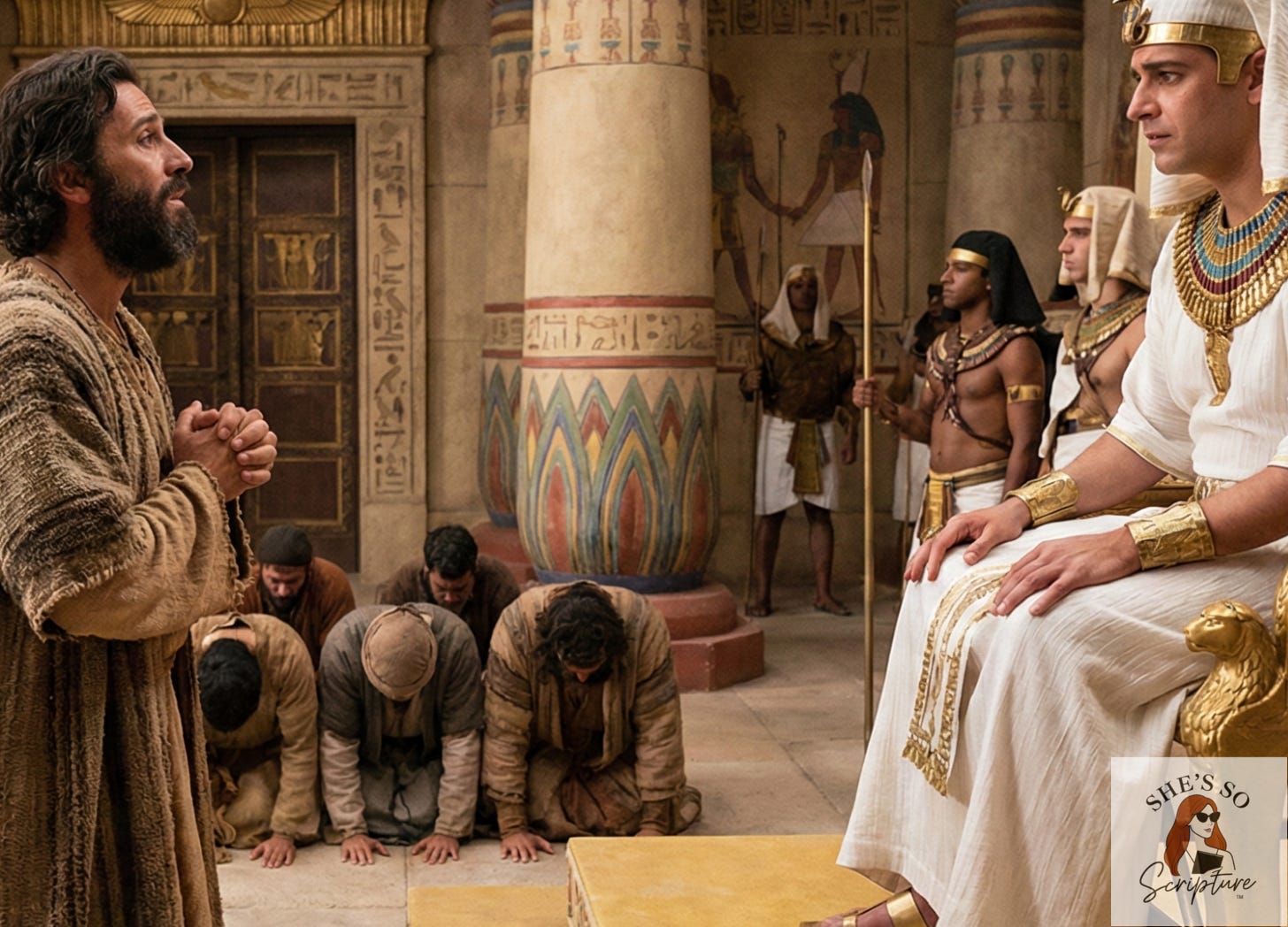
Judah steps forward.
That one movement changes the entire direction of the story. Years of silence, secrecy, regret, and unresolved pain come to a head not with a dramatic reveal, but with a man finally willing to speak honestly and carry responsibility.
Jewish tradition has never treated this as a simple family reunion. The sages read this encounter as a hinge point in Israel’s destiny. Judah’s approach is understood as the moment when leadership matures, suffering is redeemed, and the future of the people begins to take shape in a new way.
Up until now, Joseph’s story has been about survival. Vayigash is about transformation.
Torah: Genesis 44:18–47:27
When Leadership Stops Protecting Itself
The portion opens with Judah approaching Joseph. The Hebrew verb vayigash signals intentional movement. This is the kind of drawing near that happens when someone knows there is no more room for avoidance.
Judah does not rush. He does not posture. He speaks carefully, deliberately, and with awareness that every word matters. What stands out most is how different this Judah is from the one we met earlier in Genesis.
This is the brother who once suggested selling Joseph. The brother who walked away from the consequences. The brother who lived with the weight of that decision for years. Now he stands before the man who holds absolute power over him, and Judah does something quietly remarkable.
He tells the truth.
He doesn’t sanitize the past. He doesn’t excuse himself. He doesn’t frame himself as the hero of the story. Instead, he centers his father’s grief and acknowledges what another loss would do to him.
And then Judah offers himself.
He doesn’t do this as a dramatic gesture. It’s a genuine substitute. He is willing to lose his freedom so his brother can go home.
This is repentance that costs something.
Rabbinic tradition lingers here because this moment reshapes what leadership looks like in the Torah. Joseph represents wisdom forged through suffering. Judah represents responsibility forged through repentance. When those two finally meet, the story moves forward.
Joseph can no longer hold back. The man who’d mastered restraint throughout this narrative finally breaks down in tears. He reveals himself and reframes the story without erasing the harm.
“God sent me ahead of you to preserve life.”
Joseph doesn’t deny what his brothers did. But what he does is he refuses to let it define the end of the story. He has learned to see God’s hand without pretending human choices didn’t matter.
Restoration follows, but it’s not rushed. Jacob is reunited with Joseph. The family is settled in Egypt. Provision replaces famine. Yet the Torah is very clear. None of this happens without Judah stepping forward and owning the weight of what came before.
Haftarah: Ezekiel 37:15–28
God’s Commitment to Healing What Was Broken
Ezekiel’s vision of the two sticks takes the themes of Vayigash and widens the lens.
One stick for Judah.
One stick for Joseph.
What began as family tension became national fracture. The divided kingdoms carried the same unresolved wounds forward. God’s response is not denial and not punishment. It is restoration.
The prophet is told to join the sticks in his hand. What was separated will be brought together. God promises one people, one future, one shepherd.
God does not abandon fractured stories. He redeems them. The vision in Ezekiel echoes the moment in Vayigash when brothers who once stood on opposite sides finally face one another honestly.
Unity in Scripture is never superficial. It’s not about pretending wounds never existed. It is about God doing the work only He can do when repentance and faithfulness make space for healing.
Besorah: Matthew 5:27–48
The Interior Work That Makes Reconciliation Possible
In the Besorah, Yeshua continues the Sermon on the Mount by addressing what happens beneath the surface. He speaks about anger, desire, retaliation, and love for enemies. These teachings are uncomfortable because they expose the heart.
Yeshua is not interested in outward compliance that leaves the interior untouched. He presses deeper, asking His listeners to confront the roots of their actions.
Judah’s transformation didn’t begin when he spoke to Joseph. It began years earlier as he lived with the consequences of his choices. Joseph’s forgiveness did not appear overnight. It was shaped by suffering, humility, and trust in God’s sovereignty.
Yeshua teaches the same truth. Real change happens inside before it ever shows up in relationships. Reconciliation requires more than proximity. It requires honesty, responsibility, and a willingness to let God reshape the heart.
My Final Thoughts
Vayigash reminds us that redemption often begins quietly, with someone choosing to step forward instead of staying hidden.
Judah didn’t know how Joseph would respond. He moves closer anyway. Leadership in this portion has nothing to do with titles or power. It has everything to do with who is willing to carry the weight of the past without defensiveness.
Joseph shows us that forgiveness doesn’t erase pain. It places pain within a story where God is still active and purposeful.
Ezekiel reminds us that God has not given up on what has been divided. Yeshua reminds us that this kind of restoration begins within us long before it reaches others.
Vayigash leaves us with a question that refuses to stay theoretical:
Where is God inviting you to step forward with honesty rather than self-protection?
What might change if responsibility replaced avoidance?
Because sometimes the most faithful thing we can do is stop standing at a distance and finally move closer.
Hebrew Letter of the Week: י (Yod)
Sound: “Y”
Numeric Value: 10
Meaning: Hand, action, intention, God at work in small things
Yod is the smallest letter in the Hebrew alphabet, and that is exactly the point. It represents action that looks insignificant but carries enormous weight. In Jewish thought, Yod reminds us that nothing God does is wasted, even when it appears small or quiet.
That makes Yod a fitting letter for Vayigash.
Judah’s entire turning point begins with one small act. He steps forward. He speaks. He takes responsibility. No thunder. No miracle. Just a man choosing to act differently than he once did.
Joseph’s life also reflects Yod. Years of unnoticed faithfulness. Daily obedience in prison. Small choices that never looked impressive but eventually shaped a man capable of stewarding power without losing his soul.
Yod teaches us that transformation usually begins in places no one is applauding. God’s hand is often at work in the smallest movements toward honesty, humility, and responsibility.
How to Write Yod
י
Yod is written as a small suspended stroke, often slightly curved or angled. It does not sit firmly on the line like many other letters. It almost hovers.
That visual matters. Yod reminds us that divine action does not always come through what looks substantial. God often works through what appears minor, quiet, or easily overlooked.
Study Questions
Torah: Genesis 44:18–47:27
What stands out to you about Judah’s approach to Joseph compared to his earlier actions in Genesis?
Why do you think Judah centers his father’s grief rather than defending himself?
How does Judah’s offer to remain as a slave demonstrate a changed heart?
What does Joseph’s response reveal about how he understands God’s sovereignty?
Why does the Torah linger on this conversation instead of rushing to reconciliation?
How does this portion redefine leadership within the family of Israel?
Haftarah: Ezekiel 37:15–28
Why does God use physical imagery to communicate His promise of unity?
How does the joining of the two sticks reflect the themes of Vayigash?
What does this passage teach about God’s patience with long-standing division?
How does the promise of one shepherd shape your understanding of restoration?
Besorah: Matthew 5:27–48
Why does Yeshua focus so heavily on internal transformation in this section?
How do His teachings connect to Judah’s repentance and Joseph’s forgiveness?
What challenges you most in this passage and why?
How does heart-level obedience prepare the way for reconciliation?
Reflection Questions
Where in your life might God be inviting you to step forward instead of staying guarded?
Are there places where responsibility would bring healing, even if it feels costly?
How do you typically respond when faced with the consequences of past choices?
What does Judah’s growth teach you about repentance over time?
How does Joseph’s perspective on suffering reshape the way you view your own story?
Action Challenges
Spend time this week asking God to show you where honesty and responsibility might open the door to healing.
Write down one conversation you have been avoiding and pray through it before acting.
Practice listening without defending yourself in one interaction this week.
Meditate on Ezekiel 37 and ask God to bring unity where division feels entrenched.
Take one small step of obedience that aligns with what God has been revealing to you, even if it feels insignificant.
Download the Portion
Download a printable version of this Torah portion along with the study and reflection questions for your study binder!

If this post hit home for you, send it to a friend who could use a little Bible-study glow-up today.
You’re reading one of Substack’s Bestseller Publications and that’s because of readers like you. Thank you for showing up, sharing, and growing with this community.
If a monthly subscription isn’t feasible but you’ve been blessed by this space and want to support the work, you can always leave a one time tip here. Every gift, big or small, keeps this ministry thriving. 💛
🔥 Want to go deeper?
Step further into the Word with our paid subscriber community. When you upgrade, you unlock The Vault… and if you’re ready to go all in, the Founders Level opens every door.
When you upgrade, you step into The Vault—a space built for women who want to move from inspiration to transformation:
🔐 Weekly devotionals that help you apply the Word, not just read it
🌿 Weekly teachings that uncover the Jewish roots of Jesus’ life and ministry
💬 A private, judgment-free community where iron truly sharpens iron
✨ Our weekly spiritual discipline program (Mussar)—for real growth, not guilt
🎁 30% off all digital products + a FREE 4-week “Word Girl Faith Workout”
👑 The Founders Level is for the women ready to go all in. It opens every door:
You get everything in the Vault PLUS:
🎧 Weekly audio teachings for your on-the-go soul
💻 Monthly Q&A Bible Study Calls (Starting in January)
📓 Bible studies and reflection tools
🕊️ Early access to every new release
🖊️ An exclusive journal + 50% off all digital products
This isn’t a subscription, it’s a spiritual investment. When you join, you’re not just unlocking content… you’re aligning your life with the Word and walking shoulder-to-shoulder with women who are hungry for truth, boldness, and biblical beauty.
👉🏻 Step inside The Vault and start your next chapter in the Word today.